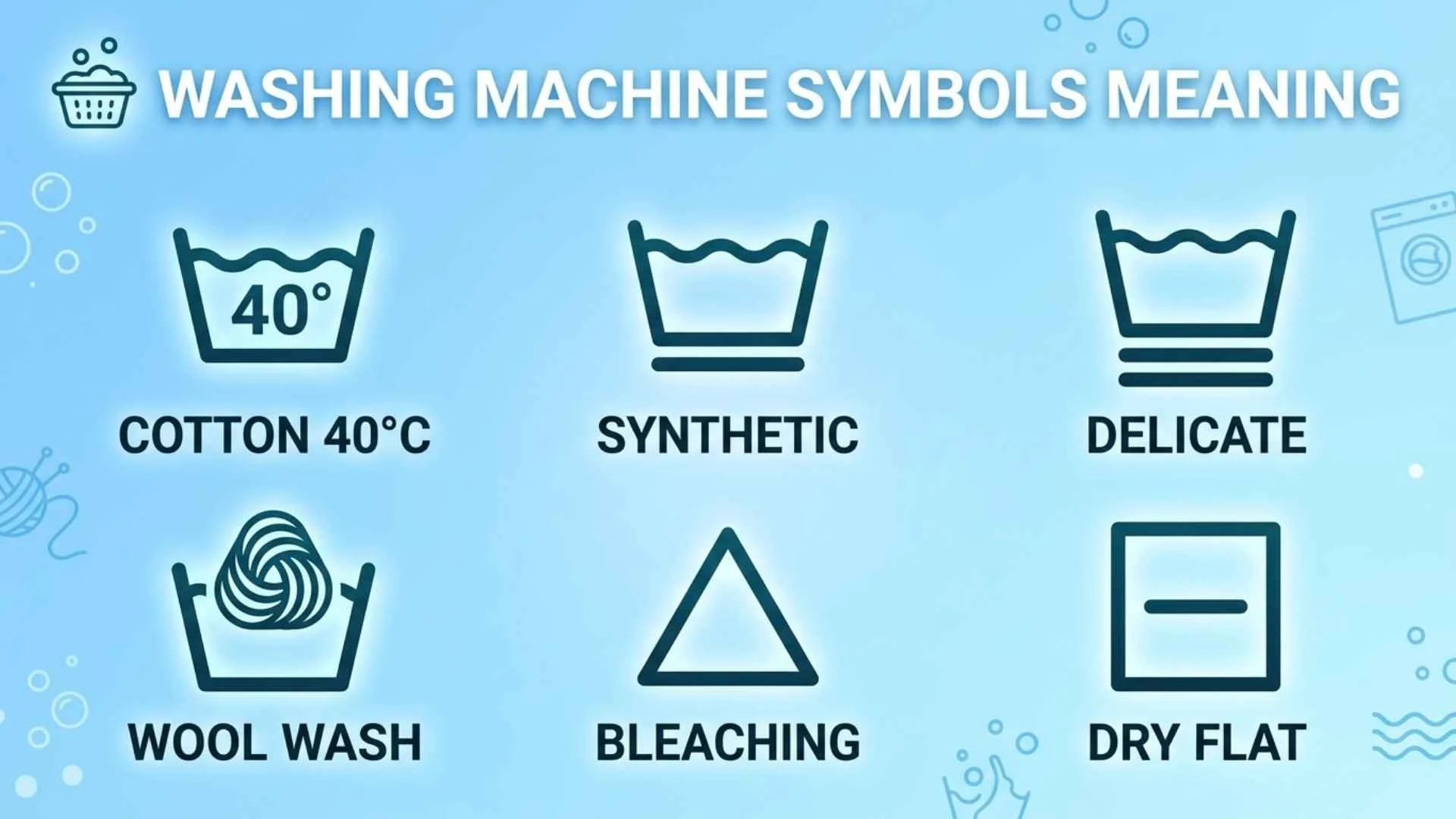
If you have ever looked at your washing machine and wondered what a small spiral, flower, tub, lock, leaf, or hand symbol means, you are not alone. Washing machine symbols are designed to show different wash cycles, temperatures, spin settings, and special functions, but their meanings are not always obvious.
Understanding washing machine symbols meaning can help you choose the right program for your clothes, avoid using excessive heat, protect delicate fabrics, and get better results from every wash.
This guide explains the most common washing machine symbols in simple terms. It also covers temperature symbols, rinse and spin icons, drying symbols, warning indicators, confusing symbols, and differences between washing machine brands.
Quick Guide to Washing Machine Symbols
The exact design of an icon can vary between manufacturers, but many washing machines use similar symbols for common functions.
| Symbol or Icon | Common Meaning | Main Purpose |
| Cotton flower | Cotton | Washes durable cotton fabrics |
| Flask-shaped icon | Synthetics | Washes synthetic fabrics |
| Feather/flower | Delicates | Gentle washing |
| Ball of yarn | Wool | Gentle wool cycle |
| Hand in tub | Hand Wash | Very gentle washing |
| Clock | Quick Wash/Time | Short or timed program |
| Leaf | Eco | Efficient washing program |
| Water tub | Rinse | Rinses clothes with water |
| Spiral | Spin | Removes excess water |
| Downward arrow | Drain | Removes water from the drum |
| Tub/extra wash icon | Prewash | Adds a washing stage before the main wash |
| Padlock | Lock | Door or control lock |
| Steam lines | Steam | Steam-related function |
| Drum with sparkle | Drum Clean | Cleans the washing machine drum |
The appearance of these symbols is not completely universal. If a symbol on your machine looks different, check the manufacturer’s manual for the exact meaning.
What Do Washing Machine Symbols Mean?
Washing machine symbols communicate the function of a program or setting without requiring a long description on the control panel. Some symbols identify the type of fabric, while others control water temperature, spin speed, rinsing, drying, or additional functions.
For example, a cotton symbol normally means that the machine is using a program intended for cotton fabrics. A spiral generally refers to spinning, while a leaf often indicates an Eco or energy-efficient program.
The most important thing is to match the washing machine setting with the care instructions on your clothing.
Common Washing Machine Symbols
Cotton Symbol
The cotton symbol is commonly shown as a cotton flower or cotton boll.
The cotton cycle is designed for durable cotton items such as:
- T-shirts
- Cotton shirts
- Towels
- Bedsheets
- Cotton trousers
- Underwear
- Other sturdy cotton garments
Cotton programs can use different temperatures and spin speeds. Select the temperature recommended on the clothing care label rather than automatically choosing the highest setting.
Synthetics Symbol
A synthetics program is often represented by a flask-shaped or similar icon, although the design can differ between brands.
It is generally intended for synthetic fabrics such as:
- Polyester
- Nylon
- Acrylic
- Synthetic shirts
- Some sportswear
- Synthetic trousers
Synthetic programs are usually designed to be gentler than heavy cotton cycles.
Delicate Wash Symbol
A delicate cycle may use a flower, feather, or another gentle-looking symbol.
This program is suitable for garments that need more careful treatment, including certain:
- Lace items
- Thin fabrics
- Lightweight tops
- Decorative garments
- Delicate synthetic fabrics
Always check the clothing label before washing delicate items in a machine.
Wool Symbol
The wool symbol usually resembles a ball of yarn.
A wool program uses gentler washing action and is designed for washable wool garments.
Wool can shrink, stretch, or lose its shape if washed incorrectly. If the garment label says “hand wash” or “dry clean,” do not assume that a wool cycle is automatically suitable.
Hand Wash Symbol
The hand-wash symbol usually shows a hand inside a tub.
It indicates a particularly gentle washing program intended for garments that require careful handling.
A hand-wash program may be suitable for some delicate clothing marked for hand washing, but the garment’s care label should always take priority.
Washing Machine Temperature Symbols
Temperature settings are among the most important washing machine symbols because heat affects different fabrics in different ways.
20°C Symbol
A 20°C setting uses relatively cool water and can be suitable for lightly soiled laundry and fabrics that should be washed at a low temperature.
It may also be useful when you want to reduce energy consumption, depending on the detergent and washing machine.
30°C Symbol
30°C is a common setting for everyday laundry and many colored or delicate garments.
It can be suitable for clothes that do not require a hotter wash, provided the care label allows machine washing at this temperature.
40°C Symbol
40°C is widely used for everyday laundry.
It can be appropriate for many cotton and synthetic garments, but the correct temperature depends on the clothing label and the level of soiling.
60°C Symbol
A 60°C cycle uses considerably warmer water and is suitable only for items whose care labels allow this temperature.
Some towels, bedding, and durable washable fabrics may be designed for 60°C washing.
90°C Symbol
Some washing machines offer very high-temperature cycles such as 90°C.
This setting should only be used when the machine and garment instructions specifically permit it. Many modern fabrics should not be exposed to such high temperatures.
Rinse Symbol
The rinse symbol usually involves a tub or water-related icon.
The rinse function adds water to the laundry to remove detergent and other residues.
An additional rinse can be useful when:
- Clothes still contain detergent residue.
- You want extra rinsing.
- You are washing items for someone who prefers additional rinsing.
- The selected program allows an extra-rinse option.
The exact symbol can differ between washing machines.
Spin Symbol
The spin symbol is commonly represented by a spiral or swirl.
During the spin cycle, the washing machine rotates the drum rapidly to remove excess water from the clothes.
Spin speed may be displayed in RPM, meaning revolutions per minute.
Common settings include:
- 400 RPM
- 800 RPM
- 1000 RPM
- 1200 RPM
- 1400 RPM
A higher spin speed generally removes more water, but delicate garments may require a lower speed.
What Does the Crossed-Out Spiral Mean?
A crossed-out spiral generally means No Spin.
This setting prevents or reduces the final spin cycle and may be useful for garments that should not be exposed to high-speed spinning.
Always check the garment’s care instructions before choosing this option.
Drain Symbol
A drain symbol may appear as a downward arrow, water flowing away, or another water-related icon.
The drain function removes water from the washing machine without necessarily running a complete washing program.
It can be useful when:
- Water remains inside the drum.
- You need to empty the machine.
- You want to drain water before another operation.
The exact icon varies by manufacturer.
Quick Wash Symbol
A clock or stopwatch is often associated with a quick or short washing program.
Quick Wash is designed for lightly soiled clothes and smaller loads when you need laundry cleaned in less time.
It can be useful when:
- Clothes have only been worn briefly.
- The load is small.
- There is little visible dirt.
- You need clean clothes quickly.
A quick cycle is not always the best choice for heavily soiled laundry because it may provide less washing time.
Eco Wash Symbol
The Eco symbol is often represented by a leaf.
An Eco program is designed to use resources efficiently. Depending on the washing machine, it may use less water or energy while taking longer than a standard program.
A longer cycle does not necessarily mean greater energy consumption. The machine may be using a lower temperature and optimizing water and energy use over a longer period.
Prewash Symbol
The prewash function adds an extra washing stage before the main wash.
It can be useful for heavily soiled clothes, muddy garments, or workwear.
Prewash is generally unnecessary for lightly soiled everyday clothing. Using additional washing stages when they are not needed can increase water and energy use.
Child Lock Symbol
The child lock symbol is commonly shown as a padlock.
When activated, it can prevent accidental changes to the controls while the washing machine is operating.
This function is particularly useful in households where children may press buttons on the appliance.
The method for turning child lock on or off varies considerably between models, so consult your machine’s manual if you cannot deactivate it.
Door Lock Symbol
A padlock can also indicate that the washing machine door is locked.
The door may remain locked while:
- The drum is spinning.
- Water is still inside.
- The machine is running a cycle.
- The machine has not reached a safe stage for opening.
Never force a locked washing machine door. Wait for the machine to indicate that it is safe to open.
Steam Symbol
Some modern washing machines include a steam function represented by several curved lines rising upward.
Depending on the model, steam may be used for purposes such as refreshing clothes, reducing wrinkles, or supporting a particular washing program.
Steam functions are not identical across brands, so the manufacturer’s instructions should be checked before using this setting.
Drum Clean Symbol
A drum-clean symbol may show a washing-machine drum combined with a sparkle, star, or cleaning icon.
Drum Clean is designed to clean the inside of the washing machine rather than wash clothing.
A drum-clean cycle can help remove:
- Detergent residue
- Dirt
- Build-up
- Unpleasant odors
Do not put normal clothing into the machine unless the manufacturer’s instructions specifically say that the drum-clean program can be used with laundry.
Drying Symbols on Washer-Dryer Machines
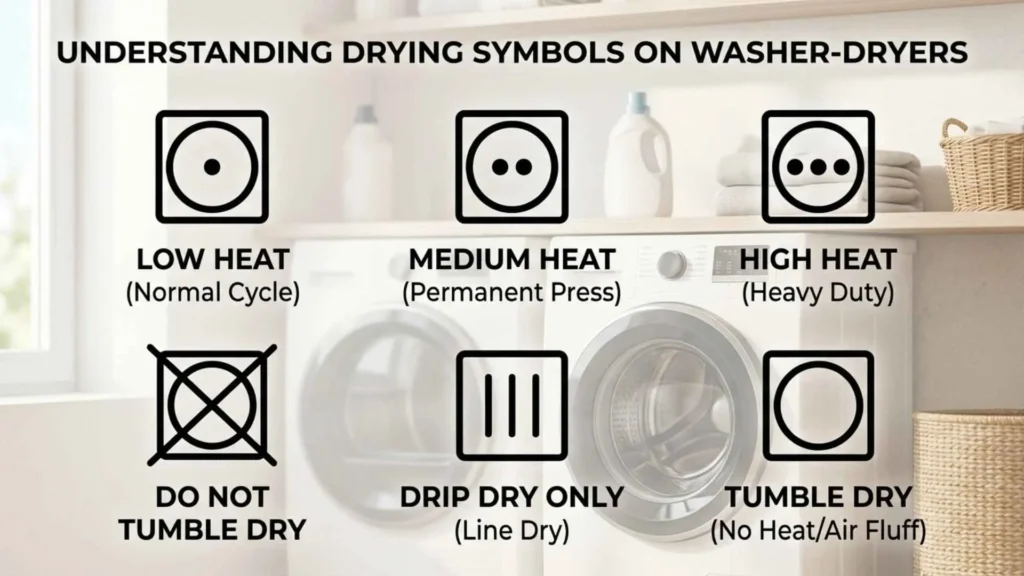
Some machines combine washing and drying functions. These appliances may have additional symbols that do not appear on standard washing machines.
Tumble Dry Symbol
A drying symbol often resembles a square containing a circle.
It generally relates to tumble drying, although the exact setting depends on the machine.
Low Heat Drying
A low-heat symbol indicates a gentler drying temperature.
This may be appropriate for fabrics that can be damaged by high heat, provided the clothing label permits tumble drying.
High Heat Drying
A higher-heat drying option is intended for fabrics that can safely tolerate more heat.
Never assume that a garment is suitable for high-temperature drying simply because it was safe to wash at a high temperature.
Common Washing Machine Warning Symbols
Some icons are not washing programs at all. They are warnings or status indicators.
Water Tap Symbol
A water tap icon may indicate a water supply issue, depending on the model.
Possible causes can include:
- Water supply turned off
- Inlet hose problem
- Blocked inlet filter
- Insufficient water supply
The exact error and solution depend on the washing machine model.
Drain or Filter Warning
A drain-related symbol can indicate a drainage problem.
Possible causes may include a blocked filter, drain hose issue, or another drainage problem.
Before attempting any maintenance, turn the machine off and follow the manufacturer’s safety instructions.
Door Warning Symbol
A door-related warning may mean that the door is not properly closed or the machine cannot safely lock it.
Check that clothing is not trapped between the door and seal before restarting the cycle.
Unbalanced Load Symbol
Some machines indicate an unbalanced load when clothes become unevenly distributed inside the drum.
This can happen when washing a heavy item with very few other garments.
Redistributing the laundry can sometimes resolve the issue, but always follow the machine’s instructions.
Washing Machine Symbols by Brand
Washing machine symbols are not completely standardized. Different manufacturers can use different icons, names, and combinations of symbols.
Samsung Washing Machine Symbols
Samsung machines can include symbols for cotton, synthetics, delicate washing, rinse, spin, Eco functions, steam, and other programs.
The exact icons and available cycles depend on the model.
LG Washing Machine Symbols
LG washing machines may use icons for cotton, mixed fabrics, delicates, wool, quick washing, rinse and spin, tub cleaning, and other functions.
Newer models can have additional smart or specialized programs.
Bosch Washing Machine Symbols
Bosch machines commonly include programs for cotton, synthetics, delicates, wool, rinse, spin, and other specialized settings.
The control panel can differ substantially between Bosch models.
Whirlpool Washing Machine Symbols
Whirlpool machines can include symbols for different fabric types, temperature settings, spin options, quick cycles, and additional washing functions.
Haier Washing Machine Symbols
Haier models can have symbols for cotton, synthetic fabrics, delicate items, quick wash, rinse, spin, and specialized programs.
Because model designs differ, the manual for your exact appliance is the most reliable reference.
Washing Machine Symbols vs Clothing Care Symbols
Washing machine symbols should not be confused with clothing care symbols.
Washing machine symbols appear on the appliance and tell you what the machine’s programs and functions do.
Clothing care symbols appear on garment labels and tell you how the specific item should be washed, dried, ironed, or treated.
For example, a garment label may show a washing tub containing “30°C.” This tells you the recommended maximum washing temperature for that item.
The washing machine may have several programs capable of washing at 30°C, so you should also consider the fabric type and care instructions.
How to Choose the Right Washing Machine Setting
Choosing the right program does not have to be complicated.
Step 1: Check the Clothing Label
Look at the care label inside the garment before selecting a cycle.
Check:
- Maximum washing temperature
- Whether machine washing is allowed
- Whether hand washing is required
- Whether tumble drying is allowed
- Special care instructions
Step 2: Identify the Fabric
Determine whether you are washing cotton, synthetic, wool, delicate, mixed, or another type of fabric.
Step 3: Select the Temperature
Choose a temperature that is allowed by the garment label.
Do not automatically use a hotter setting simply because the clothes are dirty.
Step 4: Choose the Spin Speed
Use a suitable spin speed for the fabric.
Durable fabrics may tolerate higher spin speeds, while delicate garments may require gentler treatment.
Step 5: Add Extra Functions Only When Needed
Functions such as prewash, extra rinse, steam, or intensive washing should be selected when they are appropriate for the load.
Using every available function for every wash is usually unnecessary.
Commonly Confused Washing Machine Symbols
Rinse vs Spin
Rinse uses water to remove detergent and residue.
Spin rotates the drum quickly to remove excess water.
They are different functions and may appear as separate programs.
Spin vs Drain
Spin removes water from clothing by rotating the drum.
Drain removes water from the machine.
A drain program may not provide the same water-removal effect from clothing as a full spin cycle.
Quick Wash vs Eco Wash
Quick Wash focuses on reducing cycle time.
Eco Wash focuses on efficient resource use and may take longer.
The best option depends on whether your priority is cycle time or the machine’s efficiency program.
Child Lock vs Door Lock
Child Lock normally prevents unwanted button presses or changes.
Door Lock indicates that the machine door is currently locked for safety.
These functions can use similar-looking padlock symbols, so check the display and manual.
Tips for Using Washing Machine Symbols Correctly
Follow these simple tips to avoid common laundry mistakes:
- Always check the clothing care label.
- Do not assume every brand uses the same symbol.
- Avoid using high temperatures unless the fabric allows them.
- Use a suitable spin speed for delicate clothing.
- Do not force a locked washing machine door.
- Use quick wash mainly for suitable, lightly soiled loads.
- Use prewash when it is actually needed.
- Run drum-clean cycles according to the manufacturer’s recommendations.
- Check the manual when an unfamiliar warning icon appears.
- Do not confuse appliance symbols with clothing care symbols.
Frequently Asked Questions
What do the symbols on a washing machine mean?
Washing machine symbols represent different programs and functions, including fabric types, washing temperatures, rinsing, spinning, draining, drying, and special features.
What does the spiral symbol mean on a washing machine?
A spiral generally represents the spin cycle. It removes excess water from clothes by rotating the drum at high speed.
What does the leaf symbol mean on a washing machine?
A leaf commonly represents an Eco or efficiency-focused program. The exact operation depends on the washing machine.
What does the hand symbol mean on a washing machine?
A hand inside a washing tub generally indicates a hand-wash or very gentle cycle intended for suitable delicate garments.
What does the wool symbol mean?
The wool symbol, often shown as a ball of yarn, indicates a program designed for washable wool garments.
What does the clock symbol mean?
A clock may indicate a quick wash, delay timer, or another time-related function. The exact meaning depends on the model.
What does the padlock symbol mean?
A padlock may indicate that the washing machine door or controls are locked. Check the display and manual to determine whether it represents door lock or child lock.
What does the water tap symbol mean?
A water tap warning can indicate a water-supply problem on some machines. Possible causes include a closed water tap, inlet problem, or blocked filter.
Can washing machine symbols be different between brands?
Yes. Manufacturers can use different symbols and names for similar functions. The manual for your exact model is the most reliable source.
Are washing machine symbols the same as laundry symbols?
No. Washing machine symbols describe the appliance’s programs and functions, while laundry care symbols on clothing labels describe how a specific garment should be washed, dried, ironed, or treated.
Final Thoughts
Understanding washing machine symbols meaning can make everyday laundry much easier. Symbols such as cotton, synthetics, wool, delicate, rinse, spin, drain, Eco, quick wash, temperature, steam, and child lock each provide information about how the machine will operate.
The most important point is that symbols can vary between manufacturers and models. A spiral will commonly represent spin and a leaf will often represent an Eco function, but unfamiliar symbols should always be checked against the appliance’s manual.
For the best results, combine the washing machine symbol with the clothing care label. Choose the appropriate fabric program, temperature, and spin speed, and use additional functions only when they are needed. This approach can help protect your clothes while making your washing machine easier and safer to use.

I am Lisa Reynolds, a linguist fascinated by the ever-changing world of slang. I enjoy researching how slang reflects trends, technology, and social connections. I wrote “Text Talk: Understanding Digital Slang” and “From Street to Screen: Slang in Media”, exploring the influence of digital communication on language. I love sharing my discoveries in a way that feels like a conversation with friends, so you feel the culture and humor behind every phrase.
 John Carter
 Marcus Lee