Christianity uses symbols, scriptures, and rituals to express faith, explain spiritual teachings, and connect believers with God. From the cross and Christian fish symbol to the Bible and Holy Communion, these elements shape Christian identity and religious life. They also help explain important beliefs about Jesus Christ, salvation, worship, and eternal life.
The Christian Bible provides the foundation for religious teachings, while symbols communicate ideas through recognizable images. Religious rituals, including baptism, prayer, and the Eucharist, give believers practical ways to express their faith. Although Christian denominations share many foundational beliefs, they sometimes interpret scriptures and religious practices differently.
Understanding Christian symbols, scriptures, and rituals requires looking at their biblical foundations, historical development, and theological meanings. Catholic, Eastern Orthodox, Oriental Orthodox, Anglican, and Protestant communities each preserve distinctive traditions. Together, these traditions offer a deeper picture of Christianity’s religious history and spiritual practices.
What Are Symbols, Scriptures, and Rituals in Christianity?
Christianity expresses its beliefs through sacred images, religious writings, and established practices. Each element serves a different purpose, but they frequently work together.
Christian Symbols and Their Religious Significance
Christian symbols are visual signs that represent important religious beliefs, biblical teachings, and spiritual ideas. They appear in churches, paintings, jewelry, religious clothing, and worship spaces.
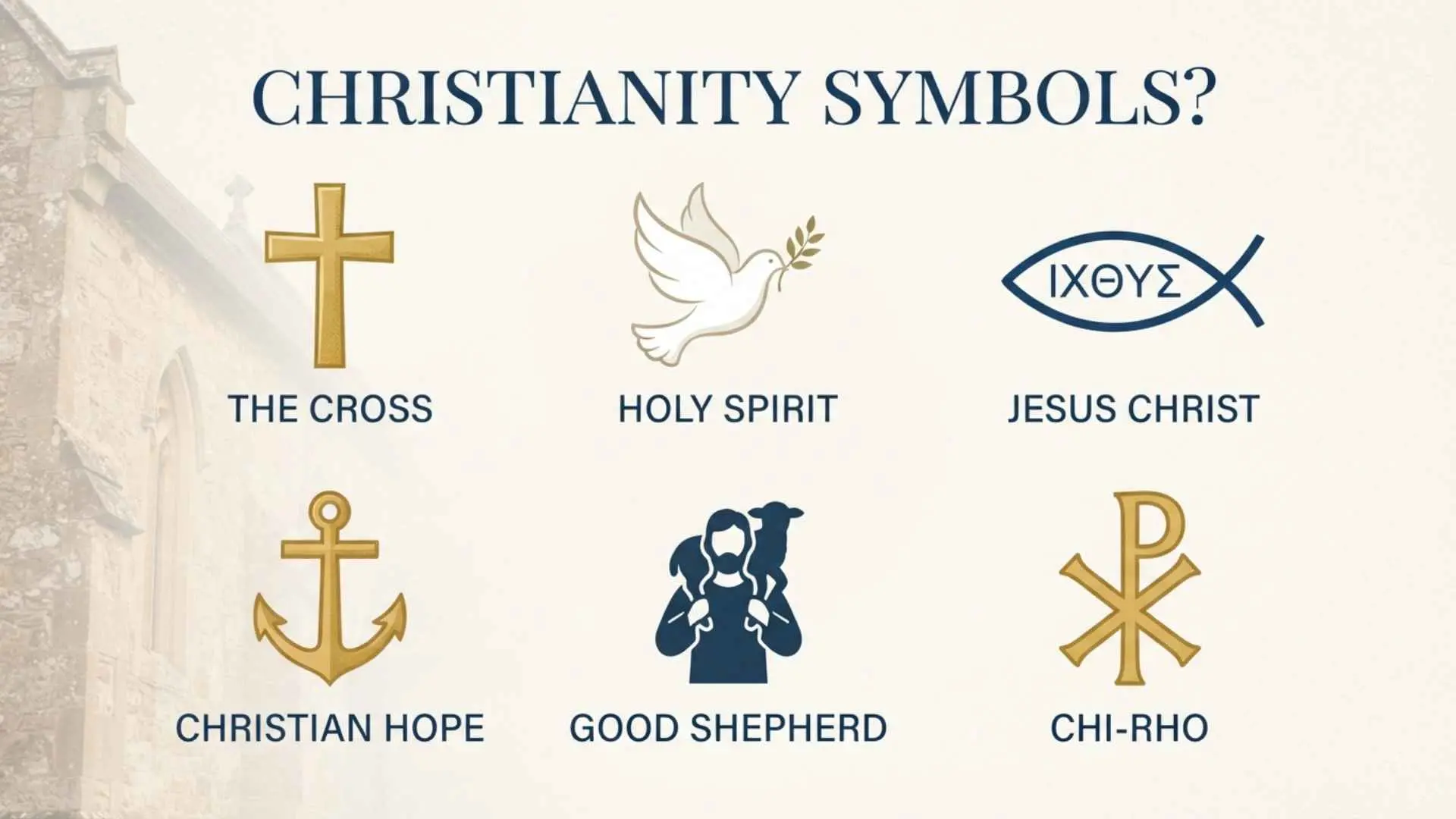
The cross represents Jesus’ crucifixion and the Christian message of salvation. Similarly, a dove often represents the Holy Spirit while a lamb symbolizes sacrifice and innocence.
Christians use these images to communicate religious ideas without relying entirely on written explanations. However, particular symbols can carry different meanings across historical periods and denominations.
Christian Scriptures and Biblical Authority
Christian scriptures are sacred writings that guide Christian beliefs, worship, and moral teachings. The Bible contains two main sections: the Old Testament and the New Testament.
Christians regard the Bible as inspired by God, although traditions differ in how they understand inspiration and interpretation. Its writings address creation, human relationships, sin, redemption, Jesus’ teachings, and the future of humanity.
Christian Rituals, Rites, and Religious Practices
Christian rituals are religious actions performed individually or collectively to express faith. They include baptism, Communion, prayer, fasting, confession, and church worship.
Some traditions recognize specific rituals as sacraments that communicate divine grace. Others describe certain practices as ordinances or symbolic acts of obedience.
Christian Symbols and Their Meanings
Christian symbolism connects visible objects with important spiritual teachings. These symbols appear throughout church history and remain recognizable in modern Christian communities.
The Cross: The Central Symbol of Christianity
The Christian cross represents the crucifixion of Jesus Christ. Christians associate it with sacrifice, redemption, forgiveness, and the hope of resurrection.
Jesus’ death occupies a central place in Christian theology. According to Christian belief, his crucifixion provides the foundation for humanity’s reconciliation with God.
Common cross designs include:
- Latin cross: The familiar design with a longer vertical section.
- Greek cross: Four arms of approximately equal length.
- Celtic cross: A cross featuring a circular ring around its intersection.
- Crucifix: A cross displaying the figure of Jesus.
- Orthodox cross: A traditional design often featuring additional crossbars.
The sign of the cross is another important Christian practice. Catholics, Orthodox Christians, and some Anglicans and Lutherans make this gesture during prayer and worship.
The Crucifix and Its Difference From the Cross
A crucifix displays Jesus’ body on the cross. It emphasizes his suffering, sacrifice, and crucifixion.
A plain cross generally shows the structure without depicting Jesus. Many Protestant communities prefer the empty cross because it emphasizes Christ’s resurrection.
However, these differences aren’t absolute. Some Protestant churches also display crucifixes while some Catholic settings use plain crosses.
The Ichthys: The Christian Fish Symbol
The Ichthys, commonly called the Christian fish symbol, represents Jesus Christ. Its Greek letters form an early Christian confession: Iēsous Christos Theou Yios Sōtēr, meaning Jesus Christ, Son of God, Savior.
Early Christians used fish imagery in religious art and burial settings. Historical references connect the symbol with Christian identity, baptism, and Eucharistic imagery.
Tertullian, an early Christian writer, connected believers with little fish born through water after the example of Jesus Christ. His discussion appears in De Baptismo.
Other Important Christian Symbols
| Christian symbol | Meaning and religious association |
| Dove | Holy Spirit, peace, and divine presence |
| Lamb | Jesus Christ, sacrifice, and redemption |
| Anchor | Hope and steadfast faith |
| Alpha and Omega | God’s eternity and completeness |
| Chi-Rho | Jesus Christ and Christian identity |
| Bread and wine | Eucharist and Holy Communion |
| Water | Baptism, purification, and new life |
| Candle | Christ as the Light of the World |
| Shepherd | Jesus as the protector and guide of believers |
| Crown | Kingship, victory, and eternal reward |
Historical Development of Christian Symbolism
Early Christians used symbols to communicate their beliefs through paintings, inscriptions, and everyday objects. The fish, anchor, shepherd, and dove appeared in early Christian artistic traditions.
Tertullian discussed the sign of the cross in his writings. His work De Corona, written around the beginning of the third century, describes Christian customs and religious gestures.
Christian symbolism later expanded through church architecture, icons, mosaics, and medieval religious paintings. Eastern Christianity developed particularly rich traditions of sacred iconography.
Christian Scriptures and the Biblical Canon
The Bible forms the central collection of sacred writings in Christianity. Its books preserve religious teachings, historical accounts, poetry, prophecy, and accounts of Jesus’ life.
What Is the Holy Bible?
The Holy Bible consists of the Old Testament and New Testament. These collections contain writings produced across different historical periods by numerous human authors.
The Old Testament shares much of its scriptural foundation with the Jewish Tanakh. However, Christian traditions organize and number these books differently.
The New Testament focuses on Jesus Christ, his teachings, the early Church, and Christian theology.
The Old Testament and Its Main Sections
The Old Testament contains several literary categories:
- Pentateuch: Genesis, Exodus, Leviticus, Numbers, and Deuteronomy.
- Historical books: Accounts of Israel’s history and religious development.
- Wisdom literature: Proverbs, Job, Psalms, and other reflective writings.
- Prophetic books: Messages associated with biblical prophets.
These writings explore creation, covenant, law, worship, justice, suffering, and the relationship between God and humanity.
The New Testament and Its 27 Books
The New Testament contains 27 books shared across Catholic, Orthodox, and Protestant biblical canons.
Its main sections include:
- Four Gospels: Matthew, Mark, Luke, and John.
- Acts of the Apostles.
- Letters traditionally associated with Paul.
- General or Catholic Epistles.
- The Book of Revelation.
The Gospels describe Jesus’ ministry, death, and resurrection. Acts follows the early Christian movement while the letters address theology, worship, and community life.
The Biblical Canon and Differences Between Christian Bibles
The biblical canon refers to the collection of writings a religious community recognizes as authoritative scripture.
| Tradition | Old Testament collection | New Testament |
| Protestant | 39 books | 27 books |
| Catholic | 46 books | 27 books |
| Eastern Orthodox | Generally includes additional books beyond the Catholic collection | 27 books |
| Oriental Orthodox | Canon varies among churches | 27 books |
Catholic Bibles include the Deuterocanonical Books, which Protestant traditions generally classify as Apocrypha. Orthodox traditions also preserve additional differences in their scriptural collections.
The Septuagint is an ancient Greek translation of Jewish scriptures. It played an important role in early Christianity and influenced the scriptural traditions of several churches.
Biblical Inspiration, Inerrancy, and Infallibility
Christians generally believe that scripture has divine inspiration. However, they interpret this teaching in different ways.
- Biblical inspiration: God guided the writing of sacred scripture.
- Biblical inerrancy: Scripture contains no errors according to a particular theological understanding.
- Biblical infallibility: Scripture reliably communicates the truths God intends to teach.
- Limited inerrancy: An approach that distinguishes theological teachings from certain historical or scientific statements.
These concepts influence biblical interpretation and discussions about scriptural authority. Christians also consider literary forms, historical settings, original languages, and translation choices when studying the Bible.
Important Biblical Languages and Translations
The Old Testament was written mainly in Biblical Hebrew, with some passages in Aramaic. The New Testament was written primarily in Koine Greek.
Important biblical texts and translations include:
- Septuagint: Ancient Greek translation of Jewish scriptures.
- Latin Vulgate: Influential Latin Bible translation.
- King James Version: English Bible first published in 1611.
- Modern translations: Contemporary English versions designed for different reading and study needs.
Christian Eschatology: End Times and Human Destiny
Christian eschatology studies biblical teachings about death, resurrection, final judgment, and the future fulfillment of God’s Kingdom. It explores what Christians believe happens at the end of human history.
What Is Christian Eschatology?
The word eschatology refers to the study of last things. Christian teachings connect this subject with the return of Jesus, resurrection, and eternal life.
The Kingdom of God is central to these teachings. Christians understand it as God’s rule and the fulfillment of his purposes for creation.
The Second Coming of Jesus Christ
The Second Coming of Jesus refers to the Christian belief that Christ will return. Biblical passages such as Matthew 24, Acts 1:11, and Revelation 19 discuss this expectation.
Christians generally believe that his return will bring God’s purposes to fulfillment. However, they disagree about the timing and sequence of end-times events.
The Great Tribulation and the Rapture
The Great Tribulation describes a period of severe suffering and distress associated with biblical end-times passages.
The Rapture refers to the gathering of believers to Christ, based especially on 1 Thessalonians 4:16–17. Some Christians connect it with the Great Tribulation while others interpret these passages differently.
Three major millennial views include:
- Premillennialism: Christ returns before the millennium.
- Amillennialism: The millennium represents Christ’s present spiritual reign.
- Postmillennialism: Christ returns after a period of widespread gospel influence.
Resurrection of the Dead and the Last Judgment
Christianity teaches the resurrection of the dead and God’s final judgment. The resurrection represents the restoration of human life through God’s power.
The Last Judgment concerns God’s final judgment of humanity. Matthew 25:31–46 describes the separation of people according to their response to God’s teachings.
Heaven and Hell in Christian Beliefs
Heaven represents eternal life and communion with God. Hell represents final judgment and separation from God in Christian theology.
Different traditions interpret the nature of eternal punishment differently. Some emphasize eternal conscious punishment while others consider conditional immortality or annihilationism.
Purgatory, Mortalism, and Annihilationism
Christian traditions also disagree about the intermediate state and purification after death.
- Purgatory: Catholic teaching describes purification for those who die in God’s grace but still need purification.
- Mortalism: The belief that the soul does not remain naturally conscious after death.
- Soul sleep: The idea that the dead remain unconscious until resurrection.
- Annihilationism: The belief that the wicked ultimately cease to exist rather than experience everlasting conscious punishment.
These positions aren’t shared by every Christian denomination.
The Christian Liturgical Calendar and Religious Celebrations
The Christian liturgical calendar organizes worship around important events in Jesus’ life and the history of Christianity. It also includes seasons of preparation, fasting, and remembrance.
What Is the Christian Liturgical Calendar?

The church calendar divides the year into religious seasons. Western and Eastern churches follow different calendar arrangements and observances.
Common liturgical seasons include Advent, Christmas, Lent, Easter, and Ordinary Time. Churches also use liturgical colors to express particular themes.
Advent and Christmas
Advent prepares Christians for Christmas through prayer, reflection, and spiritual preparation. It traditionally begins four Sundays before Christmas.
Christmas celebrates the birth of Jesus Christ. The season also includes related observances such as Epiphany, which remembers the manifestation of Christ.
Lent, Holy Week, and Easter
Lent is a period of prayer, fasting, and repentance before Easter. Western traditions generally observe approximately 40 days of Lent, excluding Sundays.
Holy Week includes several important celebrations:
- Palm Sunday: Jesus’ entry into Jerusalem.
- Maundy Thursday: The Last Supper.
- Good Friday: The crucifixion of Jesus.
- Holy Saturday: The day before Easter.
- Easter Sunday: Celebration of Jesus’ resurrection.
Pentecost and Other Christian Holy Days
Pentecost commemorates the descent of the Holy Spirit upon Jesus’ followers, as described in Acts 2.
Other important observances include Ascension Day, Trinity Sunday, saints’ feast days, and various church commemorations.
Christian Fasting and Seasonal Observances
Fasting helps Christians practice self-discipline and spiritual reflection. Traditions differ regarding fasting schedules and restrictions.
Catholic, Eastern Orthodox, and some Protestant communities observe fasting periods. Many Christians also practice personal fasting outside the formal church calendar.
The Seven Sacraments in Christianity
Sacraments are sacred religious rites associated with divine grace and spiritual life. Catholic teaching recognizes seven sacraments, which Eastern Orthodox Christians also traditionally recognize as Holy Mysteries.
What Is a Sacrament?
A sacrament combines an outward religious sign with spiritual significance. For example, baptism uses water to express Christian initiation and new life.
Many Protestant churches recognize two principal sacraments or ordinances: Baptism and the Lord’s Supper. Their understanding of sacramental grace differs across denominations.
The Seven Sacraments Explained
| Sacrament | Main meaning |
| Baptism | Christian initiation and new life |
| Eucharist | Communion with Christ through bread and wine |
| Confirmation | Strengthening through the Holy Spirit |
| Holy Orders | Ordination for Christian ministry |
| Confession | Repentance, forgiveness, and reconciliation |
| Anointing of the Sick | Spiritual support and healing |
| Matrimony | Sacred commitment within Christian marriage |
Baptism: Christian Initiation and New Life
Baptism uses water as a sign of Christian initiation. Churches connect it with repentance, forgiveness, faith, and entry into the Christian community.
Some traditions practice infant baptism while others baptize people who personally profess their faith.
Eucharist or Holy Communion
The Eucharist, also called Holy Communion or the Lord’s Supper, remembers Jesus’ Last Supper with his disciples.
Christians share bread and wine according to their traditions. Catholic teaching describes Christ’s presence through transubstantiation while other churches hold different views.
Confirmation and Chrismation
Confirmation strengthens a Christian’s commitment through the Holy Spirit. Eastern Orthodox churches call the corresponding sacrament Chrismation.
Holy Orders
Holy Orders concerns ordination to Christian ministry. Catholic tradition recognizes bishops, priests, and deacons within its ordained ministry.
Confession or Penance
Confession involves acknowledging sins, expressing repentance, and seeking forgiveness. Catholic sacramental confession includes reconciliation through a priest.
Anointing of the Sick
This sacrament provides spiritual support through prayer and anointing with oil. James 5:14–15 provides an important biblical foundation.
Matrimony or Christian Marriage
Matrimony represents a committed marriage within Christian religious life. Catholic and Orthodox churches treat marriage as a sacrament while Protestant traditions differ in classification.
Christian Baptism and Its Different Methods
Baptism holds an important place in Christian worship and theology. However, churches differ in how they perform it and explain its spiritual effects.
Four Main Methods of Water Baptism
| Method | How it works |
| Immersion | The person is fully submerged in water. |
| Affusion | Water is poured over the person’s head. |
| Aspersion | Water is sprinkled over the person. |
| Submersion | The person is placed beneath the water as part of the baptismal act. |
Infant Baptism vs. Believer’s Baptism
Catholic, Eastern Orthodox, Lutheran, and Anglican communities generally practice infant baptism.
Baptist and many Pentecostal churches generally emphasize believer’s baptism, which follows a personal profession of faith.
Baptismal Regeneration and Symbolic Baptism
Baptismal regeneration connects baptism with spiritual rebirth and God’s grace. Catholic and Orthodox traditions strongly emphasize baptism’s sacramental role.
Other Protestant communities understand baptism primarily as an outward expression of an inward commitment to Christ.
Christian Prayer and Worship Practices
Christian prayer is communication with God through praise, thanksgiving, confession, and requests. It can happen privately, within families, or during public worship.
Different Types of Christian Prayer
- Adoration: Praising God’s greatness.
- Thanksgiving: Expressing gratitude.
- Confession: Acknowledging wrongdoing.
- Supplication: Asking God for help.
- Intercession: Praying for other people.
- Contemplative prayer: Practicing quiet reflection and attention to God.
Traditional Christian Prayer Gestures
Christian prayer includes several physical gestures that express reverence and devotion.
- Kneeling: Humility and submission before God.
- Bowing: Respect and reverence.
- Genuflection: Bending one knee, especially in Catholic worship.
- Prostration: Lowering the body toward the ground.
- Joined hands: A traditional gesture of prayer.
- Orant posture: Standing with arms extended and palms open.
Biblical Teachings About Prayer
Jesus teaches about sincere prayer in Matthew 6:5–15, including the Lord’s Prayer. Philippians 4:6–7 encourages believers to approach God through prayer and thanksgiving.
James 5:13–18 discusses prayer during suffering, illness, and difficult circumstances. Together, these passages establish prayer as an important part of Christian spiritual life.
Private Prayer and Communal Worship
Private prayer allows believers to reflect and develop their relationship with God. Communal worship brings Christians together through scripture readings, sermons, singing, and shared prayer.
Intercessory Prayer and the Role of Saints
Intercessory prayer means praying on behalf of another person. Christians may pray for family members, sick people, communities, and those experiencing hardship.
Biblical Examples of Intercessory Prayer
Several biblical passages describe people praying for others:
- Acts 9:40: Peter prays for Tabitha.
- 1 Kings 17:19–22: Elijah prays for a widow’s son.
- James 5:16–18: Believers are encouraged to pray for one another.
- John 17: Jesus prays for his disciples.
These examples show how prayer supports Christian relationships and spiritual care.
Why Do Catholics and Orthodox Christians Ask Saints to Intercede?
Catholic and Eastern Orthodox Christians believe that saints can intercede through prayer. They understand this practice through the communion of saints, which connects believers in Christ.
They distinguish asking saints to pray from worshiping God. Worship belongs to God alone.
Why Do Many Protestants Reject Prayer to Saints?
Many Protestant traditions emphasize direct prayer to God through Jesus Christ. They often refer to 1 Timothy 2:5, which identifies Christ as the mediator between God and humanity.
Reformers such as Huldrych Zwingli challenged traditional practices involving saintly intercession. However, Protestant beliefs aren’t completely uniform.
Differences in Christian Symbols, Scriptures, and Rituals Across Denominations
Christian denominations share foundational beliefs about Jesus Christ but maintain different religious traditions.
| Christian tradition | Distinctive characteristics |
| Roman Catholic | Seven Sacraments, papal authority, saints, and established liturgy |
| Eastern Orthodox | Holy Mysteries, icons, Divine Liturgy, and apostolic tradition |
| Oriental Orthodox | Ancient liturgical traditions and distinctive biblical canons |
| Protestant | Strong emphasis on scripture and diverse sacramental practices |
| Anglican | Episcopal leadership, historic liturgy, and Protestant theology |
| Quaker | Silent worship and distinctive approaches to outward sacraments |
These differences influence how Christians interpret scripture, celebrate religious events, and use sacred symbols.
Frequently Asked Questions About Christian Symbols, Scriptures, and Rituals
What Are the Most Important Symbols in Christianity?
The cross, crucifix, and fish are among Christianity’s best-known symbols. Other important examples include the dove, lamb, anchor, and Chi-Rho. Each represents particular biblical teachings or theological ideas.
What Is the Difference Between a Cross and a Crucifix?
A cross generally displays the cross structure without Jesus’ body. A crucifix includes a figure of Jesus, emphasizing his crucifixion and sacrifice.
How Many Books Are in the Christian Bible?
The Protestant Bible contains 66 books while the Catholic Bible contains 73. Eastern Orthodox collections generally include additional Old Testament books. The New Testament contains 27 books across these traditions.
What Are the Seven Sacraments of Christianity?
The seven sacraments are Baptism, Eucharist, Confirmation, Holy Orders, Confession, Anointing of the Sick, and Matrimony. Catholic and Eastern Orthodox traditions recognize these sacred practices.
What Is the Difference Between a Sacrament and an Ordinance?
A sacrament is understood as a sacred sign associated with divine grace. Many Protestant churches use the term ordinance for practices such as baptism and Communion, emphasizing Christ’s commands and believers’ obedience.
What Do Christians Believe Happens After Death?
Christians generally believe in resurrection and final judgment. They also believe in eternal life, although interpretations of Heaven, Hell, and the intermediate state vary among denominations.
Do All Christians Follow the Same Religious Practices?
No. Catholic, Orthodox, Anglican, and Protestant communities differ in worship, fasting, sacraments, religious images, and prayer traditions. However, many share baptism, prayer, scripture reading, and Communion.
Conclusion: Understanding Christian Symbols, Scriptures, and Rituals
Christian symbols, scriptures, and rituals provide three important ways to understand Christianity. Symbols communicate spiritual meanings while the Bible preserves religious teachings. Rituals turn these beliefs into practices through prayer, baptism, Communion, and worship.Although Christian denominations interpret certain teachings differently, they share a historical connection to Jesus Christ and early Christianity. Understanding these traditions helps explain how Christian faith developed and continues to influence religious communities worldwide.

I am Lisa Reynolds, a linguist fascinated by the ever-changing world of slang. I enjoy researching how slang reflects trends, technology, and social connections. I wrote “Text Talk: Understanding Digital Slang” and “From Street to Screen: Slang in Media”, exploring the influence of digital communication on language. I love sharing my discoveries in a way that feels like a conversation with friends, so you feel the culture and humor behind every phrase.
 John Carter