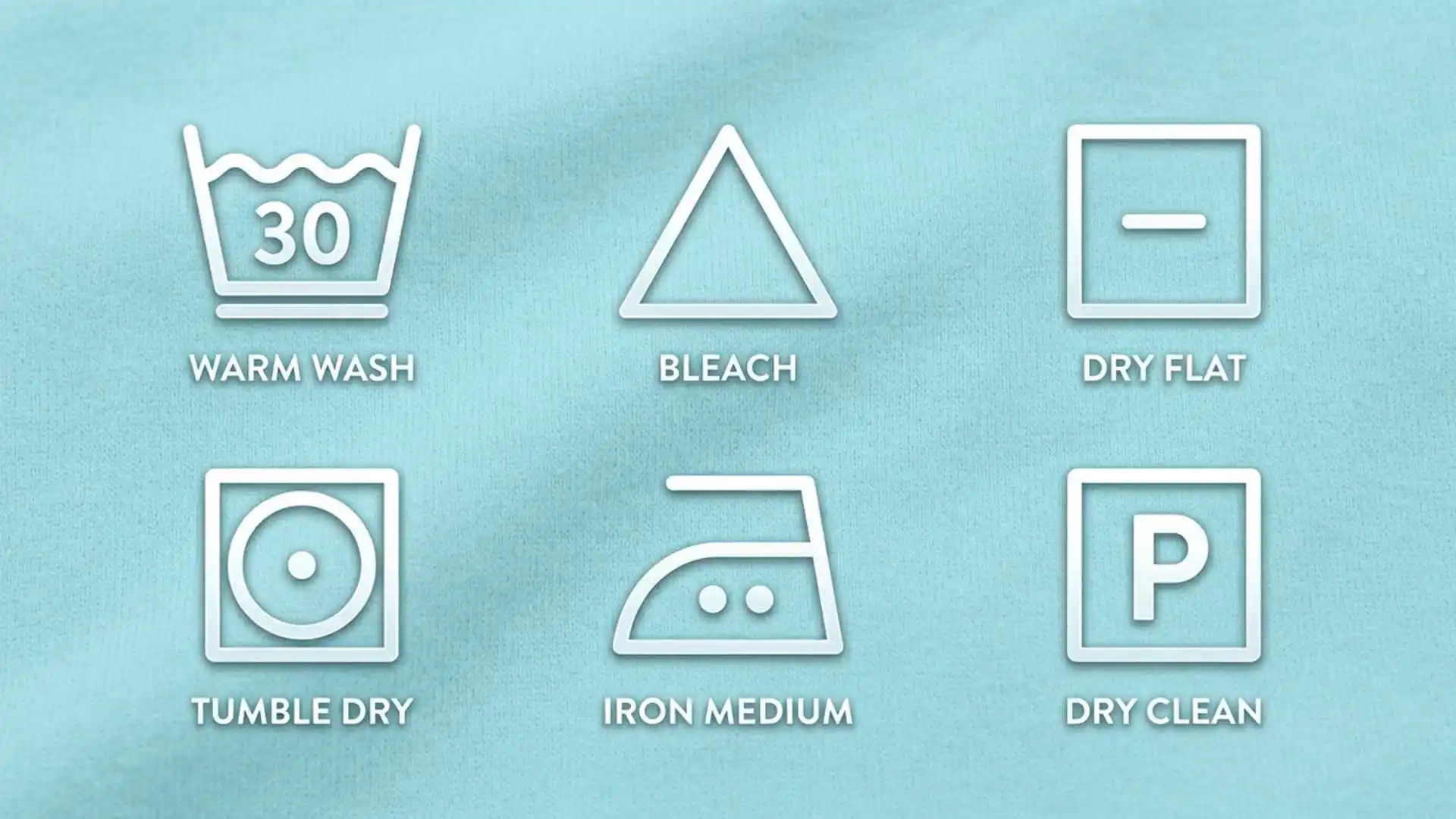
Washing symbols help you care for clothes without guessing which cleaning method works best. You’ll find these small icons on clothing labels, usually printed near the neckline, waistband, or inside seam. Although they look simple, each symbol communicates important information about washing, drying, bleaching, ironing, and professional cleaning.
Understanding washing symbols can prevent common laundry problems. The wrong water temperature may shrink a cotton shirt while excessive dryer heat can damage synthetic fibers. Similarly, using chlorine bleach on unsuitable fabric can cause permanent discoloration.
Fortunately, you don’t need to memorize every symbol at once. Most laundry symbols follow five basic categories: washing, bleaching, drying, ironing, and professional textile care. Once you understand their shapes, dots, lines, and numbers, reading clothing labels becomes much easier.
This guide explains washing symbols and their meanings, including temperature restrictions, handwashing instructions, tumble drying settings, and fabric-specific care. You’ll also learn how to interpret confusing labels and protect your favorite clothes.
What Are Washing Symbols?
Washing symbols, also called laundry symbols or clothing care symbols, are small graphic instructions printed on garment labels. They explain how to clean and maintain clothing without causing avoidable damage.
These symbols belong to an international textile care labeling system. The current international standard is ISO 3758:2023, which establishes symbols for domestic washing, bleaching, drying, ironing, and professional textile care.
Each symbol communicates the most severe treatment a garment can safely tolerate without irreversible damage. Therefore, the instructions generally describe maximum permitted conditions rather than settings you must always use.
For example, a shirt labeled for washing at 40°C can often be washed at 30°C when the cleaning results remain satisfactory.
The five main fabric care symbols include:
| Symbol shape | Category | Purpose |
| Washtub | Washing | Explains washing temperature and mechanical action |
| Triangle | Bleaching | Shows whether bleach is permitted |
| Square | Drying | Explains natural and tumble drying methods |
| Iron | Ironing | Indicates safe ironing temperatures |
| Circle | Professional care | Provides dry-cleaning and wet-cleaning instructions |
Together, these garment care symbols help prevent shrinking, stretching, color fading, and unnecessary fabric damage.
How to Read Washing Symbols on Clothing Labels
Before washing clothes, examine the entire care label rather than focusing on one symbol. Each icon provides a different instruction, and ignoring one restriction can damage an otherwise washable garment.
Most care labels display symbols in this standard order:
- Washing
- Bleaching
- Drying
- Ironing
- Professional textile care
Understanding the markings makes these washing instructions symbols much easier to interpret.
Understand Dots, Lines, Numbers, and Crosses
Small details often change a symbol’s meaning.
- Numbers: Indicate the maximum permitted washing temperature in degrees Celsius.
- Dots: Show permitted heat levels for tumble drying and ironing.
- One bar: Indicates a mild washing or professional cleaning process.
- Two bars: Indicate a very mild treatment with reduced mechanical action.
- Diagonal cross: Prohibits the treatment represented by that symbol.
- Letters: Identify permitted professional cleaning methods or solvents.
Remember that these markings work together. A garment might permit machine washing but require a gentle cycle and low-temperature drying.
Washing Symbols and Their Meanings
The washtub is the most recognizable washing symbol on clothing labels. It tells you whether domestic washing is permitted and provides temperature and washing-action restrictions.
Normal Machine Wash Symbol
A washtub without additional lines underneath indicates a normal domestic washing process.
You can use a suitable washing machine program while following the temperature printed inside the tub. The garment may tolerate ordinary mechanical action and spinning.
However, normal washing doesn’t mean unlimited heat or aggressive detergent. Always check the remaining care instructions.
Washing Temperature Symbols
Numbers inside the washing tub indicate the maximum permitted water temperature.
| Washing symbol | Maximum temperature | General application |
| Tub with 30 | 30°C | Delicate or color-sensitive clothing |
| Tub with 40 | 40°C | Everyday washable garments |
| Tub with 60 | 60°C | Suitable durable textiles |
| Tub with 95 | 95°C | Heat-resistant textiles that permit high-temperature washing |
These temperatures are limits rather than mandatory settings. You can generally choose a lower temperature when it cleans the garment effectively.
For instance, washing everyday colored shirts at 30°C may help reduce unnecessary heat exposure.
Washing Symbol With One Bar
One horizontal bar underneath the washing tub indicates a mild washing process.
Choose a gentle or easy-care washing machine program with reduced mechanical action. This treatment helps protect garments that cannot tolerate aggressive washing.
It may also require a lower spin speed depending on the fabric and appliance.
Washing Symbol With Two Bars
Two horizontal bars indicate a very mild washing process.
This instruction is particularly important for sensitive textiles such as certain wool garments. Choose a specialized wool or delicate cycle when the machine offers one.
Reduce the laundry load because crowded drums can increase friction and mechanical stress.
Hand Washing Symbol
A hand inside the washing tub means hand washing is required or permitted under the specified conditions.
Follow these basic instructions:
- Fill a basin with water at the permitted temperature.
- Dissolve a suitable mild detergent.
- Submerge the garment gently.
- Move the fabric carefully without rubbing or twisting.
- Rinse thoroughly using clean water.
- Press out excess water gently.
- Reshape the garment before drying.
The standard handwash instructions generally specify water temperatures between 30°C and 40°C, depending on the garment. ISO 3758:2023 also includes an ambient-temperature handwashing option.
Do Not Wash Symbol
A crossed-out washing tub means do not wash.
Avoid both machine washing and ordinary handwashing. Some garments contain sensitive materials, construction details, or finishes that cannot tolerate domestic wet treatment.
Check whether the professional-care symbol recommends dry cleaning or another specialist method.
Bleaching Symbols and Their Meanings
Bleaching symbols use a triangle to show which bleaching treatments a garment can tolerate. These laundry bleaching symbols matter because unsuitable bleach can weaken fibers or permanently change fabric colors.
Empty Triangle: Bleaching Allowed
An empty triangle means chlorine and oxygen-based bleaching agents are permitted.
However, you should still follow the bleach manufacturer’s instructions. Check fabric compatibility and avoid using stronger concentrations than recommended.
Triangle With Two Diagonal Lines: Non-Chlorine Bleach Only
Two diagonal lines inside the triangle indicate that oxygen-based or non-chlorine bleach is permitted.
Chlorine bleach is not allowed.
Oxygen bleach is commonly used in color-safe laundry products. Nevertheless, check the garment label and product instructions before treating stains.
Crossed-Out Triangle: Do Not Bleach
A crossed-out triangle means do not bleach.
Avoid chlorine bleach and oxygen-based bleaching products. Instead, use a suitable bleach-free laundry detergent.
This restriction is particularly important for colored garments and fabrics with sensitive dyes.
Drying Symbols and Their Meanings
Drying symbols use a square to explain how to remove moisture from washed clothing. They distinguish natural drying from machine tumble drying.
Line Drying Symbol
A square containing one vertical line indicates line drying.
Hang the garment on a washing line or suitable hanger. Support heavier items properly to reduce stretching while they remain wet.
Drip Drying Symbol
A square containing three vertical lines indicates drip line drying.
Hang the garment while it remains wet rather than extracting excess water through a conventional spin cycle. This method suits certain delicate textiles.
Flat Drying Symbol
A square containing one horizontal line indicates flat drying.
Place the garment horizontally on a clean drying rack or suitable surface. This method helps prevent heavy wet fabrics from stretching under their own weight.
Wool sweaters and delicate knitwear often benefit from flat drying when their care labels specify it.
Drip Flat Drying Symbol
A square containing three horizontal lines indicates drip flat drying.
Lay the garment flat while it remains wet. Avoid twisting or squeezing the material to remove water.
Drying in the Shade Symbol
A diagonal line added to a natural drying symbol indicates drying in the shade.
Keep garments away from direct sunlight while they dry. This can help protect color-sensitive textiles from unnecessary fading.
How to Prevent Clothes From Shrinking During Drying
Incorrect drying methods can change garment size and shape.
Follow these practical precautions:
- Avoid excessive dryer heat.
- Lay heavy knitwear flat when instructed.
- Reshape garments while damp.
- Use suitable drying racks.
- Follow the label’s line-drying restrictions.
- Avoid stretching delicate clothing while handling it.
Tumble Drying Symbols and Their Meanings
A circle inside a square represents tumble drying. The dots inside the circle indicate the permitted temperature level.
| Tumble drying symbol | Meaning |
| Circle inside square | Tumble drying permitted |
| One dot inside circle | Low heat |
| Two dots inside circle | Medium heat |
| Three dots inside circle | High heat |
| Crossed-out circle inside square | Do not tumble dry |
Tumble Dry Low Heat
One dot indicates low-temperature tumble drying.
Choose the low-heat setting on your dryer. This option helps reduce unnecessary heat exposure for suitable garments.
Tumble Dry Medium Heat
Two dots indicate medium-temperature tumble drying.
Use a medium-heat setting only when the garment label permits it. Avoid assuming that every cotton or blended garment can tolerate this treatment.
Tumble Dry High Heat
Three dots indicate high-temperature tumble drying.
This treatment is intended for textiles that tolerate higher dryer temperatures. Follow the label rather than relying solely on fiber content.
Do Not Tumble Dry
A crossed-out tumble dryer symbol means the garment must not go into a tumble dryer.
Use the permitted natural drying method instead. Excessive heat and mechanical movement may cause shrinkage, deformation, or damage to sensitive fabric finishes.
Ironing Symbols and Their Meanings
The iron-shaped symbol communicates safe ironing temperatures. One, two, or three dots indicate the maximum permitted soleplate temperature.
| Ironing symbol | Maximum temperature | Heat setting |
| One dot | 110°C | Low |
| Two dots | 150°C | Medium |
| Three dots | 200°C | High |
| Crossed-out iron | No ironing | Do not iron |
Iron With One Dot: Low Heat
One dot indicates a maximum soleplate temperature of 110°C.
This setting is appropriate for many heat-sensitive synthetic fabrics. Steam use should be avoided under the standard one-dot ironing restriction.
Iron With Two Dots: Medium Heat
Two dots indicate a maximum soleplate temperature of 150°C.
This setting can suit certain wool, silk, polyester, and viscose garments. Use a pressing cloth when appropriate.
Iron With Three Dots: High Heat
Three dots indicate a maximum soleplate temperature of 200°C.
Certain cotton and linen garments tolerate this higher temperature. However, always follow the actual garment label.
Crossed-Out Iron: Do Not Iron
A crossed-out iron means ironing is prohibited.
Direct heat can damage delicate fibers, decorative finishes, elastic materials, and synthetic fabrics.
Iron With Crossed-Out Steam
An iron with crossed-out steam lines means do not use steam.
You may use dry ironing if the remaining symbol permits it. Never assume that a garment prohibits all ironing simply because it cannot tolerate steam.
Dry Cleaning Symbols and Their Meanings
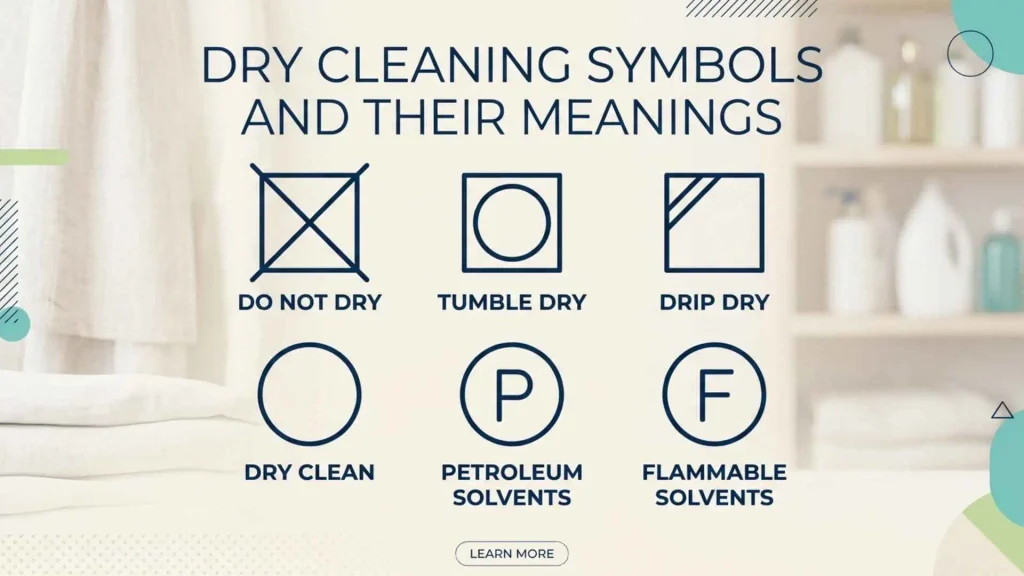
A circle represents professional textile care. Additional letters and lines specify the permitted cleaning process.
These instructions help professional cleaners select suitable solvents and treatment conditions.
Circle With the Letter P
The letter P identifies permitted professional dry-cleaning solvent categories and processes.
The cleaner must follow the applicable professional-care requirements rather than choosing an ordinary household washing cycle.
Circle With the Letter F
The letter F indicates professional dry cleaning using specified hydrocarbon solvent categories.
This instruction helps cleaners avoid unsuitable solvent treatments.
Circle With the Letter W
The letter W indicates professional wet cleaning.
Despite using water, professional wet cleaning differs from ordinary household washing. Specialists use controlled equipment, detergents, and treatment methods to protect sensitive textiles.
Circle With One Bar
One bar underneath the professional-care circle indicates a mild cleaning process.
Circle With Two Bars
Two bars indicate a very mild professional cleaning process.
These restrictions may control mechanical action, moisture levels, or drying conditions.
Crossed-Out Circle
A crossed-out circle means the represented professional cleaning treatment is prohibited.
Check the other care instructions before choosing an alternative cleaning method.
Washing Machine Symbols vs. Clothing Care Symbols
Washing machine symbols and clothing care symbols serve different purposes.
Clothing labels explain how to treat a garment. Washing machine control-panel icons explain how to operate an appliance.
Common washing machine programs include:
- Cotton: Designed for suitable cotton laundry.
- Synthetics: Intended for appropriate synthetic garments.
- Wool: Provides a specialized gentle treatment.
- Delicate: Reduces mechanical action for sensitive clothing.
- Quick wash: Provides a shorter cleaning cycle for suitable lightly soiled loads.
- Rinse and spin: Rinses clothing and extracts water.
- Drain and spin: Removes water and spins the laundry.
- Eco wash: Uses an energy-conscious washing program.
- Prewash: Adds an initial cleaning stage for suitable heavily soiled loads.
The exact symbols and available programs vary between manufacturers.
Important: A washing machine’s wool program does not automatically make every wool garment machine washable. Check the clothing label first.
Washing Symbols for Different Fabric Types
Different fabric fibres respond differently to water, heat, friction, and detergents. Understanding these differences helps you make better laundry decisions.
Cotton Washing Instructions
Cotton is a natural fiber commonly used in shirts, towels, bedsheets, and everyday clothing.
Follow the care label’s temperature restrictions. Separate dark and light garments to reduce color transfer.
Cotton can shrink under unsuitable washing and drying conditions. Avoid excessive heat unless the label specifically permits it.
Wool and Woollen Garment Care
Wool fibers can felt, shrink, or lose their shape under unsuitable washing conditions.
Choose handwashing or a very mild wool cycle when permitted. Use a suitable wool detergent and avoid aggressive spinning.
Flat drying helps heavy wool garments retain their shape.
Silk Washing Instructions
Silk is a delicate natural protein fiber that requires careful handling.
Follow the label’s washing restrictions and avoid aggressive rubbing. Use a suitable detergent and keep the garment away from excessive heat.
If professional cleaning is required, follow the circle symbol rather than experimenting with household washing.
Cashmere Care Instructions
Cashmere requires gentle handling because its soft fibers can lose their shape through rough washing.
Use a suitable wool detergent when washing is permitted. Avoid twisting wet garments and reshape them before flat drying.
Linen Washing Instructions
Linen is a natural plant-based fiber known for its strength and breathability.
Follow the specified washing temperature and ironing restrictions. Linen wrinkles easily, so suitable ironing while slightly damp can help restore its appearance when permitted.
Synthetic Fabric Care
Synthetic fibers include polyester, nylon, and acrylic.
These materials often require attention to heat exposure. Excessive dryer temperatures and unsuitable ironing settings may damage or distort them.
Use the washing and drying restrictions printed on the garment label.
Fabric Blends and Mixed-Fiber Clothing
Blended garments combine two or more fibers, such as cotton and polyester.
Their care requirements depend on the complete garment construction, including dyes, trims, stitching, and finishes. Never assume that the strongest fiber determines the safest washing method.
Washing Temperature Guide: What Temperature Should You Wash Clothes At?
Choosing the correct washing temperature can improve cleaning while reducing unnecessary heat exposure.
| Temperature | Common applications | Important consideration |
| 30°C | Everyday lightly soiled clothes | Suitable for many colored garments |
| 40°C | Regular household laundry | Check fabric and color restrictions |
| 60°C | Suitable durable textiles | Use only when the label permits |
| 95°C | Specific heat-resistant textiles | Not appropriate for most everyday clothing |
Washing Clothes at 30°C
A 30°C wash can suit many everyday garments, especially lightly soiled colored clothing.
Modern detergents are available for lower-temperature washing. However, heavily soiled laundry may need pretreatment or a different cleaning approach.
Washing Clothes at 40°C
A 40°C wash is a common option for everyday garments that permit this temperature.
It can help remove ordinary household dirt while remaining suitable for many washable fabrics.
Washing Clothes at 60°C
A 60°C wash is appropriate only for garments whose labels permit higher-temperature treatment.
Do not use it automatically for every towel, shirt, or bedsheet. Check the material and manufacturer’s instructions.
Washing Clothes at 95°C
A 95°C wash is a high-temperature treatment reserved for suitable heat-resistant textiles.
Most modern everyday garments cannot tolerate this temperature. Always check the care label before selecting it.
Can You Wash Clothes at 30°C Instead of 40°C?
Yes, provided the lower temperature delivers satisfactory cleaning.
A lower-temperature cycle can reduce the energy required to heat water. However, cleaning results depend on detergent formulation, soil level, cycle duration, and washing machine performance.
Common Laundry Mistakes That Damage Clothes
Even a good washing machine cannot protect clothing from incorrect care decisions.
Avoid these common mistakes:
- Ignoring temperature restrictions: Excessive heat can shrink or damage certain fabrics.
- Choosing the wrong washing cycle: Aggressive mechanical action can harm delicate garments.
- Using unsuitable bleach: Chlorine bleach can damage fabrics that permit oxygen bleach only.
- Tumble drying restricted garments: Excessive heat may distort fibers and garment shapes.
- Ironing at high temperatures: Delicate materials can develop permanent heat damage.
- Wringing delicate clothing: Twisting can stretch or deform sensitive fibers.
- Ignoring drying instructions: Heavy knitwear may stretch when hung while wet.
- Mixing unsuitable garments: Different colors and fabric requirements can create avoidable problems.
Reading the complete care label before starting a laundry load prevents many of these problems.
How to Wash Clothes Correctly Using Care Label Symbols
A simple laundry routine can protect clothing and reduce unnecessary washing mistakes.
Follow these steps:
Check the garment care label. Identify the washing, bleaching, drying, ironing, and professional-care instructions.
Separate clothes by color and fabric. Keep suitable light, dark, and delicate garments apart.
Choose the permitted washing temperature. Never exceed the number shown inside the washing tub.
Select the correct washing machine cycle. Use normal, mild, or very mild mechanical action as indicated.
Add suitable laundry detergent. Choose a product compatible with the fabric and washing conditions.
Follow the bleaching and drying symbols. Avoid prohibited treatments and excessive heat.
Finish with appropriate garment care. Iron only when permitted or arrange professional cleaning when necessary.
For example, consider a wool sweater with a handwash symbol, crossed-out triangle, flat-drying symbol, and low-temperature iron symbol.
That combination tells you to wash gently, avoid bleach, dry the garment flat, and use low ironing heat if ironing is permitted.
Frequently Asked Questions About Washing Symbols
What Do Washing Symbols Mean?
Washing symbols explain how to clean and maintain clothing safely. They cover washing, bleaching, drying, ironing, and professional textile care.
What Are the Five Main Laundry Symbols?
The five main symbols are the washtub, triangle, square, iron, and circle. They represent washing, bleaching, drying, ironing, and professional textile care.
What Does a Triangle Mean on Washing Labels?
A triangle represents bleaching instructions. An empty triangle permits bleaching, two diagonal lines allow oxygen bleach only, and a crossed-out triangle prohibits bleaching.
What Does a Circle Mean on Clothes Labels?
A circle represents professional textile care. Letters and additional markings identify permitted cleaning processes and restrictions.
What Does a Square Mean in Laundry Symbols?
A square represents drying instructions. Additional markings indicate line drying, drip drying, flat drying, shade drying, or tumble drying.
What Do the Bars Under a Washing Tub Mean?
One bar indicates a mild washing process with reduced mechanical action. Two bars indicate a very mild washing process, commonly used for sensitive garments.
What Does a Hand Inside a Washing Tub Mean?
A hand inside the tub indicates handwashing. Follow the specified water temperature and handle the garment gently without rubbing or twisting.
What Does a Crossed-Out Washing Symbol Mean?
It means domestic washing is prohibited. Check the remaining care instructions to identify the permitted professional cleaning method.
What Does One Dot on an Iron Symbol Mean?
One dot indicates a maximum ironing soleplate temperature of 110°C. It represents the lowest standard ironing heat level.
What Do Two Dots and Three Dots on an Iron Mean?
Two dots indicate a maximum temperature of 150°C. Three dots indicate a maximum temperature of 200°C.
What Does a Circle Inside a Square Mean?
A circle inside a square means tumble drying is permitted. The dots inside the circle indicate the permitted heat level.
What Clothes Should Not Be Tumble Dried?
Clothes carrying a crossed-out tumble dryer symbol should not be tumble dried. Some delicate fabrics, heat-sensitive materials, and garments with special finishes require natural drying.
Can You Wash Clothes at 30°C Instead of 40°C?
Yes, when a lower temperature provides adequate cleaning. Washing at 30°C can reduce water-heating energy consumption and may help protect color-sensitive garments.
How Do You Prevent Clothes From Shrinking?
Follow washing and drying temperature restrictions. Avoid excessive dryer heat, use suitable washing cycles, and lay heavy knitwear flat when instructed.
Final Thoughts on Understanding Washing Symbols
Understanding washing symbols and their meanings makes everyday laundry easier and helps protect your wardrobe. Each symbol provides a practical instruction about cleaning, heat exposure, drying methods, or professional textile care.
Start by learning the five main categories: washing, bleaching, drying, ironing, and professional cleaning. Then pay attention to numbers, dots, bars, and crossed-out markings.
Most importantly, always read the complete clothing care label before washing a garment. Choosing the correct temperature and washing method can prevent shrinking, fading, stretching, and unnecessary fabric damage.
A few seconds spent checking laundry symbols can save your favorite clothes from an expensive laundry mistake.

I am Lisa Reynolds, a linguist fascinated by the ever-changing world of slang. I enjoy researching how slang reflects trends, technology, and social connections. I wrote “Text Talk: Understanding Digital Slang” and “From Street to Screen: Slang in Media”, exploring the influence of digital communication on language. I love sharing my discoveries in a way that feels like a conversation with friends, so you feel the culture and humor behind every phrase.
 John Carter