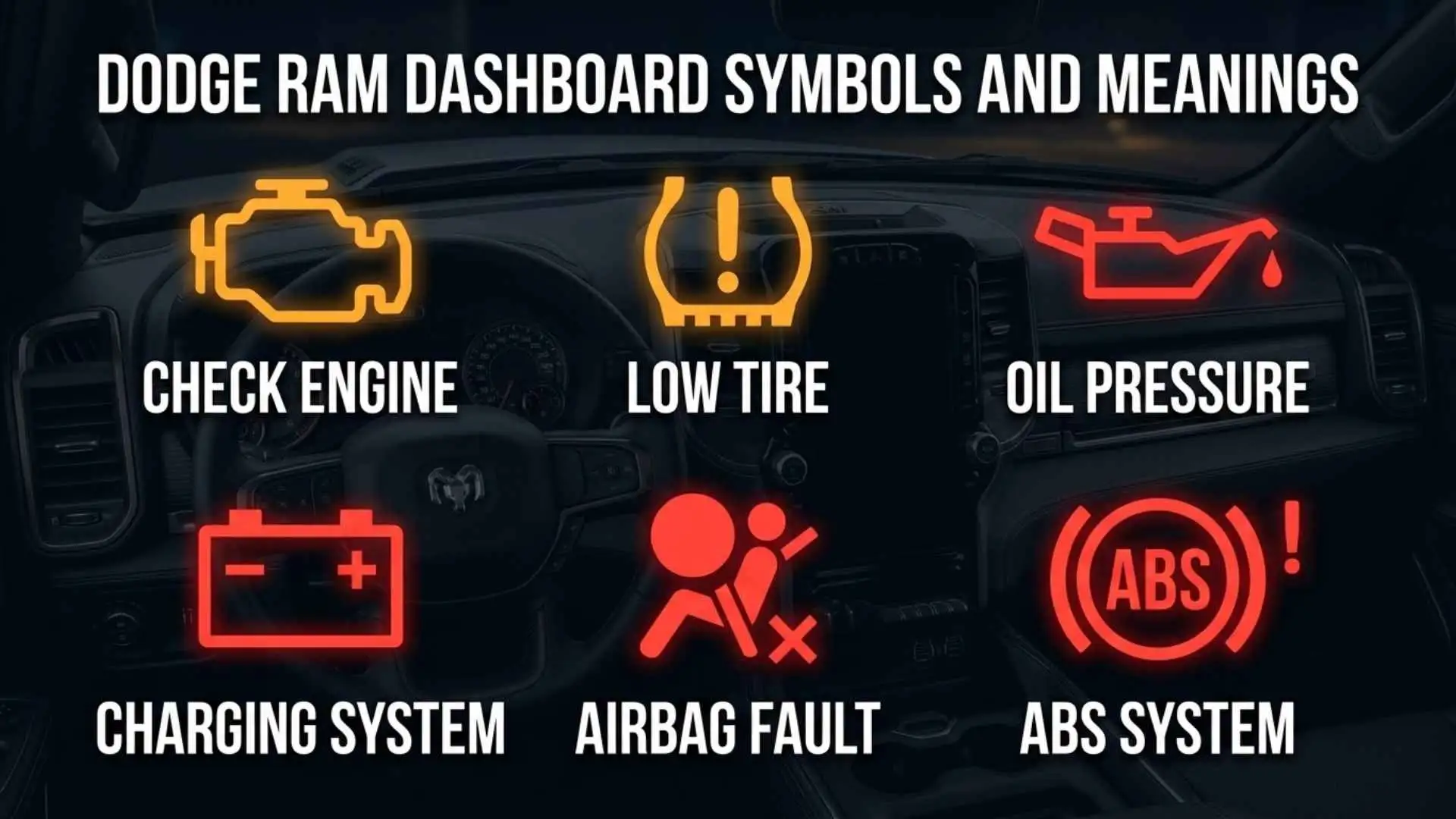
Dodge Ram dashboard symbols and meanings help drivers understand their truck’s condition, identify potential mechanical problems, and respond to important safety warnings. Whether you drive a Ram 1500, Ram 2500, or Ram 3500, knowing what the symbols on your dashboard mean can help you avoid unnecessary repairs and make safer driving decisions.
Dashboard warning lights can indicate anything from low tire pressure to engine overheating, brake system problems, or an issue with the electronic throttle control system. Other symbols simply tell you that a feature, such as cruise control or four-wheel drive, is active.
This guide explains the most common Dodge Ram dashboard warning lights, what causes them to appear, and what you should do when they illuminate. It also covers warning light colors, diesel-specific indicators, towing-related alerts, and differences between Ram models.
Dodge Ram Dashboard Symbols and Meanings at a Glance
Use this quick-reference table to identify common warning lights and understand their general meaning.
| Dashboard symbol or indicator | Color commonly used | Meaning | Recommended action |
| Check engine | Amber | Engine or emissions system fault | Arrange diagnostic testing |
| Oil pressure | Red | Engine oil pressure may be too low | Stop safely and switch off the engine |
| Engine temperature | Red | Engine overheating | Stop safely and follow the manual |
| Battery | Red | Charging system malfunction | Arrange prompt inspection |
| BRAKE or brake warning | Red | Parking brake engaged or brake system warning | Check the parking brake; stop if the warning persists |
| ABS | Amber | Anti-lock braking system fault | Have the system inspected |
| Tire pressure (TPMS) | Amber | Low tire pressure or TPMS fault | Check tire pressure and tire condition |
| Electronic Throttle Control | Amber or red, depending on model | Possible throttle control malfunction | Follow the dashboard instructions |
| Airbag | Red or amber, depending on model | Restraint system fault | Arrange prompt inspection |
| Low fuel | Amber | Fuel level is low | Refuel soon |
| Coolant temperature | Red | Coolant temperature is excessive | Stop safely |
| Transmission temperature | Red or another designated warning | Transmission overheating | Follow the manual’s instructions |
| Stability control | Amber | System activation, deactivation, or fault | Check whether it flashes or remains on |
| 4WD indicator | Varies | Four-wheel-drive mode or system status | Check the selected drivetrain mode |
| Glow plug | Amber | Diesel engine preheating | Follow the diesel starting procedure |
| Cruise control | Green or another status color | Cruise control status | Confirm whether it is active |
| High-beam indicator | Blue | High-beam headlights are on | Switch to low beams when appropriate |
These are general descriptions, not a substitute for the symbol glossary in the applicable Ram owner’s manual. Some indicators may not be available on every vehicle.
Understanding Dodge Ram Dashboard Warning Light Colors
Dashboard light colors provide a useful first indication of urgency. However, the meaning of the symbol and any accompanying message matter more than color alone.
Red Dashboard Warning Lights
Red lights commonly identify serious warnings or conditions requiring immediate attention. Examples include low engine oil pressure, engine overheating, and certain brake system faults.
When a red warning indicates a critical problem, safely pull over and follow the instructions in your owner’s manual. Continuing to drive may damage the engine or compromise vehicle safety.
Yellow or Amber Dashboard Warning Lights
Amber warning lights commonly indicate a malfunction, a maintenance concern, or a system that requires attention. Examples include the check engine light, ABS warning, and tire pressure indicator.
Some amber warnings allow cautious driving to a repair facility, while others require you to stop. A flashing check engine light, especially when accompanied by rough running, needs urgent attention.
Green and Blue Dashboard Indicators
Green and blue lights usually indicate that a vehicle feature is operating or that a particular function is selected. Examples include turn signals, cruise control status, and high-beam headlights.
These indicators are generally informational, but you should still check the owner’s manual if an indicator appears unexpectedly or accompanies another warning.
Common Dodge Ram Dashboard Warning Lights and Their Meanings
1. Check Engine Light
The check engine light usually looks like an engine outline. It indicates that the engine management or emissions control system has detected a problem.
Possible causes include a faulty oxygen sensor, an ignition misfire, a fuel system issue, an emissions component malfunction, or a loose fuel cap on applicable models.
What should you do?
If the light stays on steadily and the truck operates normally, arrange a diagnostic scan promptly. If it flashes, reduce engine load and stop safely if the engine runs roughly or the problem continues. A flashing light can indicate a misfire that may damage the catalytic converter.
A diagnostic trouble code helps identify the system involved but does not always confirm which component has failed.
2. Engine Oil Pressure Warning Light
The oil pressure symbol commonly resembles an oil can with a dripping drop. It warns that engine oil pressure may be too low.
Possible causes include insufficient oil, an oil leak, a failing oil pump, blocked oil passages, or internal engine wear.
What should you do?
Safely stop and switch off the engine as soon as possible. Once the vehicle is parked safely and the engine has cooled sufficiently, check the oil level according to the owner’s manual.
If the warning remains on or returns, do not continue driving until the problem has been diagnosed. Low oil pressure can cause severe engine damage even when the oil level appears normal.
3. Engine Coolant Temperature Warning Light
This symbol commonly resembles a thermometer over wavy lines. It indicates that the engine coolant temperature is too high.
Potential causes include low coolant, a coolant leak, a faulty thermostat, a malfunctioning radiator fan, or a water pump problem.
What should you do?
Pull over safely and follow the overheating instructions in your owner’s manual. If the temperature does not return to normal, switch off the engine and seek assistance.
Never remove a hot radiator cap or open a pressurized cooling system while the engine is hot. Doing so can cause serious burns.
4. Battery Warning Light
The battery warning light looks like a battery with positive and negative signs. It generally indicates a problem with the charging system rather than simply a low battery charge.
Possible causes include alternator failure, a damaged drive belt, corroded terminals, faulty wiring, or a failing battery.
If the light remains on while the engine is running, arrange prompt inspection. Electrical systems may stop functioning properly if the battery is no longer being charged.
5. Brake Warning Light
The brake warning symbol may display the word “BRAKE” or an exclamation mark inside a circle. It may appear when the parking brake is engaged or when a brake system problem is detected.
Check that the parking brake is fully released. If the warning remains on, the brake fluid may be low or the system may require inspection.
If the brake pedal feels soft, braking performance decreases, or another brake warning appears simultaneously, stop safely and seek assistance. Do not continue driving if braking safety is uncertain.
6. ABS Warning Light
The Anti-lock Braking System warning light commonly displays the letters “ABS” inside a circle.
It can indicate a faulty wheel speed sensor, damaged wiring, a control module problem, or another ABS malfunction.
If the ABS light stays illuminated, have the system checked promptly. Conventional braking may remain available, but anti-lock functionality may be impaired.
If the red brake warning light also appears, stop safely and consult the owner’s manual before continuing.
7. Tire Pressure Monitoring System Light
The tire pressure warning symbol resembles a horseshoe-shaped tire with an exclamation mark inside it.
It commonly indicates that one or more tires have low pressure. A flashing indicator followed by a steady light may indicate a TPMS fault on some models.
Check all tires with a reliable pressure gauge and inflate them to the recommended cold pressure on the vehicle’s tire information label. Inspect for punctures, visible damage, and leaks.
Do not drive on a severely underinflated or damaged tire. If pressure is correct but the warning remains, the sensor or monitoring system may need inspection.
8. Electronic Throttle Control Warning Light
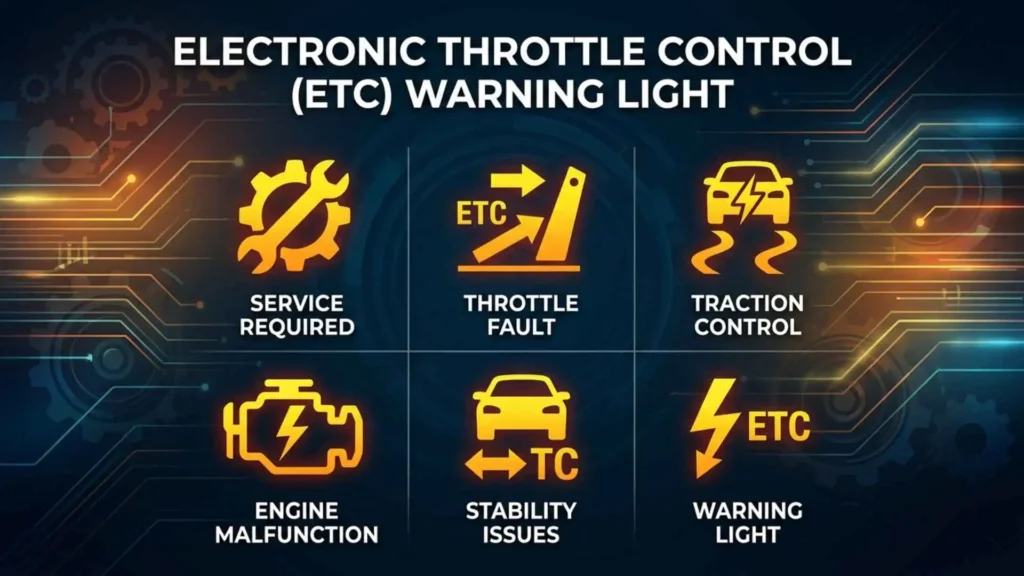
The Electronic Throttle Control symbol may resemble a lightning bolt between curved brackets.
It indicates a possible problem with the electronic system that controls engine throttle operation. Symptoms can include reduced power, poor acceleration, rough idling, or difficulty maintaining engine speed.
Follow any dashboard messages and consult the owner’s manual. If the truck loses significant power or becomes difficult to control, stop safely and arrange professional diagnosis.
9. Airbag Warning Light
The airbag symbol typically shows a seated person with a circle in front of them. It indicates a possible fault in the supplemental restraint system.
The problem may affect airbags or seat belt pretensioners, which help protect occupants during a collision.
If the light remains on after startup or illuminates while driving, arrange an inspection promptly. Do not attempt repairs on airbag wiring or restraint components without appropriate training and manufacturer-approved procedures.
10. Transmission Temperature Warning
This warning indicates that the transmission fluid temperature has become too high. It can occur during heavy towing, sustained heavy loads, or when a transmission system problem develops.
Follow the specific instructions displayed by the vehicle and in the owner’s manual. Stop safely when directed and allow the transmission to cool as recommended.
If the warning persists or returns, have the truck inspected before continuing heavy-duty operation. Ignoring excessive transmission temperatures can cause serious damage.
11. Electronic Stability Control Light
The stability control symbol commonly shows a vehicle with wavy skid marks beneath it.
A flashing indicator often means the system is actively helping maintain traction. A light that stays on may indicate that stability control has been switched off or a system fault has occurred.
If the light flashes on a slippery surface, reduce speed and avoid sudden steering or braking. If it remains illuminated unexpectedly, consult the manual and arrange inspection if necessary.
12. Four-Wheel Drive Indicator
Depending on the Ram model, four-wheel-drive indicators may display “4WD,” “4H,” “4L,” or another drivetrain-related symbol.
These indicators may identify the selected mode, show that a shift is in progress, or signal a system fault. A flashing indicator that does not stop may mean the shift has not completed successfully.
Check the selected transfer-case mode and follow the proper shifting procedure for your vehicle. The meaning of a 4WD indicator depends on the truck’s drivetrain configuration.
13. Low Fuel Warning Light
The low fuel indicator usually resembles a fuel pump. It signals that the remaining fuel has reached a low threshold.
Refuel as soon as practical. Do not depend on a fixed remaining driving range because fuel consumption changes with speed, traffic, towing, and terrain.
14. Door Open and Hood Open Warning Lights
These indicators alert you that a door, hood, or, on applicable models, tailgate may not be properly secured.
Stop safely and check the relevant panel. Make sure all doors are closed and the hood is securely latched before driving.
15. Glow Plug Warning Light on Diesel Ram Trucks
Applicable diesel Ram trucks use a glow plug indicator, often shown as a coil or heating element. It signals that the engine’s preheating system is warming the combustion chambers before starting.
Follow the starting procedure in the diesel owner’s manual. If the light flashes or remains illuminated unexpectedly, arrange diagnosis as recommended for your model.
16. Air Suspension Warning
Ram models equipped with air suspension may display a suspension warning symbol or a message relating to ride height.
Possible causes include a height sensor fault, air leak, compressor problem, or electrical malfunction.
Read the dashboard message and consult the manual. If the truck sits unusually low or becomes unstable, arrange prompt inspection.
17. Trailer Brake Warning
A trailer brake warning may appear on Ram trucks equipped with a trailer brake controller when the system detects a fault or connection problem.
Because trailer braking is important for safe towing, stop in a safe location and check the relevant connections and messages according to the owner’s manual.
Do not continue towing if the trailer braking system is not operating as required.
Dodge Ram Dashboard Symbols by Model
Dashboard symbols vary across Ram trucks. The model name alone is not enough to determine the exact meaning of every indicator.
Ram 1500 Dashboard Symbols
The Ram 1500 may have indicators for engine management, tire pressure, ABS, electronic stability control, four-wheel drive, and driver assistance features, depending on the year and equipment.
Some versions also include adaptive cruise control, Forward Collision Warning, LaneSense, and other safety-related alerts.
Ram 2500 Dashboard Symbols
Ram 2500 models can share many indicators with the Ram 1500 but may also include equipment-specific warnings for heavy-duty operation, diesel engines, towing, and drivetrain systems.
The exact symbol set depends on the engine, trim, model year, and optional features.
Ram 3500 Dashboard Symbols
Ram 3500 models may include warnings related to diesel engine operation, transmission temperature, trailer brake systems, and other heavy-duty equipment where fitted.
Drivers should pay particular attention to warnings that appear while towing or carrying heavy loads. Always follow the vehicle-specific instructions.
What to Do When a Dodge Ram Dashboard Warning Light Appears
Follow these steps whenever an unfamiliar warning light appears.
Step 1: Identify the Symbol and Message
Note the shape, color, and whether the light is steady or flashing. Read any message shown on the instrument cluster.
Step 2: Determine Whether You Need to Stop
Warnings involving oil pressure, severe overheating, or impaired braking may require you to stop immediately when it is safe to do so. A flashing check engine light also needs urgent attention.
Step 3: Check the Owner’s Manual
Use the manual for the exact model year and configuration. It explains the warning and any required procedure more reliably than a generic symbol list.
Step 4: Perform Only Safe Basic Checks
You may be able to check tire pressure, close a door, release the parking brake, or refill washer fluid. Avoid working around moving engine parts or opening a hot cooling system.
Step 5: Arrange Professional Diagnosis
A qualified technician can scan the relevant vehicle systems, review fault codes, and test components. Do not assume that replacing the first component suggested by a code will fix the problem.
Why Do Dodge Ram Dashboard Warning Lights Stay On?
A warning light may remain illuminated because a fault is still present, a system has been disabled, or the vehicle requires maintenance.
Common reasons include:
- Sensor faults: A damaged sensor or connection can trigger an alert.
- Low fluid levels: Oil, coolant, or brake fluid may be below the required level.
- Electrical problems: Battery, alternator, wiring, or connector issues may affect multiple systems.
- Mechanical wear: Tires, brakes, and drivetrain components may require service.
- System malfunctions: Electronic throttle control, ABS, or other control modules may detect a problem.
Do not disconnect the battery or erase diagnostic codes simply to turn off a warning. Identify and address the underlying issue first.
Frequently Asked Questions
What is the most serious Dodge Ram dashboard warning light?
The oil pressure warning, severe engine temperature warning, and certain brake warnings can indicate immediate risks. Stop safely when required and follow the owner’s manual. Continuing to drive may damage the engine or compromise safety.
Can I drive my Dodge Ram with the check engine light on?
A steady check engine light with normal vehicle behavior may allow cautious driving to a repair facility, depending on the circumstances. A flashing light, rough running, overheating, or significant power loss requires more urgent action.
What does a red lightning bolt mean on a Dodge Ram?
A lightning bolt between curved brackets commonly indicates an Electronic Throttle Control warning. If it appears while driving, follow the dashboard instructions. Reduced power or rough running may indicate that the truck needs diagnosis.
What does the horseshoe-shaped symbol mean?
A horseshoe-shaped symbol with an exclamation mark usually indicates low tire pressure or a tire pressure monitoring system issue. Check the tires and recommended pressures before continuing.
Why are multiple warning lights appearing at once?
Multiple warnings can appear when one underlying problem affects several systems. Low system voltage, a charging fault, wiring problems, or a control system malfunction may trigger several alerts. A diagnostic scan can help identify the cause.
How do I reset a Dodge Ram dashboard warning light?
Some maintenance reminders can be reset using the approved vehicle menu or procedure. Fault warnings generally require the underlying issue to be corrected first. Never reset a safety warning without investigating why it appeared.
Do all Dodge Ram trucks use the same dashboard symbols?
No. Symbols vary by model year, engine, trim, drivetrain, and optional equipment. Always use the owner’s manual that matches your particular truck.
Conclusion
Understanding Dodge Ram dashboard symbols and meanings helps you identify potential faults, respond to warnings, and maintain your truck safely. From check engine and oil pressure lights to ABS, tire pressure, four-wheel drive, diesel, and trailer brake indicators, each symbol communicates information about a vehicle system or operating condition.
Pay particular attention to critical warnings, flashing indicators, and alerts accompanied by overheating, unusual noises, loss of power, or reduced braking performance. Stop safely when necessary and seek professional assistance rather than risking further damage.
For the most reliable answer, match the symbol to the owner’s manual for your exact Ram model year and configuration. A clear understanding of dashboard warnings can help you make informed decisions and keep your truck operating reliably.

I am John Carter, a lifelong enthusiast of language and modern slang. I explore how words evolve and shape culture, and I enjoy uncovering the stories behind everyday expressions. I have authored “Slang and Society: The Language of Youth” and “Modern Words, Modern Worlds”, where I dive into how informal language impacts communication and identity. My goal is to make language accessible, fun, and insightful for everyone who loves words as much as I do.
 Lisa Reynolds
 Marcus Lee