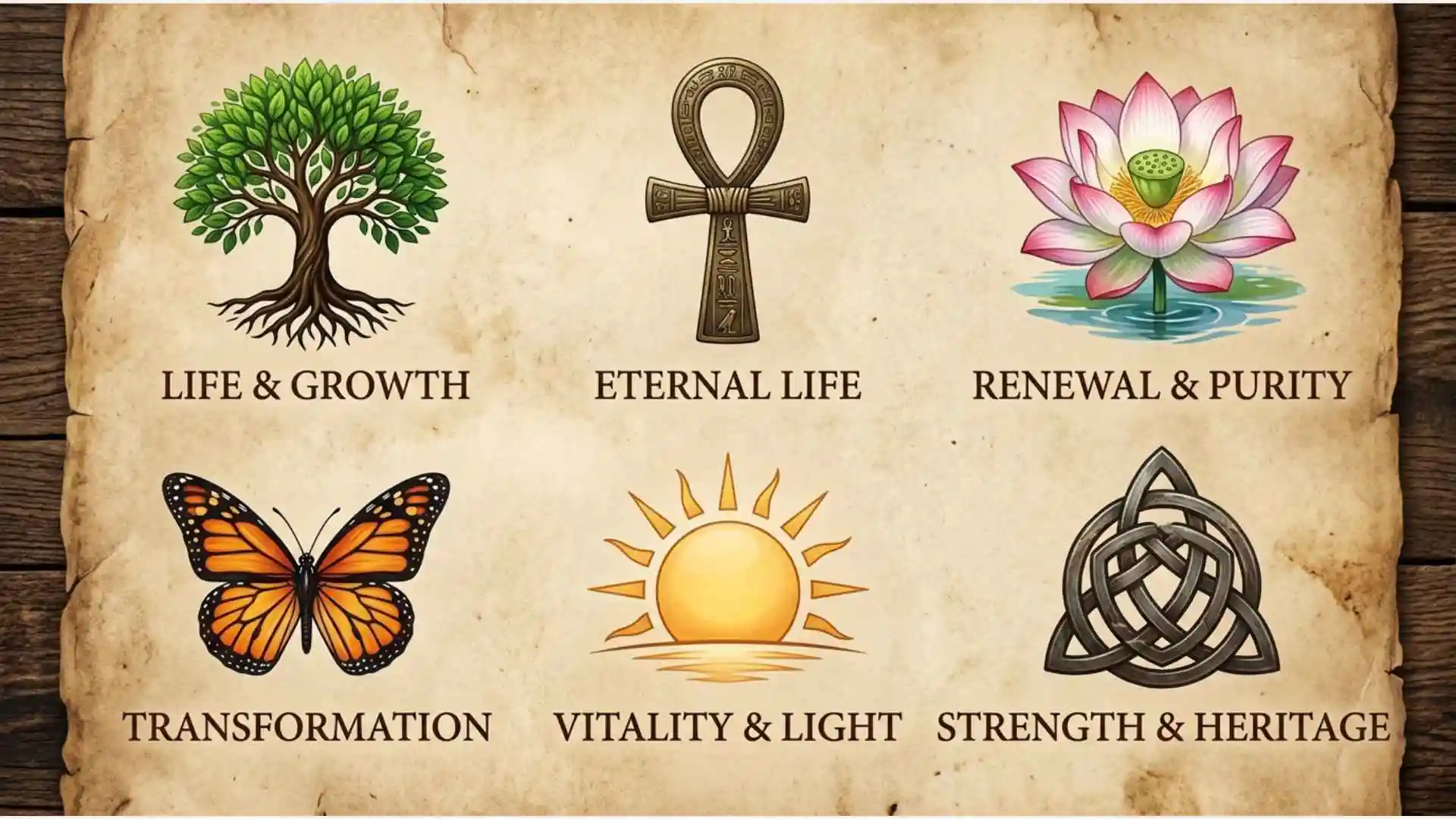
National symbols are important representations of a country’s identity, history, culture, traditions, and natural heritage. They help people recognize a nation and understand the values and traditions associated with it. National symbols can include a flag, anthem, emblem, animal, bird, flower, tree, motto, monument, or other culturally significant objects.
Every country has its own collection of symbols. Some are officially adopted by governments, while others become widely recognized because of their historical or cultural importance. These symbols can be seen during national celebrations, official ceremonies, international sporting events, educational programs, and cultural activities.
Understanding national symbols provides an easy way to learn about different countries and the things that make their identities unique.
What Are National Symbols?
National symbols are objects, images, sounds, animals, plants, places, or traditions that represent a particular nation. They are connected to the country’s history, culture, geography, political development, or natural environment.
A national flag, for example, is one of the most recognizable symbols of a country. A national anthem can express feelings of patriotism and national unity, while a national animal or flower can represent the country’s natural heritage.
Not every national symbol has the same legal status. Some are formally selected by a government or established through legislation. Others are recognized through long-standing public and cultural traditions.
List of Common National Symbols
Countries can have different official symbols, but several types are common around the world.
| National Symbol | What It Represents |
| National Flag | Identity, unity, history, or national values |
| National Anthem | Patriotism, unity, history, and national identity |
| National Emblem | State identity, heritage, and official authority |
| National Animal | Wildlife, strength, heritage, or cultural importance |
| National Bird | Native wildlife and natural heritage |
| National Flower | Beauty, culture, tradition, or national heritage |
| National Tree | Forests, nature, environment, or cultural traditions |
| National Motto | A country’s ideals, values, or aspirations |
| National Monument | Important historical or cultural heritage |
| National Sport | Sporting traditions and cultural identity |
These symbols are not identical in every country. A nation may officially recognize some categories while others may be more traditional or culturally recognized.
Types of National Symbols
National Flag
The national flag is one of the most visible and widely recognized national symbols. It normally contains specific colors, shapes, patterns, or emblems that have a connection with the country’s history and identity.
Flags are displayed on government buildings, schools, public institutions, and during national celebrations. They are also used at international events to identify participating countries.
The colors and designs of national flags can have different meanings. Some represent historical events, while others symbolize religion, geographical features, unity, freedom, or important national ideals.
National Anthem
A national anthem is a patriotic song or musical composition officially associated with a country. It is commonly performed at government ceremonies, national events, schools, and international sporting competitions.
National anthems often contain references to a country’s history, independence, unity, homeland, or national aspirations.
Because an anthem is shared by citizens across different regions and communities, it can serve as an important expression of national identity.
National Emblem
A national emblem is an official visual representation of a country or its government. It may appear on passports, official documents, government buildings, currency, and other state materials.
National emblems can contain animals, plants, stars, shields, historical objects, or other important elements. Each part of an emblem may have a particular historical or symbolic meaning.
A national emblem is sometimes confused with a national flag, but the two serve different purposes. A flag is generally a national banner, while an emblem is often used as an official state insignia.
National Animal
A national animal is an animal selected or recognized as a symbol of a country. It may be chosen because it is native to the country, culturally important, historically significant, or associated with certain qualities.
For example, Pakistan recognizes the markhor as its national animal. The markhor is a wild goat found in mountainous areas and is an important part of the country’s wildlife heritage.
National animals can also draw attention to wildlife conservation and the importance of protecting native species.
National Bird
A national bird is a bird that represents a country’s natural or cultural heritage. Countries may select birds that are native to their territory or have a long-standing place in local culture.
Pakistan’s national bird is the chukar partridge. It is associated with the country’s natural environment and is found in various regions.
National birds can help create awareness of local wildlife and encourage interest in biodiversity.
National Flower
A national flower is a flower that has been selected or recognized as an important symbol of a country. It may be valued for its beauty, fragrance, cultural significance, historical associations, or connection to local traditions.
Pakistan’s national flower is jasmine. The flower is well known for its fragrance and has a place in South Asian culture and traditions.
National flowers are often used in celebrations, art, decorations, gardens, and cultural events.
National Tree
A national tree represents a country’s natural environment, forests, or cultural heritage. Trees can have ecological, economic, historical, and cultural importance.
Pakistan’s national tree is the deodar cedar. It is strongly associated with the mountainous areas of the country and is an important part of its natural landscape.
National trees can also represent the importance of forests, environmental protection, and sustainable use of natural resources.
National Motto
A national motto is a short phrase expressing an important principle, ideal, or aspiration associated with a country. It may appear on official documents, government symbols, currency, or national emblems.
Mottos can communicate ideas such as unity, freedom, justice, strength, peace, or national service. Their meanings depend on the history and values of the country where they are used.
National Monument
A national monument is a historically, culturally, or geographically significant place or structure that represents an important part of a country’s heritage.
Some monuments commemorate independence, important historical events, national leaders, wars, cultural achievements, or architectural traditions.
National monuments can serve as educational sites and help preserve historical memory for future generations.
Examples of National Symbols Around the World
National symbols differ greatly from one country to another. Comparing them provides a useful way to understand how countries express their identities.
United States
The United States has several well-known national symbols, including the Stars and Stripes national flag and the bald eagle, which is recognized as the national bird.
The Statue of Liberty is also widely associated with the United States and has become an internationally recognized symbol connected with ideas of freedom and welcome.
Canada
Canada is strongly associated with the maple leaf, which appears prominently on its national flag. The maple leaf has become one of the country’s most recognizable national symbols.
Canada also recognizes the beaver as an important national symbol.
India
India has several national symbols representing its history, culture, and natural heritage. Its national flag contains three horizontal colors with the Ashoka Chakra in the center.
The Bengal tiger is recognized as the national animal, while the Indian peafowl is the national bird. The lotus is the national flower.
United Kingdom
The United Kingdom has several symbols connected with its history and constituent nations. The Union Flag is one of the best-known national symbols.
The United Kingdom’s symbolic traditions also include royal and historical emblems, monuments, and cultural traditions that reflect its long history.
Australia
Australia’s national symbols include the Australian national flag, the Commonwealth Coat of Arms, and the golden wattle, which is recognized as the national floral emblem.
The kangaroo and emu are also prominent national symbols and appear on the Commonwealth Coat of Arms.
National Symbols of Pakistan
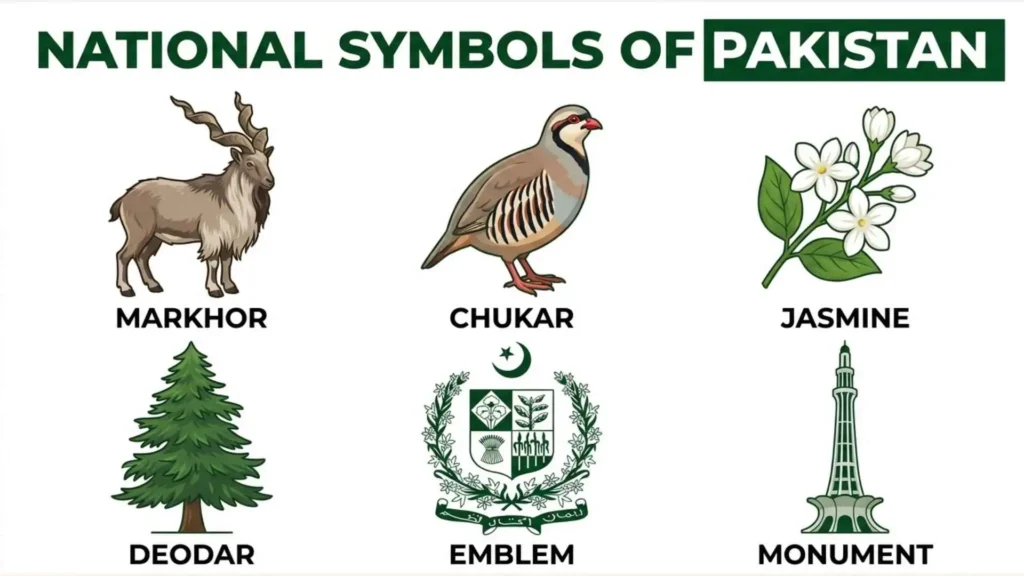
Pakistan has a range of national symbols representing its history, culture, wildlife, and national identity. Some of the most commonly recognized include the national flag, national anthem, national emblem, national animal, national bird, national flower, and national tree.
Pakistan’s National Flag
The national flag of Pakistan has a dark green field, a white vertical stripe, and a white crescent and star.
The flag is displayed during Pakistan’s Independence Day, Pakistan Day, official ceremonies, educational events, and international occasions.
It is one of the country’s most recognizable symbols and represents Pakistan’s national identity.
Pakistan’s National Anthem
Pakistan’s national anthem, commonly known as “Qaumi Tarana,” is an important national symbol. It is performed at official ceremonies, schools, national events, and other occasions.
The anthem provides a shared expression of national identity and patriotism.
Pakistan’s National Emblem
Pakistan’s state emblem contains several important elements associated with the country’s agricultural and cultural heritage. It is used in official government contexts and represents the authority and identity of the state.
Pakistan’s National Animal
The markhor is Pakistan’s national animal. It is a wild goat known for its distinctive spiral-shaped horns and is found in mountainous areas.
The markhor is also important from a conservation perspective because protecting its habitat contributes to the preservation of Pakistan’s mountain ecosystems.
Pakistan’s National Bird
The chukar partridge is recognized as Pakistan’s national bird. It is found in different parts of the country and is associated with Pakistan’s natural heritage.
Pakistan’s National Flower
Jasmine is Pakistan’s national flower. Its fragrance and cultural importance have made it a familiar plant in gardens and traditional settings.
Pakistan’s National Tree
The deodar cedar is Pakistan’s national tree. It grows naturally in mountainous regions and is associated with the country’s northern landscapes.
Why Are National Symbols Important?
National symbols are important because they provide common representations of national identity. People from different regions, languages, and communities can recognize the same national symbols as part of their shared country.
They can also preserve historical and cultural traditions. A flag may remind people of a country’s independence, while a national monument may preserve memories of an important historical period.
National symbols are also useful for education. Students can learn about geography, history, wildlife, culture, and political development by studying their country’s symbols.
National Symbols and National Identity
National identity is influenced by many factors, including language, history, culture, traditions, geography, and shared experiences. National symbols provide visible or recognizable representations of these factors.
For example, a national animal can highlight a country’s wildlife, while a national flower can reflect its natural environment or cultural traditions. A national anthem can communicate historical experiences and national aspirations.
However, a national identity is broader than its official symbols. Citizens may have different cultural traditions and regional identities while still sharing national symbols.
How Are National Symbols Chosen?
The process for selecting national symbols differs between countries.
Some symbols are established through government decisions, legislation, official proclamations, or constitutional arrangements. Others develop over time through public use and cultural traditions.
Governments may consider several factors when selecting a symbol, including:
- Historical significance
- Cultural importance
- Native wildlife or plants
- National traditions
- Public recognition
- Geographical relevance
- Connection with important historical events
In some cases, a symbol can have existed in public culture for many years before becoming officially recognized.
National Symbols and International Events
National symbols are especially visible during international events. At the Olympic Games, for example, athletes compete under national flags and national identities. National anthems may also be played during medal ceremonies.
Diplomatic meetings and international conferences similarly use national flags and other official symbols to identify participating countries.
These occasions demonstrate how national symbols function as a simple visual and cultural language between nations.
National Symbols and Education
National symbols are commonly taught in schools because they provide an accessible introduction to national history and culture.
Students can learn about their country’s flag, anthem, emblem, wildlife, plants, historical monuments, and other important symbols. Studying these subjects can also introduce broader topics such as conservation, geography, history, and cultural heritage.
Teachers can use national symbols to create lessons, classroom activities, quizzes, presentations, and research projects.
National Symbols vs. National Emblems
The terms “national symbol” and “national emblem” are sometimes used interchangeably, but they are not exactly the same.
A national symbol is a broad category that can include many things representing a country, such as a flag, flower, bird, animal, anthem, or monument.
A national emblem is generally a specific official design or insignia used to represent the state. It may contain multiple symbolic elements within one design.
Therefore, a national emblem can be considered one type of national symbol.
National Symbols and Cultural Heritage
National symbols can contribute to the preservation of cultural heritage. They connect modern societies with historical traditions and help keep important cultural references visible.
Natural symbols such as animals, birds, flowers, and trees can also highlight biodiversity. When these species become national symbols, they may receive greater public attention, although symbolic recognition alone does not guarantee their protection.
Historical symbols and monuments similarly encourage people to learn about the events and traditions that shaped their country.
Frequently Asked Questions About National Symbols
What are national symbols?
National symbols are objects, images, songs, animals, plants, places, or traditions that represent a country and its identity. Common examples include national flags, anthems, emblems, animals, birds, flowers, and trees.
What is the most common national symbol?
The national flag is generally one of the most recognizable national symbols because it provides a clear visual identity for a country and is used in official, public, and international settings.
Why are national symbols important?
National symbols represent aspects of a country’s identity, history, culture, traditions, and natural heritage. They can also help create a shared sense of national belonging.
What are some examples of national symbols?
Common examples include the national flag, national anthem, national emblem, national animal, national bird, national flower, national tree, national motto, and important national monuments.
What is Pakistan’s national animal?
Pakistan’s national animal is the markhor, a wild goat found in mountainous areas of the country.
What is Pakistan’s national bird?
Pakistan’s national bird is the chukar partridge.
What is Pakistan’s national flower?
Pakistan’s national flower is jasmine.
What is Pakistan’s national tree?
Pakistan’s national tree is the deodar cedar.
Are national symbols the same in every country?
No. Each country chooses or develops its own national symbols according to its history, culture, geography, traditions, and natural environment.
How do national symbols represent a country?
National symbols can represent a country’s history, cultural traditions, natural environment, national values, important events, or shared identity. Their specific meanings vary from one country to another.
Final Thoughts on National Symbols
National symbols provide meaningful ways for countries to express their identity and preserve their heritage. From flags and anthems to animals, flowers, trees, monuments, and emblems, these symbols reflect different aspects of a nation’s history, culture, and environment.
Although every country has its own collection of symbols, their broader purpose is similar: they provide recognizable representations of national identity and heritage. Learning about national symbols can therefore help people understand not only their own country but also the diverse histories and cultures of nations around the world.

I am Lisa Reynolds, a linguist fascinated by the ever-changing world of slang. I enjoy researching how slang reflects trends, technology, and social connections. I wrote “Text Talk: Understanding Digital Slang” and “From Street to Screen: Slang in Media”, exploring the influence of digital communication on language. I love sharing my discoveries in a way that feels like a conversation with friends, so you feel the culture and humor behind every phrase.
 John Carter
 Marcus Lee