Washer symbols can seem confusing at first, especially when a clothing label or washing machine uses small icons instead of words. A tub, hand, flower, spiral, lines, numbers, or crossed-out symbol can each give you a different instruction. Understanding these symbols can help you choose the right washing temperature and cycle while reducing the risk of shrinking, fading, stretching, or damaging your clothes.
The term washer symbols can refer to two related things: the symbols printed on clothing care labels and the symbols displayed on a washing machine. Clothing-care symbols tell you how a particular garment should be washed, dried, ironed, or cleaned, while washing-machine symbols identify programs, functions, and detergent compartments.
This guide explains the most common washer symbols in simple terms. It also includes a quick-reference chart so you can find the meaning of a symbol without reading the entire article.
What Are Washer Symbols?
Washer symbols are pictorial instructions used to explain how clothes and fabrics should be cared for. They are commonly found on garment labels, washing-machine control panels, and detergent drawers.
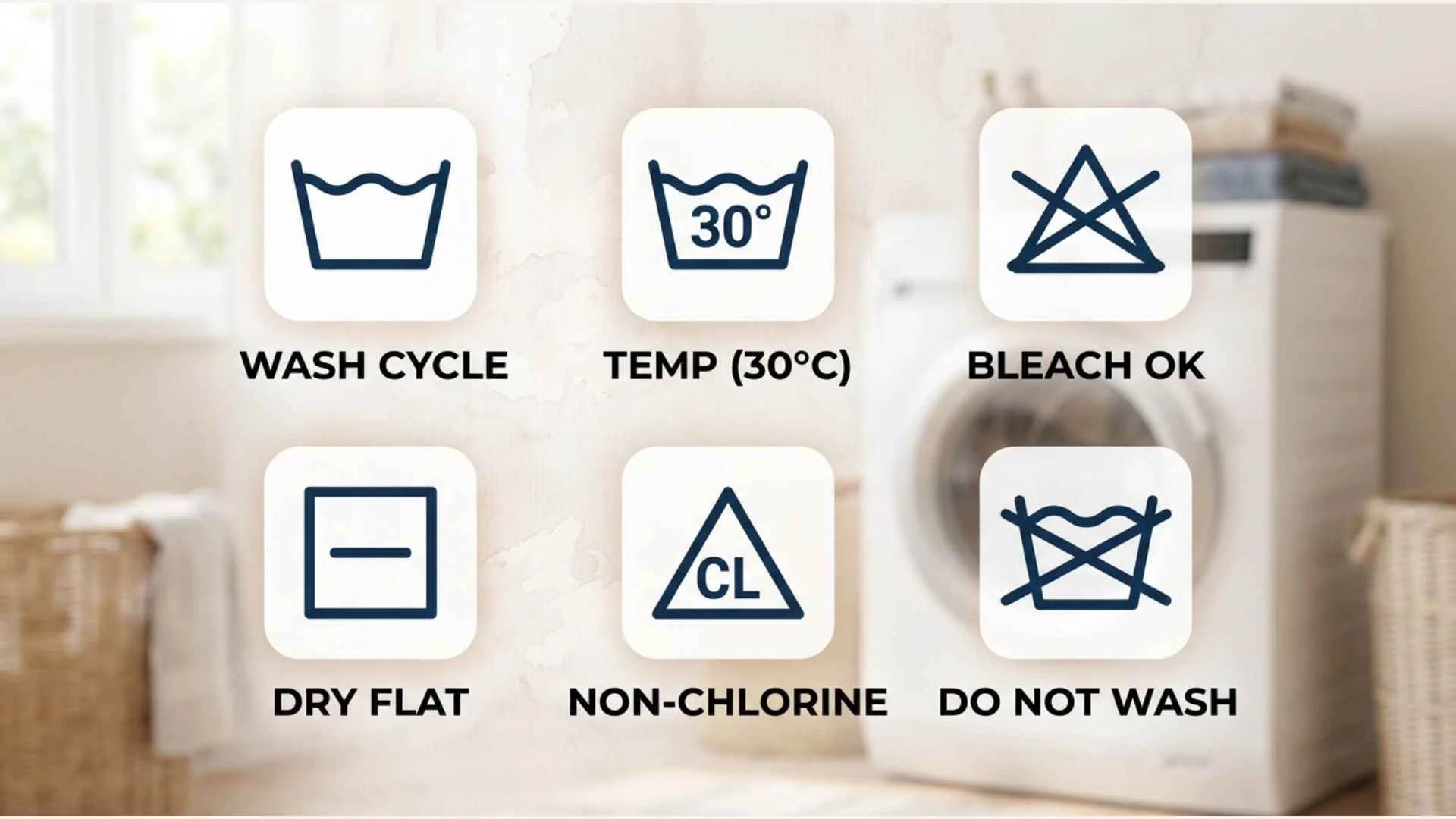
A clothing label may show a washing tub with a number such as 30 or 40. This usually indicates the maximum washing temperature. A tub with a hand inside means hand washing, while a crossed-out tub means the garment should not be washed with water.
Washing machines use a different set of symbols. These can represent programs such as cotton, synthetics, wool, delicate, quick wash, rinse, spin, and drain.
Because symbols can vary between manufacturers, it is important to check your washing machine’s manual when a symbol is unfamiliar.
Quick Washer Symbols Chart
The following chart covers some of the most common laundry and washer symbols.
| Symbol or Mark | Meaning | What to Do |
| Tub | Machine wash | Wash according to the remaining instructions |
| Tub + 30°C | Maximum 30°C wash | Select 30°C or a suitable cooler setting |
| Tub + 40°C | Maximum 40°C wash | Use a 40°C wash or lower |
| Tub + 60°C | Maximum 60°C wash | Use up to 60°C when appropriate |
| Hand in tub | Hand wash | Wash by hand or use a suitable hand-wash program |
| Crossed-out tub | Do not wash | Do not wash with water |
| One line under tub | Gentle process | Use a gentler cycle |
| Two lines under tub | Very gentle process | Use a very gentle cycle |
| Spiral | Spin-related instruction | Follow the garment’s spin instructions |
| Flower | Fabric softener compartment | Add softener to the marked compartment |
| I / 1 | Prewash detergent | Use for the prewash compartment |
| II / 2 | Main-wash detergent | Add detergent for the main wash |
| Square with circle | Tumble dry | Dryer may be used according to heat instructions |
| Crossed-out square with circle | Do not tumble dry | Air dry instead |
| Iron | Ironing allowed | Follow the temperature dots |
| Crossed-out iron | Do not iron | Avoid ironing |
| Triangle | Bleaching instruction | Check the specific triangle marking |
The exact appearance of these symbols can differ slightly depending on the manufacturer or care-label system.
Washing Symbols on Clothing Labels
Washing symbols on clothing labels are designed to tell you whether and how a garment can be washed with water.
The Washing Tub Symbol
A tub filled with water generally represents the washing process. When there is no additional restriction, the garment can usually be washed according to the instructions shown on or around the symbol.
The most important details are often the temperature number and any lines underneath the tub.
For example, a tub marked 40°C means the garment can be washed at a maximum temperature of 40°C.
30°C Washer Symbol
A tub marked 30°C indicates a maximum washing temperature of 30°C.
This temperature is commonly associated with garments that can be cleaned at a relatively low temperature. Using the recommended temperature can help reduce unnecessary heat exposure, particularly for some colored or delicate clothing.
40°C Washer Symbol
A 40°C marking means the garment can be washed at a maximum temperature of 40°C.
This is a common temperature for everyday laundry, but the correct setting always depends on the garment’s care label and fabric.
60°C Washer Symbol
A 60°C marking means the garment can be washed at temperatures up to 60°C.
Not every item should be washed this hot. Always follow the temperature specified on the individual garment label rather than assuming that a higher temperature is better for cleaning.
95°C Washer Symbol
A tub marked 95°C indicates that the garment is designed to tolerate a very high washing temperature.
This marking is less common on ordinary clothing and should never be assumed for a garment unless its care label specifically permits it.
Lines Under Washing Symbols
The lines underneath a washing tub are important because they can indicate that the garment needs reduced mechanical treatment.
One Line Under the Tub
One line generally indicates a gentler washing process than a normal cycle.
This can mean reduced agitation or a more controlled wash depending on the care-label system and machine.
Two Lines Under the Tub
Two lines generally indicate a very gentle washing process.
This type of instruction is particularly important for delicate fabrics because temperature alone does not determine how much stress clothing experiences during washing.
Hand Wash and Do Not Wash Symbols
Hand Wash Symbol
A hand inside a washing tub means the garment should be hand washed.
This instruction is commonly found on delicate items. If your washing machine has a program specifically designed for hand-wash garments, check the machine and garment manufacturer’s instructions before using it.
Do Not Wash Symbol
A washing tub crossed out with an X means the garment should not be washed with water.
Do not assume that a short or cold machine cycle will be safe. Check the rest of the care label for professional-cleaning instructions.
Washing Machine Symbols Explained
Washing-machine symbols are different from clothing-care symbols. They identify the programs and functions available on the appliance.
The exact symbols vary by brand and model, but several common categories appear on many machines.
Cotton Washer Symbol
The cotton program is often represented by a cotton flower or cotton-related icon.
It is designed for suitable cotton garments and may use a more intensive washing process than delicate programs.
Before selecting it, check that the clothes are appropriate for the temperature and cycle.
Synthetic Symbol
Synthetic programs are designed for fabrics such as polyester and other man-made fibers.
These programs may use different washing and spinning characteristics from cotton programs.
Always follow the garment label if it gives a more specific instruction.
Delicate Washer Symbol
A delicate symbol or program indicates a gentler washing process.
It is commonly used for garments that can be damaged by strong agitation or high-speed spinning.
When washing delicate clothes, avoid mixing them with heavy items such as towels if the machine or garment instructions recommend separate treatment.
Wool Symbol
The wool symbol is usually associated with a wool-care program.
Wool can be sensitive to heat, agitation, and incorrect washing methods. If the clothing label says hand wash or gives specific wool-care instructions, follow those instructions rather than automatically selecting a standard cycle.
Quick Wash Symbol
A quick-wash symbol commonly identifies a shorter washing program.
Quick cycles are generally intended for lightly soiled clothes or situations where a shorter wash is appropriate. They are not necessarily the right choice for heavily soiled laundry.
Eco Wash Symbol
Many modern washing machines include an eco program.
An eco cycle is designed to use resources differently from a standard program, often by adjusting factors such as water use, temperature, or cycle duration.
Do not assume that every eco program is suitable for every garment. Check the care label and machine instructions.
Rinse Symbol
The rinse function is used to rinse clothes with clean water after washing.
Some washing machines allow users to select an additional rinse when needed.
Spin Symbol
A spiral-shaped symbol commonly represents spinning.
The spin cycle removes water from clothes by rotating the drum at high speed. Different fabrics may require different spin speeds.
Delicate garments may require lower-speed spinning or a gentler program.
Drain Symbol
A drain function removes water from the washing machine without necessarily performing a complete wash.
It can be useful when the machine contains water that needs to be emptied, depending on the appliance’s design.
Prewash Symbol
A prewash function adds an initial washing stage before the main wash.
It may be useful for heavily soiled laundry when the clothing and detergent instructions permit it.
The detergent drawer often has a separate compartment marked I or 1 for prewash detergent.
Temperature Symbols on Washing Machines
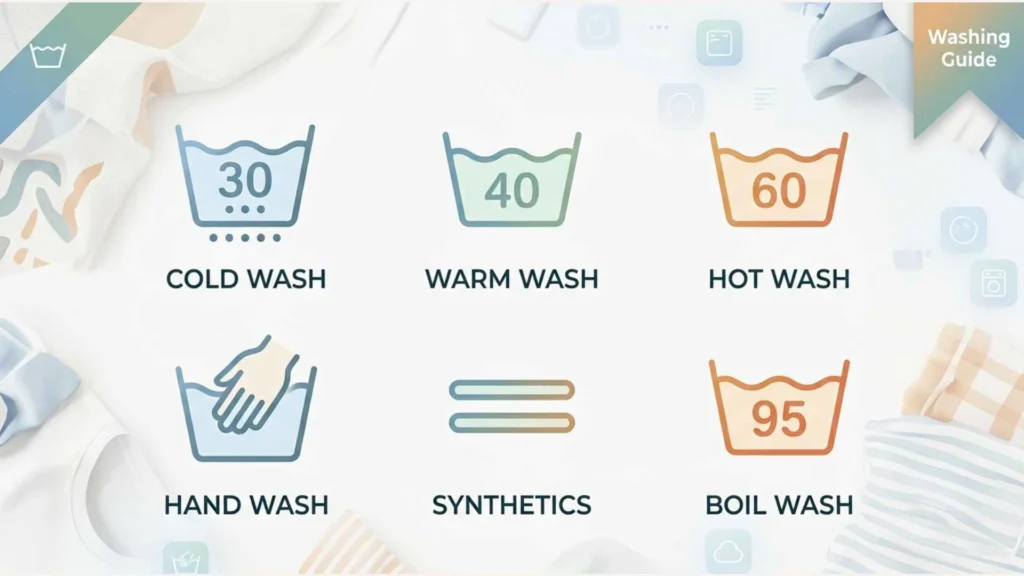
Many washing machines allow you to select different temperatures, such as 20°C, 30°C, 40°C, 60°C, or higher settings.
The correct temperature should be based on the garment-care instructions.
What Does 20°C Mean?
A 20°C setting uses a relatively low washing temperature and may be appropriate for garments whose care instructions permit it.
What Does 30°C Mean?
A 30°C setting is widely used for clothes that should be washed at a lower temperature.
It can be particularly useful when the care label specifies 30°C as the maximum temperature.
What Does 40°C Mean?
A 40°C setting is common for everyday laundry, provided the garment label permits it.
What Does 60°C Mean?
A 60°C setting is intended for garments and textiles that can safely tolerate this temperature.
Never select 60°C simply because you believe hotter water will always produce a better wash.
Detergent Drawer Symbols
The symbols inside a washing-machine detergent drawer can also be confusing.
I or 1 Symbol
The compartment marked I or 1 is commonly used for detergent when the prewash function is selected.
II or 2 Symbol
The II or 2 compartment is generally used for detergent during the main wash.
Flower Symbol
A small flower is commonly used to identify the fabric-softener compartment.
Fabric softener should normally be added only to the compartment intended for it.
The exact layout can vary between washing-machine models, so check the manufacturer’s instructions if the markings are unclear.
Washer Symbols for Drying
Washing and drying symbols are often shown together on clothing labels.
Tumble Dry Symbol
A square containing a circle generally means tumble drying is allowed.
Dots inside the circle indicate the permitted heat level.
One Dot in the Drying Symbol
One dot generally indicates low heat.
Two Dots
Two dots generally indicate medium heat.
Three Dots
Three dots generally indicate high heat.
Do Not Tumble Dry
A crossed-out square containing a circle means the garment should not be tumble dried.
If this symbol appears, use an appropriate air-drying method instead.
Washer Symbols for Ironing
An iron-shaped symbol provides instructions for ironing.
One Dot
One dot generally indicates a low ironing temperature.
Two Dots
Two dots indicate a medium temperature.
Three Dots
Three dots indicate a high temperature.
Crossed-Out Iron
A crossed-out iron means the garment should not be ironed.
Washer Symbols for Bleaching
Bleaching instructions are commonly represented by a triangle.
Plain Triangle
A plain triangle generally indicates that bleaching is permitted.
Triangle With Two Lines
A triangle with two diagonal lines generally indicates that only certain non-chlorine bleaching methods are suitable.
Crossed-Out Triangle
A crossed-out triangle means the garment should not be bleached.
Washer Symbols vs. Laundry Symbols
The phrases washer symbols, washing symbols, and laundry symbols are sometimes used interchangeably, but they can refer to slightly different things.
Laundry or clothing-care symbols provide instructions for caring for a garment. These include washing, drying, bleaching, ironing, and professional cleaning.
Washing-machine symbols are found on the appliance itself and explain the available programs and functions.
For example, a 40°C tub on a clothing label tells you the maximum washing temperature for that garment. A cotton icon on your washing machine identifies a particular wash program.
Understanding this difference makes it easier to choose a machine setting based on the garment’s actual care instructions.
How to Choose the Right Washer Setting
Choosing a washing-machine setting does not have to be complicated.
Step 1: Check the Clothing Label
Look at the care label before putting the garment into the washer.
Identify the maximum temperature and whether the garment requires a gentle or hand-wash process.
Step 2: Separate Different Types of Laundry
Separate laundry according to factors such as color, fabric type, and washing requirements.
For example, delicate garments may need different treatment from towels or heavy cotton items.
Step 3: Select the Temperature
Choose a temperature that does not exceed the maximum shown on the care label.
If the label says 30°C, do not automatically select 40°C or 60°C.
Step 4: Choose the Cycle
Match the machine cycle to the clothing requirements.
Cotton, synthetics, wool, delicate, and quick-wash programs are designed for different laundry situations.
Step 5: Select the Spin Speed
If the garment is delicate, check whether it requires a lower spin speed or a gentler program.
Step 6: Add the Correct Laundry Product
Use the appropriate detergent compartment and follow the detergent manufacturer’s instructions.
If using fabric softener, place it in the compartment marked with the appropriate symbol, commonly a flower.
Common Washer Symbol Mistakes
Assuming a Higher Temperature Is Always Better
A higher temperature can expose some fabrics to unnecessary heat. Always follow the garment’s maximum temperature.
Choosing a Normal Cycle for Delicate Clothes
A garment may tolerate 30°C but still require a gentle cycle. Temperature and mechanical action are separate considerations.
Ignoring the Lines Under the Tub
The lines underneath a washing symbol can provide important information about the required washing process.
Putting Fabric Softener in the Wrong Compartment
The detergent drawer compartments are designed for different products. Check the symbols before adding detergent or softener.
Assuming Every Washing Machine Uses the Same Symbols
Different manufacturers and models can use different icons. If a symbol on your machine is unfamiliar, consult the user manual.
Do Washer Symbols Differ by Brand?
Yes. Washing-machine symbols and program icons can differ between manufacturers and even between different models from the same manufacturer.
A Samsung washer, LG washer, Bosch washer, Whirlpool washer, or another brand may use its own design for certain programs or functions.
The basic laundry-care symbols on clothing labels are more standardized, but machine-control symbols can vary considerably.
For a machine-specific symbol, the owner’s manual is the most reliable source because it explains exactly what that particular icon means and how the program operates.
Practical Examples of Washer Symbols
Example 1: A Shirt Says 30°C With One Line
This indicates a maximum washing temperature of 30°C combined with a gentler washing process.
You would normally choose a 30°C setting with a suitable gentle or reduced-action cycle.
Example 2: A Garment Shows a Hand in the Tub
The garment is intended for hand washing.
Do not treat it as an ordinary machine-wash item unless the manufacturer’s instructions specifically say that a suitable machine program can be used.
Example 3: A Label Shows a Crossed-Out Tub
The garment should not be washed with water.
Check the rest of the care label for the appropriate cleaning method.
Example 4: Your Machine Shows a Flower
This usually identifies the fabric-softener compartment.
Do not use the symbol as a universal rule for every machine; check the appliance instructions if the drawer markings are unclear.
Frequently Asked Questions About Washer Symbols
What are the most common washer symbols?
Common washer symbols include the washing tub, temperature numbers, hand-wash symbol, crossed-out tub, gentle-cycle lines, spin symbol, drying symbol, ironing symbol, and bleaching symbol.
What does a tub symbol mean on a clothing label?
A tub generally indicates that the garment can be washed with water. Additional numbers or markings specify the temperature and washing conditions.
What does 30°C mean on a washer?
30°C indicates a washing temperature of 30 degrees Celsius. On a clothing-care label, it generally represents the maximum permitted washing temperature.
What does 40°C mean on a washing machine?
A 40°C setting means the machine will wash using a 40-degree Celsius temperature setting. Whether it is appropriate depends on the garments being washed.
What does the hand symbol mean on a washer?
A hand inside a washing tub means the garment should be hand washed.
What does a crossed-out washing tub mean?
It means the garment should not be washed with water. Check its remaining care instructions for the recommended cleaning method.
What do lines under a washing symbol mean?
Lines underneath the tub generally indicate that a gentler washing process is required.
What does the flower symbol mean in a washing machine?
A flower symbol commonly identifies the fabric-softener compartment.
What does the spiral symbol mean on a washing machine?
A spiral commonly represents the spin function or spin cycle.
What does the cotton symbol mean on a washer?
A cotton-related symbol usually identifies a cotton washing program designed for suitable cotton fabrics.
What is the difference between washer symbols and laundry symbols?
Washer symbols can refer to washing-machine controls, while laundry symbols generally refer to clothing-care instructions. However, people often use the terms interchangeably.
Should I follow the washer or clothing label?
When deciding how a particular garment should be washed, start with its care label. Then select a washing-machine program that meets those requirements.
Final Thoughts
Understanding washer symbols makes laundry easier because each symbol provides information about how clothing should be washed, dried, ironed, or otherwise cared for. The most important symbols include the washing tub, temperature numbers, hand-wash symbol, crossed-out tub, gentle-cycle lines, and washing-machine program icons.
When using a washing machine, first check the garment’s care label, then choose a temperature and cycle that match its instructions. Remember that a correct temperature alone does not guarantee a suitable wash; cycle type, agitation, and spin speed can also matter.
If you are unsure about a symbol on your specific washing machine, check the manufacturer’s manual because machine symbols and programs can vary by model. By learning these basic symbols and using them together with the garment-care label, you can make better laundry decisions and reduce avoidable damage to your clothes.

I am John Carter, a lifelong enthusiast of language and modern slang. I explore how words evolve and shape culture, and I enjoy uncovering the stories behind everyday expressions. I have authored “Slang and Society: The Language of Youth” and “Modern Words, Modern Worlds”, where I dive into how informal language impacts communication and identity. My goal is to make language accessible, fun, and insightful for everyone who loves words as much as I do.
 Lisa Reynolds
 Marcus Lee