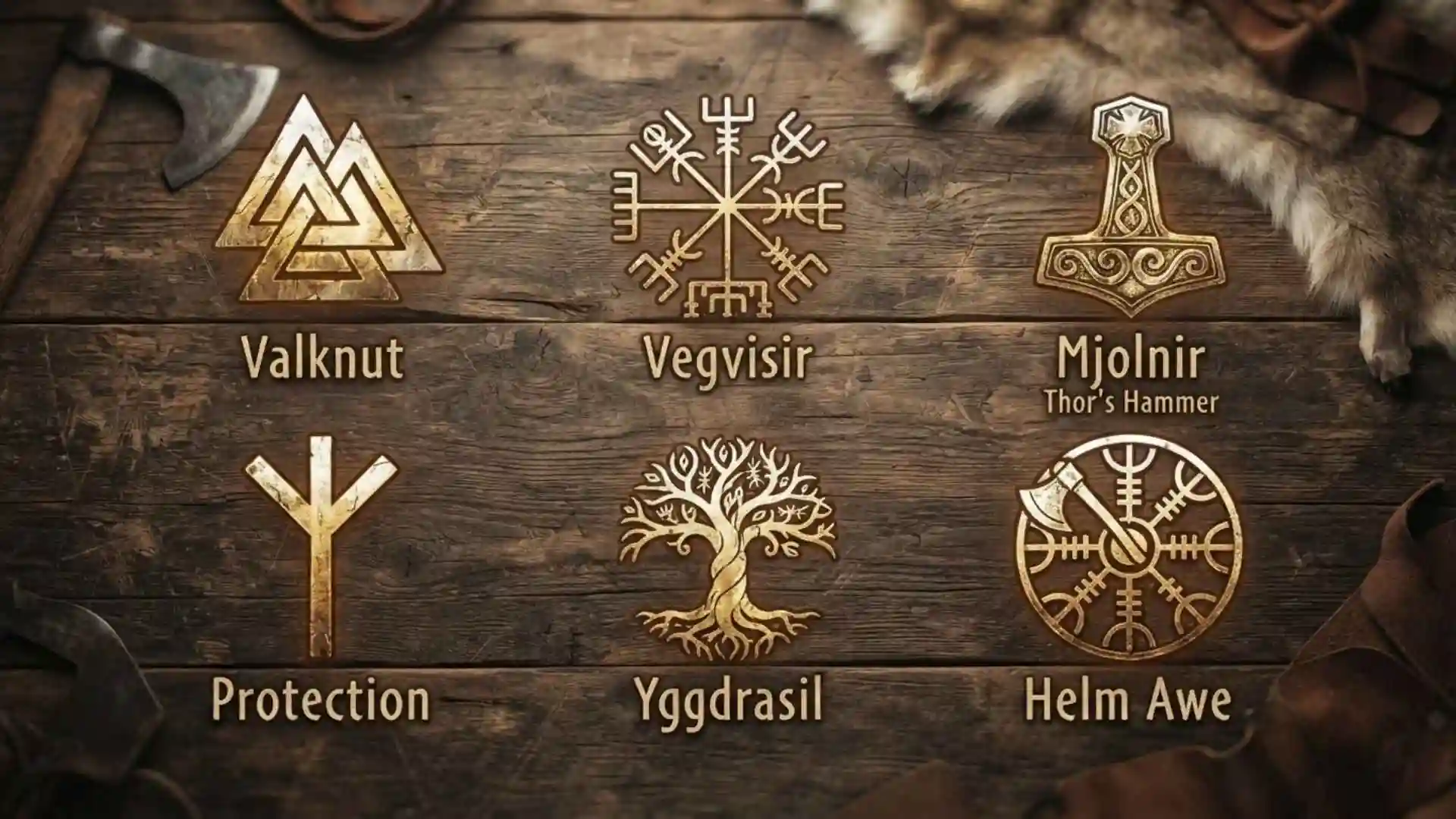
Looking for protection Viking symbols and wondering which Norse symbols were actually used for protection? The most historically supported answer is Mjölnir, the hammer of Thor. Viking Age archaeological discoveries show that people wore small hammer-shaped amulets associated with Thor. Runes and certain inscriptions were also connected with magical and protective practices.
However, not every symbol commonly called a “Viking protection symbol” today actually comes from the Viking Age. Symbols such as Ægishjálmur and Vegvísir are strongly associated with Norse and Icelandic culture, but their familiar graphical forms belong to later Icelandic magical traditions.
This guide explains the most important Viking and Norse protection symbols, their meanings, historical evidence, and modern uses. It also separates authentic Viking Age evidence from symbols that became popular much later.
What Is the Viking Symbol for Protection?
If you want one symbol with strong archaeological evidence, Mjölnir, Thor’s hammer, is one of the best choices.
Thor was one of the most important gods in Norse mythology. He was associated with thunder, strength, protection, and the defense of gods and humans. Small hammer pendants have been found across Scandinavia and other regions connected with the Viking world.
The Swedish History Museum documents numerous Viking Age Thor’s hammer pendants made from materials such as silver, iron, and amber. These objects are important evidence that hammer symbols were actually worn during the Viking Age.
Runic inscriptions provide another important category of protection symbolism. Some historical sources and archaeological finds connect runes with magic, protection, and attempts to influence circumstances.
Therefore, the strongest historically grounded answer is:
Mjölnir = one of the most historically supported Viking protection symbols.
Viking Protection Symbols at a Glance
| Symbol | Main association | Viking Age evidence |
| Mjölnir | Protection, Thor, strength | Strong |
| Protective runic inscriptions | Protection and magic | Strong in specific examples |
| Algiz | Modern protection association | Rune is historical; protective interpretation is debated |
| Ægishjálmur | Awe, power, protection | Familiar stave design is later |
| Vegvísir | Guidance and safe travel | Later Icelandic tradition |
| Yggdrasil | Life, connection, stability | Norse mythology |
This distinction is important because “Viking,” “Norse,” and “Icelandic magical” are not interchangeable terms.
1. Mjölnir — Thor’s Hammer
Mjölnir is the most important symbol to discuss when researching Viking symbols for protection.
In Norse mythology, Mjölnir was the powerful hammer belonging to Thor. It was used as a weapon against giants and other dangerous forces. Thor’s role as a defender makes the hammer naturally connected with strength and protection.
Archaeological evidence makes Mjölnir particularly interesting. Small hammer-shaped pendants have been found in Viking Age contexts. The Swedish History Museum describes Thor’s hammer amulets as objects connected with Norse religious practice and notes their association with protection, fertility, and power.
Mjölnir Meaning
Today, Mjölnir commonly represents:
- Protection
- Strength
- Courage
- Power
- Thor and Norse religion
- Defense against danger
- Religious identity
A modern Mjölnir pendant can therefore be interpreted as a reminder to remain strong and protect the people who matter to you.
More importantly, unlike many symbols marketed as “Viking,” Mjölnir has genuine Viking Age archaeological evidence behind it.
2. Viking Protection Runes
Runes are another major part of the discussion surrounding Norse protection symbols.
The Vikings used runes primarily as a writing system. They were used for names, messages, memorial inscriptions, ownership marks, and other forms of communication.
However, runes also had associations with magic in Norse literary and historical traditions. The Danish National Museum explains that runes could be connected with magical practices and that traditions describe them as being used for protection against misfortune and for giving objects particular qualities.
This does not mean that every Viking rune was automatically a magical protection symbol. Historical context matters.
Protective Runic Inscriptions
One of the most interesting examples is the Södra Kvinneby amulet, a copper runic object from Öland.
The Swedish History Museum describes the object as an amulet and discusses an interpretation of its inscription as a protective appeal involving Thor and his hammer.
This is valuable evidence because it demonstrates that protective ideas could be expressed through written runes and amulets rather than only through recognizable pictures.
What Rune Means Protection?
Modern rune websites frequently associate Algiz with protection. It is often described as a protective or defensive rune.
However, this should be presented carefully. There is no simple historical rule saying that every Viking automatically understood Algiz to mean “protection” in the modern sense.
Its modern protective meaning is widespread, but interpretations of individual runes have changed across time and depend on historical and linguistic context.
For this reason, it is better to describe Algiz as a rune strongly associated with protection in modern Norse-inspired culture, rather than claiming that this was its single fixed Viking Age magical meaning.
3. Ægishjálmur — The Helm of Awe
Ægishjálmur, often translated as the Helm of Awe, is one of the most recognizable Norse protection symbols today.
It is usually shown as a circular design with several radiating arms.
The name and concept have roots in Old Norse literature. The term appears in connection with the legendary dragon Fáfnir and the idea of a powerful object or force that creates fear or awe.
However, the familiar graphical symbol seen in modern tattoos and jewelry comes from later Icelandic magical-stave traditions rather than securely documented Viking Age archaeology.
Ægishjálmur Meaning
Modern interpretations commonly connect the Helm of Awe with:
- Protection
- Fearlessness
- Strength
- Power
- Defense
- Intimidation of enemies
- Spiritual confidence
This makes it highly relevant to people searching for a Norse protection symbol, but historical accuracy requires an important qualification.
The concept has Old Norse literary roots, while the familiar magical-stave design belongs to a later period.
Is Ægishjálmur a Viking Symbol?
Not in the simple sense often claimed online.
It is better described as a Norse-inspired symbol with roots in Old Norse literature and later Icelandic magical traditions.
This distinction does not make it meaningless. It simply gives the symbol a more accurate historical context.
4. Vegvísir — The Icelandic Wayfinding Symbol
Vegvísir is frequently called a “Viking compass” or “Viking protection symbol.”
It is one of the most common misconceptions in modern Norse symbolism.
The familiar Vegvísir design is not a documented Viking Age symbol. Its earliest known appearance is in the 19th-century Icelandic Huld manuscript, compiled in 1860.
That makes it much later than the Viking Age.
What Does Vegvísir Mean?
Modern interpretations associate Vegvísir with:
- Guidance
- Safe travel
- Finding your way
- Protection during journeys
- Direction
- Staying on the correct path
These meanings make it popular as a modern tattoo or pendant.
However, it is historically more accurate to call Vegvísir a later Icelandic magical stave, rather than a Viking Age compass.
Is Vegvísir Really a Viking Symbol?
No, not if “Viking symbol” means a symbol documented during the Viking Age.
Vegvísir is associated with Icelandic magical traditions from centuries after the Viking Age.
This is one of the most important distinctions to make when discussing protection Viking symbols.
5. Yggdrasil and Protection
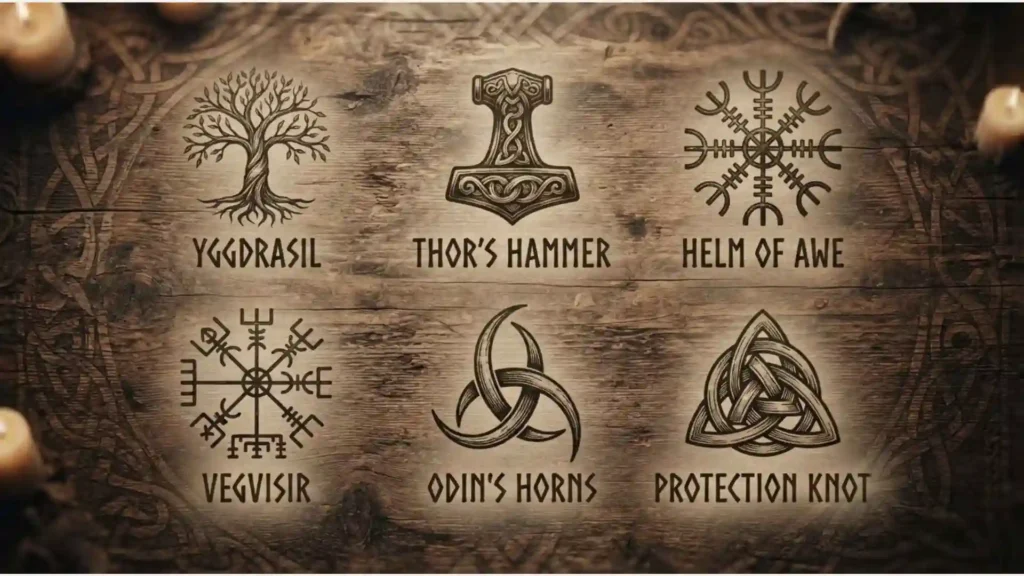
Yggdrasil is the great cosmic tree of Norse mythology.
It connects different parts of the mythological universe and plays a central role in the structure of Norse cosmology.
Yggdrasil is not specifically a Viking protection amulet in the same way as Mjölnir. However, its themes of stability, connection, life, and cosmic order make it a popular modern symbol of protection and strength.
Yggdrasil Meaning
A modern Yggdrasil design can represent:
- Life
- Growth
- Stability
- Family roots
- Connection
- Balance
- Strength
- Spiritual continuity
Someone choosing a Yggdrasil tattoo may therefore use it as a symbolic representation of being grounded and protected by their roots.
Mjölnir vs. Ægishjálmur vs. Vegvísir
These three symbols are often placed together online, but their historical backgrounds are very different.
| Feature | Mjölnir | Ægishjálmur | Vegvísir |
| Viking Age evidence | Strong | Familiar design is later | No |
| Main association | Thor | Awe and power | Guidance |
| Protection association | Strong | Strong modern association | Strong modern association |
| Origin | Norse/Viking Age | Old Norse concept + later tradition | Later Icelandic tradition |
| Modern popularity | Very high | Very high | Very high |
If historical authenticity is your priority, Mjölnir is the safest choice of these three.
If your priority is modern symbolism, all three can have meaningful interpretations.
Which Viking Protection Symbol Is Historically Authentic?
There is no single official “Viking protection symbol” that everyone in the Viking Age used.
Instead, the archaeological record shows several types of religious and protective objects.
Most Historically Supported
Mjölnir has strong archaeological evidence because hammer-shaped pendants from the Viking Age have survived.
Also Historically Relevant
Runic inscriptions and amulets are supported by archaeological evidence, including objects associated with protective or magical interpretations.
Later Norse and Icelandic Traditions
Ægishjálmur and Vegvísir are better understood through later Icelandic magical traditions and should not automatically be presented as Viking Age symbols.
This distinction is particularly important for people researching symbols for tattoos, jewelry, historical reenactment, or educational projects.
Viking Protection Symbols for Tattoos
Viking-inspired protection tattoos are popular because they combine mythology with strong visual designs.
Mjölnir Tattoo
A Mjölnir tattoo can represent:
Strength + protection + courage + Thor
It is also one of the better options if historical Viking authenticity matters.
Algiz Tattoo
An Algiz tattoo is commonly interpreted today as representing protection, defense, and resilience.
However, the modern interpretation should not be confused with a proven single Viking Age definition.
Ægishjálmur Tattoo
The Helm of Awe is often selected for themes of power, courage, and protection.
Its familiar graphical form, however, comes from later Icelandic magical-stave traditions.
Vegvísir Tattoo
Vegvísir is popular among people who want a symbol representing guidance and safe travel.
It should be described as an Icelandic magical stave rather than a Viking Age navigation symbol.
Yggdrasil Tattoo
Yggdrasil works well for people who want a symbol connected with life, roots, family, stability, and connection.
Viking Symbols Commonly Mistaken for Ancient Protection Symbols
Modern Norse-inspired culture contains many designs that look ancient but do not have strong Viking Age evidence.
Some examples include:
- Modern bind-runes
- Modern interpretations of Algiz
- Vegvísir
- Later Icelandic magical staves
- Modern fantasy versions of Viking symbols
- Contemporary “Viking protection” logos
A symbol being popular today does not automatically mean Vikings used it.
This is why checking the historical origin of a symbol is important before describing it as a Viking artifact.
How Did Vikings Use Protective Symbols?
Protection in Viking society was not necessarily separated into a modern category called “symbolic protection.”
Religion, magic, warfare, health, travel, family, and everyday life could overlap.
Protective objects could include:
- Amulets
- Pendants
- Runes
- Religious objects
- Inscribed metal pieces
- Hammer-shaped objects
Some objects may have had religious significance, while others may have served personal or magical purposes.
The exact meaning cannot always be established from an archaeological object alone.
This is why responsible discussions of Viking symbols should distinguish between archaeological evidence, literary evidence, and modern interpretation.
Why Were Viking Protection Symbols Important?
Life during the Viking Age involved considerable uncertainty.
People traveled by sea, fought wars, depended on agriculture, faced disease, and lived in environments where natural forces could be dangerous.
Religious beliefs provided ways of understanding these dangers.
Thor’s connection with strength and protection helps explain why his hammer became such an important symbol. A person wearing a hammer pendant could potentially express religious identity, devotion, protection, or connection with Thor.
The exact personal meaning of any individual pendant is not always known, but the archaeological evidence clearly demonstrates that these objects existed.
Modern Meaning of Viking Protection Symbols
Today, people often use Viking and Norse symbols for personal rather than strictly religious reasons.
A person may wear Mjölnir to represent strength during difficult times. Someone else may choose Yggdrasil to symbolize family and stability. Another person may choose Vegvísir as a reminder to stay on their path in life.
These modern meanings are valid personal interpretations, but they should not be confused with historical claims.
Understanding the difference allows people to appreciate both the historical tradition and the modern symbolism.
Frequently Asked Questions
What is the Viking symbol for protection?
Mjölnir, Thor’s hammer, is one of the strongest historically supported Viking protection symbols. Viking Age hammer pendants have been found across Scandinavia and related regions.
What is the most powerful Viking protection symbol?
There is no historical evidence for a single “most powerful” Viking symbol. However, Mjölnir is one of the strongest choices because of its connection with Thor and archaeological evidence for hammer amulets.
What rune represents protection?
Algiz is widely associated with protection in modern rune culture. However, its exact Viking Age magical meaning should not be treated as a simple fixed definition.
Is Mjölnir a protection symbol?
Yes, Mjölnir is strongly associated with Thor, strength, and protection. Archaeological evidence for Viking Age hammer pendants makes it one of the most historically supported Norse protective symbols.
Is Vegvísir actually Viking?
No. The familiar Vegvísir symbol is not documented from the Viking Age. It comes from later Icelandic magical manuscript traditions, with an important early example appearing in the Huld manuscript of 1860.
Is Ægishjálmur a Viking protection symbol?
The concept of the Helm of Awe has roots in Old Norse literature, but the familiar graphical stave belongs to later Icelandic magical traditions. It is therefore better described as a later Norse/Icelandic magical symbol rather than a confirmed Viking Age design.
Did Vikings use protection runes?
There is evidence connecting runes with magical and protective practices. The Danish National Museum discusses traditions of runic magic involving protection from misfortune and other magical purposes.
What is the best Viking protection tattoo?
For historical authenticity, Mjölnir is one of the best choices. For modern symbolic meanings, Algiz, Ægishjálmur, Vegvísir, and Yggdrasil are also popular, although they have different historical backgrounds.
What is the difference between Viking and Norse symbols?
“Viking” usually refers specifically to the Viking Age and its people, while “Norse” is a broader term covering Scandinavian culture, mythology, language, and traditions. A Norse symbol is not necessarily a Viking Age symbol.
Final Thoughts
The world of protection Viking symbols is much more interesting when history and modern interpretation are kept separate.
Mjölnir, Thor’s hammer, is one of the strongest historically supported choices. Archaeological discoveries of hammer-shaped pendants demonstrate that people in the Viking Age actually used these objects. Runic inscriptions and amulets also provide evidence for protective and magical practices.
At the same time, popular symbols such as Ægishjálmur and Vegvísir should not automatically be described as Viking Age symbols. Their familiar designs belong largely to later Icelandic magical traditions.
For someone choosing a symbol today, the right option depends on the meaning they want. Mjölnir can represent strength and protection, Yggdrasil can represent stability and connection, while later symbols such as Vegvísir can represent guidance and finding one’s path.
The most important thing is to understand the history behind the design rather than assuming that every modern “Viking symbol” came directly from the Viking Age.

I am Lisa Reynolds, a linguist fascinated by the ever-changing world of slang. I enjoy researching how slang reflects trends, technology, and social connections. I wrote “Text Talk: Understanding Digital Slang” and “From Street to Screen: Slang in Media”, exploring the influence of digital communication on language. I love sharing my discoveries in a way that feels like a conversation with friends, so you feel the culture and humor behind every phrase.
 John Carter
 Marcus Lee