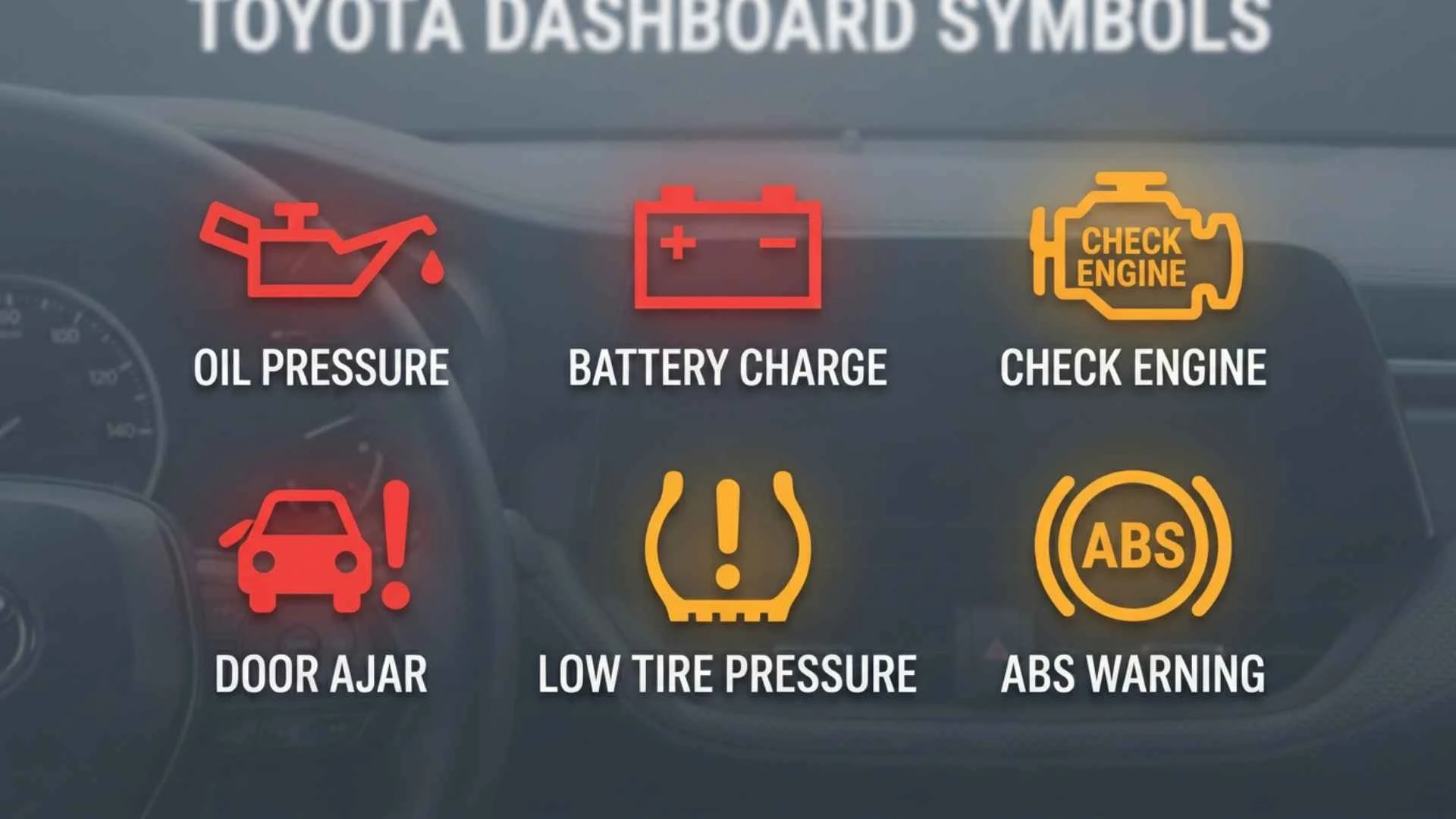
Toyota dashboard symbols and meanings PDF is a useful search for drivers who want to identify warning lights, understand dashboard icons, and find a printable reference for their vehicle. Toyota dashboard symbols provide information about engine performance, brakes, battery charging, tire pressure, safety systems, fuel levels, and other vehicle functions.
However, not every dashboard symbol means something is wrong. Some icons indicate that a feature is active, while others warn drivers about a malfunction that needs attention. Understanding the difference can help you respond appropriately and avoid unnecessary repairs or potentially unsafe driving.
This guide explains common Toyota dashboard symbols and meanings, warning-light colors, urgent dashboard alerts, model-specific differences, and how to find the correct Toyota Owner’s Manual PDF.
Toyota Dashboard Symbols and Meanings PDF: Quick Reference
If a warning light appears while driving, start by identifying its shape, color, and any accompanying dashboard message. The following table covers common Toyota dashboard symbols and the actions drivers should consider.
| Dashboard Symbol or Label | Meaning | Recommended Action |
| BRAKE or brake warning icon | Brake-system warning | Stop safely and follow the manual’s instructions |
| Oil-can icon | Low engine oil pressure | Stop safely as soon as possible |
| Battery icon | Charging-system malfunction | Stop safely and arrange inspection |
| Engine-shaped icon | Check engine or malfunction indicator | Check the warning conditions and arrange diagnosis |
| ABS | Anti-lock braking system malfunction | Have the system inspected |
| Tire with exclamation mark | Low tire pressure or monitoring-system fault | Check tire pressure and the manual |
| Thermometer over waves | High engine coolant temperature | Stop safely and follow overheating instructions |
| Airbag icon | SRS airbag-system warning | Arrange prompt inspection |
| Steering wheel with exclamation mark | Electric power steering warning | Follow the displayed warning and arrange inspection |
| Skidding car | Stability or traction-control system status | Check whether it is flashing or remains illuminated |
| Fuel pump | Low fuel level | Refuel soon |
| Seat belt icon | Seat belt reminder | Fasten the seat belt |
| Triangle with exclamation mark | Master warning on many Toyota models | Read the accompanying dashboard message |
| Turn-signal arrows | Turn signals are active | No action is needed if operating normally |
| Blue headlight icon | High-beam headlights are active on many models | Switch to low beams when appropriate |
Important: These are general descriptions, not a universal diagnostic chart. The exact meaning and urgency of a symbol can vary by Toyota model, model year, equipment, and market. Always check your vehicle’s Owner’s Manual for the correct interpretation.
What Do Toyota Dashboard Light Colors Mean?
Dashboard colors help drivers understand the general importance of an alert. However, the symbol itself and the accompanying message determine the appropriate response.
Red Dashboard Warning Lights
Red warning lights generally indicate a condition that requires immediate attention. Examples can include low engine oil pressure, high coolant temperature, and certain brake-system warnings.
If a critical red warning appears, safely stop the vehicle when instructed. Do not continue driving simply because the vehicle still seems to operate normally.
Yellow or Amber Dashboard Lights
Yellow and amber symbols usually indicate a warning, malfunction, or condition that needs attention. Common examples include the check engine, ABS, tire pressure, and certain driver-assistance warnings.
Some amber warnings allow you to drive cautiously to a repair facility, while others require more urgent attention. Check the Owner’s Manual and dashboard messages before deciding.
Green Dashboard Indicators
Green indicators generally show that a feature is operating. Turn signals and some lighting or driving-system indicators are common examples.
A green indicator is not usually an emergency warning, but you should still understand what system it represents.
Blue Dashboard Indicators
Blue indicators commonly identify a particular operating state, such as high-beam headlights. They usually communicate that a feature is active rather than indicate a malfunction.
Toyota explains that dashboard icon colors and meanings can vary by system and vehicle, so color alone should never replace checking the specific warning.
Common Toyota Dashboard Warning Lights and Their Meanings
Toyota Brake Warning Light
A brake warning may indicate that the parking brake is engaged, brake fluid is low, or a brake-system malfunction has occurred, depending on the vehicle.
If the warning remains illuminated after you release the parking brake, check the dashboard message and Owner’s Manual. If braking performance changes or the warning indicates a serious brake-system problem, stop safely and arrange professional assistance.
Do not assume that every brake warning is harmless. A problem affecting the braking system can put you and other road users at risk.
Toyota Check Engine Light
The check engine light usually looks like an engine outline. It indicates that the vehicle’s engine-management, emissions-control, or related electronic system has detected a problem.
A steady light can indicate a fault that needs diagnosis. A flashing check engine light can indicate a more urgent problem, particularly if the engine shakes, loses power, or runs roughly.
Avoid hard acceleration if the engine is running abnormally. Stop safely if the vehicle develops serious symptoms and arrange professional diagnosis.
Toyota Low Engine Oil Pressure Light
The oil-pressure warning usually resembles an oil can with a drop. It is different from a routine oil-change reminder.
Low engine oil pressure can prevent important engine components from receiving adequate lubrication. If this warning appears while driving, stop safely as soon as possible and switch off the engine when safe to do so.
Check the Owner’s Manual for the correct next steps. Do not continue driving merely because the engine still sounds normal.
Toyota Battery and Charging System Light
The battery-shaped warning light generally indicates a charging-system malfunction. The cause may involve the battery, alternator, wiring, or another electrical component.
If the light appears while driving, electrical systems may eventually lose power. Reduce unnecessary electrical loads when safe, find a suitable place to stop, and arrange assistance rather than assuming that replacing the battery will solve the problem.
Toyota ABS Warning Light
ABS stands for Anti-lock Braking System. This system helps prevent the wheels from locking during certain braking situations.
If the ABS light remains illuminated, the anti-lock braking function may be unavailable. Conventional braking may still operate, but that depends on the fault and whether other brake warnings are present.
Drive cautiously only if the vehicle can be operated safely and the manual permits it. If the red brake warning also appears or braking feels abnormal, stop safely and seek assistance.
Toyota Tire Pressure Warning Light
The tire pressure monitoring system, or TPMS, warns when tire pressure is low or when the monitoring system has a problem.
Check the pressure of all tires, including the spare if your vehicle monitors it. Use the recommended cold-tire pressure listed on the driver’s door placard or in the Owner’s Manual rather than relying on the maximum pressure printed on the tire.
If a tire looks damaged, loses air quickly, or feels unstable, do not continue driving on it. A TPMS warning that remains after correcting pressure may require further inspection.
Toyota High Coolant Temperature Warning Light
The high coolant temperature warning indicates that the engine may be overheating. Continuing to drive can cause severe engine damage.
Safely pull over and follow the vehicle’s overheating instructions. Never open a hot radiator cap, because pressurized coolant can cause serious burns.
Allow the engine to cool before any appropriate checks. If the warning returns, coolant is leaking, or the engine continues overheating, arrange professional assistance.
Toyota SRS Airbag Warning Light
The SRS warning relates to the airbag and associated restraint systems. Depending on the vehicle, it may involve airbags, seat belt pretensioners, or passenger-detection components.
A persistent warning means a safety system may not work as intended during a collision. Arrange prompt inspection by a qualified technician and do not attempt to repair airbag components yourself.
Toyota Electric Power Steering Warning
The electric power steering warning indicates a possible problem with the steering-assistance system. Steering may become heavier, especially at low speeds.
If steering becomes difficult, unpredictable, or unsafe, stop in a safe location and arrange assistance. Even if the vehicle remains steerable, a persistent warning should be investigated.
Toyota Slip Indicator, VSC and TRAC OFF Lights
The slip indicator commonly shows a vehicle with wavy lines underneath it. It can flash when traction or stability control is operating.
VSC refers to Vehicle Stability Control, while TRAC refers to traction control. These systems help maintain control in certain driving conditions.
A TRAC OFF or VSC OFF indicator may mean a system has been switched off. If an unexpected warning remains illuminated, check the dashboard message and Owner’s Manual to determine whether the system needs to be reactivated or inspected.
What Does the Toyota Red Triangle With an Exclamation Mark Mean?
On many Toyota vehicles, a triangle containing an exclamation mark represents the Master Warning Light. It alerts the driver that the vehicle has detected a condition requiring attention.
The triangle alone may not identify the underlying problem. Look at the multi-information display for a message explaining the alert.
Depending on the vehicle, the message may relate to a safety system, operating condition, or other detected issue. Follow the displayed instructions and consult the Owner’s Manual rather than guessing at the cause.
Why Do Toyota Dashboard Lights Come On at Startup?
Many dashboard warning lights briefly illuminate when the ignition or power system is switched on. This is part of a system check that allows the vehicle to verify its warning indicators.
On many models, these lights turn off after the engine or hybrid system starts, or after a few seconds.
If a warning light does not illuminate during the expected check, remains on afterward, or appears with a warning message, there may be a malfunction. Toyota manuals explain that the expected startup behavior varies by system and vehicle.
What Does a Flashing Toyota Dashboard Light Mean?
A flashing warning light can have a different meaning from a steady light. For example, a flashing check engine light may indicate a more urgent engine problem, while a flashing slip indicator can show that traction or stability control is actively operating.
Never assume that every flashing symbol means the same thing. Identify the icon, read the dashboard message, and check the vehicle’s manual.
If flashing is accompanied by unusual engine noise, loss of power, overheating, abnormal braking, or another serious symptom, stop safely and seek assistance.
Toyota Dashboard Symbols and Meanings by Model
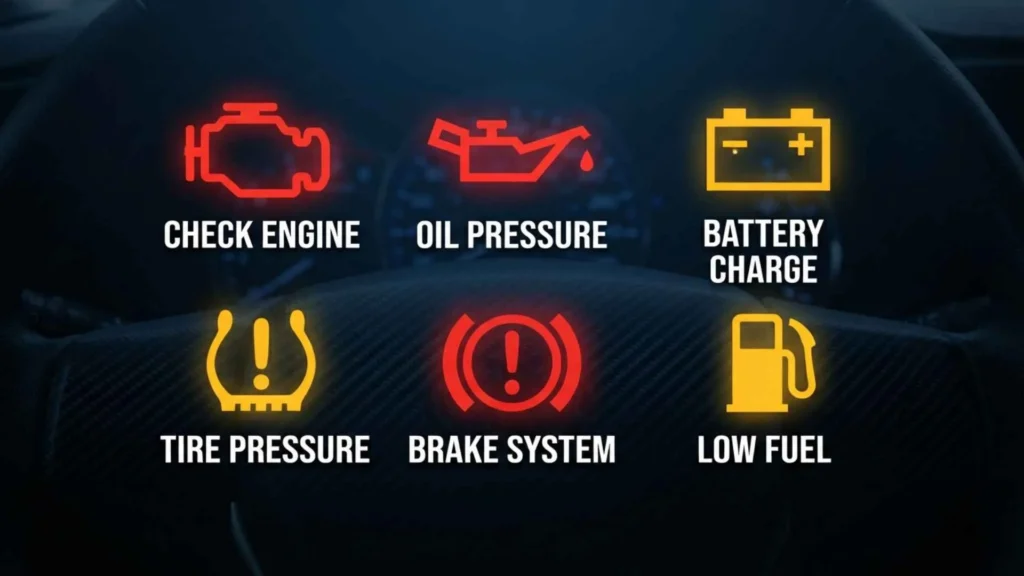
Toyota uses different dashboard layouts and features across its vehicle range. The available symbols depend on the model year, trim, powertrain, optional equipment, and market.
Toyota Corolla Dashboard Symbols
Corolla models may display engine, brake, ABS, tire pressure, airbag, and driver-assistance warnings. Newer versions may also include additional safety-system indicators.
Toyota Camry Dashboard Symbols
Camry dashboard symbols vary by generation and equipment. Hybrid versions can display additional hybrid-system warnings and operating indicators.
Toyota RAV4 Dashboard Symbols
RAV4 models may include conventional warning lights alongside indicators for traction control, stability control, and driver-assistance features. Hybrid versions may have additional hybrid-system alerts.
Toyota Prius Dashboard Symbols
Prius models include hybrid-system indicators and warnings alongside conventional brake, tire pressure, engine, and safety-system symbols. Some warnings require attention to the hybrid system rather than a conventional engine component.
Toyota Hilux Dashboard Symbols
Hilux dashboards can vary with engine type, drivetrain, trim, and market. Depending on the vehicle, indicators may relate to four-wheel drive, diesel emissions equipment, engine management, or other installed systems.
Toyota Land Cruiser and Tacoma Dashboard Symbols
Land Cruiser and Tacoma models can have additional drivetrain, off-road, stability-control, and driver-assistance indicators, depending on the year and configuration.
For every model, use the manual that matches your vehicle. A symbol’s appearance or function should not be assumed to be identical across all Toyota vehicles.
How to Find the Correct Toyota Dashboard Symbols and Meanings PDF
The best way to find an accurate Toyota dashboard symbols PDF is to start with the official Owner’s Manual for your specific vehicle.
Follow these steps:
- Identify your Toyota model and model year.
- Visit the official Toyota warning-light guide.
- Open the Toyota Owners manuals and resources section, where available for your market.
- Select the appropriate vehicle and locate the Owner’s Manual.
- Search the manual for terms such as “warning lights,” “indicators,” or “instrument cluster.”
- Use the manual’s PDF download or print option when available.
If your Toyota was sold outside the United States, use the official Toyota website for your country or contact an authorized Toyota dealer. Manual availability and specifications can differ between markets.
For a more targeted search, use phrases such as “Toyota Corolla 2022 warning lights PDF” or “Toyota Hilux 2020 Owner’s Manual PDF.” Include the model year to reduce the chance of finding information for a different dashboard.
What Should You Do When a Toyota Dashboard Warning Appears?
Use this practical process whenever an unfamiliar dashboard light appears.
- Identify the symbol: Compare its shape or label with your Owner’s Manual.
- Check the color: Treat red warnings seriously, but remember that some amber warnings can also require immediate action.
- Read the message: The multi-information display may explain what triggered the warning.
- Assess the vehicle: Look for unusual noises, smoke, leaks, loss of power, overheating, or changes in braking and steering.
- Stop if necessary: Follow instructions for critical warnings and choose a safe location.
- Arrange inspection: If a warning remains or returns, have the cause diagnosed rather than repeatedly resetting the light.
A diagnostic scan can help identify some electronic faults, but it does not replace a proper inspection or the manufacturer’s instructions.
Frequently Asked Questions
Where can I download a Toyota dashboard symbols and meanings PDF?
Start with Toyota’s official Owner’s Manual resources for your model and year. The manual may include a dashboard warning-light chart and explanations of individual symbols. PDF availability varies by market and vehicle.
What are the most serious Toyota dashboard warning lights?
Warnings for low engine oil pressure, high coolant temperature, and serious brake-system problems can require immediate action. Follow the specific warning instructions and stop safely when directed.
Can I drive with a Toyota check engine light on?
It depends on the light and the vehicle’s behavior. A steady light without other symptoms may allow cautious travel for diagnosis, but a flashing light or severe engine symptoms require more urgent attention.
Are Toyota dashboard symbols the same for every model?
No. Symbols can vary by model, year, trim, market, and powertrain. Always check the correct Owner’s Manual.
What does a yellow exclamation mark mean on a Toyota?
Its meaning depends on the surrounding symbol. It may relate to tire pressure, braking, or a master warning, among other possibilities. Identify the complete icon and read any accompanying message.
Why is my Toyota dashboard showing multiple warning lights?
Several lights can appear because of a startup system check or because one fault affects multiple vehicle systems. If the lights remain on after startup, read the messages and arrange inspection as appropriate.
Can I reset a Toyota warning light myself?
Some reminders can be reset using the procedure specified in the Owner’s Manual. However, resetting a warning without addressing its underlying cause can hide an ongoing problem. Serious safety warnings should be investigated before any reset.
Final Thoughts
Toyota dashboard symbols and meanings PDFs help drivers understand warning lights, identify active features, and respond to possible vehicle problems. From oil pressure and coolant temperature to ABS, tire pressure, airbags, and hybrid-system warnings, each symbol provides information that can help you make safer decisions.
For the most reliable answer, match the dashboard icon to the official Owner’s Manual for your exact Toyota model and year. Pay attention to the warning’s color, accompanying message, and any changes in how the vehicle operates. If a serious warning appears, follow the manufacturer’s instructions and seek professional assistance rather than continuing to drive without understanding the problem.

I am John Carter, a lifelong enthusiast of language and modern slang. I explore how words evolve and shape culture, and I enjoy uncovering the stories behind everyday expressions. I have authored “Slang and Society: The Language of Youth” and “Modern Words, Modern Worlds”, where I dive into how informal language impacts communication and identity. My goal is to make language accessible, fun, and insightful for everyone who loves words as much as I do.
 Lisa Reynolds
 Marcus Lee