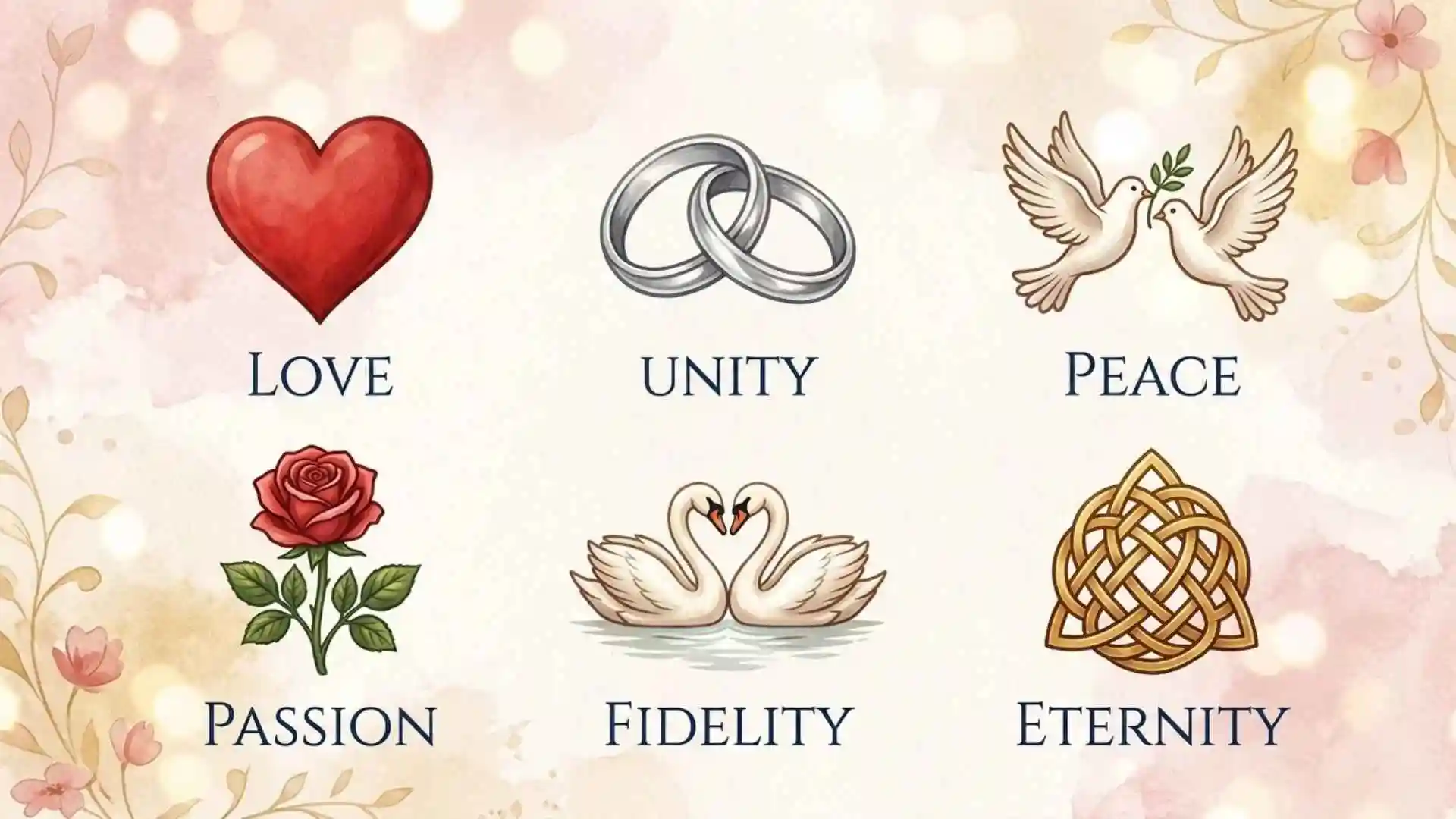
Love speaks many languages, but symbols often express feelings that words struggle to capture. A heart on a handwritten note, a red rose on an anniversary, or a wedding ring exchanged during a ceremony can communicate affection without a lengthy explanation.
Across history, people have used flowers, animals, jewelry, religious imagery, and traditional patterns to express their deepest connections. Some love symbols represent romantic passion, while others suggest loyalty, spiritual devotion, friendship, or a bond believed to transcend time.
However, these meanings aren’t always universal. A lotus flower carries religious significance in Hinduism and Buddhism, while the ankh represents life in ancient Egyptian culture. The red thread of fate, meanwhile, appears in East Asian folklore associated with destined relationships.
Understanding love symbols in different cultures means looking beyond their appearance. Their histories, myths, religious associations, and modern uses reveal why certain images continue to hold such emotional power.
This guide explores popular symbols of love and their meanings, from the familiar heart and red rose to ancient Egyptian imagery, Japanese cherry blossoms, Celtic-inspired knotwork, and Chinese decorative traditions. You’ll also discover how to choose a meaningful symbol for a gift, wedding, or personal keepsake.
What Are Love Symbols?
Love symbols are images, objects, flowers, animals, or patterns that people associate with affection and emotional connection. They can communicate romantic interest, celebrate a marriage, honor a family bond, or express spiritual devotion.
A symbol becomes meaningful through its history and the people who use it. For example, a wedding ring represents commitment partly because couples exchange rings during marriage ceremonies. A red rose communicates romance partly because centuries of artistic and cultural traditions have linked roses with love and beauty.
Common love and affection symbols include:
- The heart: Romantic love, compassion, and emotional closeness.
- Red roses: Passion, romance, and admiration.
- Doves: Peace, partnership, and certain religious meanings.
- Wedding rings: Marriage and enduring commitment.
- The red thread of fate: Destined relationships in East Asian folklore.
- Lotus flowers: Purity and spiritual significance in Hindu and Buddhist traditions.
- Decorative knots: Interconnection, continuity, or good fortune, depending on the design and tradition.
Not every symbol represents romantic love specifically. Some communicate friendship, compassion, divine love, or the hope for a lasting relationship.
Are There Universal Symbols of Love?
The heart is among the most widely recognized modern symbols of romantic affection. Red roses, wedding rings, and heart-shaped gifts also have familiar meanings in many contemporary societies.
Still, universal symbols of love require careful interpretation. People don’t share one worldwide system of symbolism, and a symbol’s meaning can change across communities.
A lotus, for example, has important spiritual associations in several Asian religious traditions. Calling it simply a romantic love symbol would overlook much of its cultural significance.
The best way to understand a symbol is to consider its original context, historical development, and present-day use.
The Most Popular Love Symbols and Their Meanings
Some symbols communicate romance immediately, while others carry meanings that require a little historical context.
The following table offers a quick guide to several traditional love symbols, their common associations, and their cultural backgrounds.
| Love symbol | Common meaning | Cultural or historical context |
| Heart | Romantic affection and emotional connection | Medieval and modern European visual traditions |
| Red rose | Passion and romantic love | Greek and Roman mythology; later European traditions |
| White rose | Purity, remembrance, or new beginnings | Varies across floral and religious traditions |
| Dove | Peace, love, and partnership | Classical mythology and Christian imagery |
| Cupid | Attraction and romantic desire | Roman mythology |
| Red thread of fate | Destined relationships | Chinese folklore and related East Asian traditions |
| Ankh | Life and vitality | Ancient Egyptian religion |
| Lotus | Purity and spiritual development | Hinduism and Buddhism |
| Celtic-inspired love knot | Unity and lasting connection | Historical interlace art and modern romantic design |
| Cherry blossom | Beauty and impermanence | Japanese cultural traditions |
| Chinese decorative knot | Good fortune and auspicious wishes | Chinese decorative arts and celebrations |
| Wedding ring | Marriage and commitment | Marriage customs across many societies |
| Lock and key | Intimacy and personal connection | Modern romantic imagery and gifts |
| Hummingbird | Beauty, vitality, or affection in some modern interpretations | Meanings vary across specific cultural traditions |
These associations aren’t fixed rules. A white rose can represent remembrance in one setting and purity in another. Likewise, a knot’s meaning depends on its design, origin, and use.
The Heart Symbol: A Widely Recognized Sign of Love
Heart symbol meaning: Romance, affection, compassion, and emotional connection
The heart shape is one of the clearest examples of how a simple image can acquire extraordinary cultural influence. Today, people use it on greeting cards, jewelry, clothing, social media, and countless romantic gifts.
Yet the familiar heart symbol doesn’t look much like the human heart. Its precise origin remains uncertain, and historians have explored several possible explanations.
According to HISTORY’s account of the heart symbol, proposed explanations include medieval anatomical drawings and the shapes of certain plants. No single theory has conclusively settled the question.
What Does the Heart Symbol Mean in Love?
The heart commonly represents feelings that come from emotional attachment rather than logic alone.
Its meanings include:
- Romantic affection: Expressing attraction or love for a partner.
- Emotional connection: Showing that another person matters deeply.
- Compassion: Communicating kindness, empathy, and care.
- Devotion: Expressing a strong emotional commitment.
- Gratitude: Thanking someone for their support or generosity.
A small heart in a text message can soften a conversation. A heart-shaped pendant can become a keepsake of a relationship. The image stays simple, but the meaning depends on the people sharing it.
The History of the Heart-Shaped Love Symbol
During the medieval period, European art and literature increasingly used the heart as a metaphor for a person’s inner self and feelings.
The British Museum describes how medieval jewelry, including courtship gifts and wedding rings, expressed devotion and loyalty. Heart imagery also appeared in objects exchanged between lovers.
Over time, the heart became closely associated with romantic love. Printed greeting cards, Valentine’s Day traditions, and modern popular culture helped make the shape familiar to wider audiences.
Heart Symbols in Modern Relationships
People now use heart imagery in countless ways:
- Heart-shaped jewelry for anniversaries.
- Handmade cards for Valentine’s Day.
- Matching accessories for couples.
- Heart emojis in messages.
- Personalized artwork celebrating a relationship.
Color can add another layer of meaning. Red commonly suggests romance, pink often conveys tenderness, and white can suggest sincerity or purity. These associations are popular conventions rather than universal rules.
Roses: Traditional Symbols of Romantic Love
Rose symbolism: Romance, beauty, passion, admiration, and affection
Few flowers have a stronger connection with romance than the rose. Its fragrance, layered petals, and rich colors have made it a favorite in art, poetry, religious imagery, and personal gifts.
The rose’s association with love stretches back to ancient Mediterranean traditions. Greek mythology connected roses with Aphrodite, the goddess of love, while Roman tradition associated them with Venus.
The Metropolitan Museum of Art’s discussion of roses and floral symbolism traces the flower’s meanings through religious imagery and the development of Valentine’s Day traditions.
Red Roses as Symbols of Romantic Love
Red roses commonly express passion, desire, and romantic devotion. Their strong color makes them a popular choice for anniversaries, proposals, Valentine’s Day, and other romantic occasions.
A dozen red roses may communicate a familiar message, but a single rose can be just as meaningful. The gesture often matters more than the number of flowers.
White, Pink, and Yellow Roses: Different Meanings
Rose colors carry distinct associations in modern floral traditions.
| Rose color | Common association | Suitable occasion |
| Red | Passion and romantic love | Valentine’s Day or an anniversary |
| White | Purity, remembrance, or sincerity | Weddings or memorial occasions |
| Pink | Admiration, appreciation, and gratitude | Birthdays or thank-you gifts |
| Yellow | Friendship, warmth, and happiness | Celebrating a friend |
| Orange | Enthusiasm and energetic attraction | Celebrations or romantic gestures |
These meanings are not universal. Floral symbolism changes across cultures, and the same color may carry different associations in different settings.
How Flowers Became Symbols of Love
Flowers offer a natural way to communicate emotion. Their colors, fragrance, growth, and short flowering periods lend themselves to metaphor.
Roses also became prominent in European traditions through mythology, religious art, and later floral gift-giving customs. In Victorian-era floriography, people assigned meanings to different flowers and arrangements, allowing bouquets to convey carefully chosen messages.
Today, flowers remain a familiar way to express affection. If you’re choosing a bouquet, consider the recipient’s preferences and the occasion rather than relying entirely on traditional color meanings.
Doves: Symbols of Love, Peace, and Partnership
Doves appear in religious paintings, wedding imagery, and romantic illustrations. Their gentle appearance and familiar pair-bonding behavior have helped make them symbols of peace and affection.
However, dove symbolism in love draws from several different traditions rather than one universal source.
Doves in Greek and Roman Mythology
Doves were associated with Aphrodite and her Roman counterpart, Venus. Because these goddesses represented love and beauty, the birds became connected with romantic and divine imagery.
Artists used doves alongside flowers and other motifs to communicate tenderness, beauty, and affection.
Dove Symbolism in Christianity
In Christianity, the dove is especially associated with the Holy Spirit. This religious meaning appears in biblical narratives and Christian art.
Although the dove can also appear in wedding imagery, its religious significance shouldn’t be reduced to romance. Spiritual symbolism and romantic symbolism can overlap without being identical.
Why Doves Appear at Weddings
Doves may represent peace, harmony, and partnership in modern wedding ceremonies. Their appearance can express a couple’s hope for a peaceful life together.
Some ceremonies include dove releases, but this isn’t a universal marriage custom. Anyone considering such a ritual should also account for animal welfare and local guidance.
Cupid and Aphrodite: Love Symbols in Ancient Mythology
Ancient mythology shaped many familiar romantic love symbols. Cupid’s arrows, Aphrodite’s beauty, and Venus’s association with desire continue to influence modern depictions of romance.
Cupid and His Bow and Arrow
Cupid is the Roman god of love, commonly depicted as a winged figure carrying a bow and arrows. He is closely associated with Venus.
In Roman mythology, Cupid’s arrows represent the power of desire and attraction. The familiar image of someone being struck by an arrow offers a playful explanation for falling in love unexpectedly.
Cupid appears frequently on Valentine’s Day cards, chocolates, decorations, and romantic gifts. His modern image draws from classical mythology but has also evolved through centuries of art and popular culture.
Aphrodite and the Origins of Romantic Symbolism
Aphrodite is the Greek goddess associated with love, beauty, and desire. Roman tradition identifies her counterpart as Venus.
Their stories connected romantic attraction with divine power. Roses, doves, and other motifs became associated with these goddesses through artistic and mythological traditions.
These connections explain why flowers and birds appear so frequently in classical-inspired romantic artwork.
Why Ancient Mythology Still Influences Love Symbols
Mythological imagery gives people a visual language for complex emotions. Cupid represents attraction, while Aphrodite and Venus embody broader ideas of love and beauty.
These figures also remind us that ancient cultures didn’t always separate love, desire, fertility, marriage, and beauty into neat categories. Their stories often connected several of these ideas.
The Red Thread of Fate: A Symbol of Destined Love
Red thread symbolism: Destiny, meaningful encounters, and romantic connection
Some love symbols represent feelings that already exist. The red thread of fate represents a connection that folklore says brings certain people together.
The motif is especially familiar through Chinese folklore and related stories in Japanese and Korean popular culture. It often depicts an invisible or red thread linking people whose lives are destined to intersect.
In modern romance, people commonly interpret the thread as a sign of soulmates, an inevitable connection, or a relationship that survives distance and difficulty.
What Does the Red Thread of Fate Mean?
The thread symbolizes the idea that certain relationships have a meaningful place in a person’s life. Two people may meet unexpectedly, separate for years, or face obstacles before reconnecting.
The story suggests that their connection remains significant despite those changes.
Common modern interpretations include:
- Destiny: Two people are meant to encounter each other.
- Soulmates: A special connection exists between particular individuals.
- Enduring love: Distance and time don’t necessarily erase a bond.
- Inevitable connection: A relationship may develop despite unexpected circumstances.
- Hope: Difficult periods don’t always mark the end of a meaningful relationship.
These are symbolic and folkloric ideas, not guarantees about real relationships.
The Red Thread in Chinese, Japanese, and Korean Traditions
Chinese folklore includes stories about a supernatural matchmaker who connects people destined for marriage. Related red-string motifs appear in Japanese and Korean storytelling, although versions differ in their details.
Modern adaptations frequently depict the thread tied around the fingers, wrists, or little fingers of two people. The exact image varies, so it shouldn’t be treated as one identical ancient custom shared by all three cultures.
In contemporary books, films, jewelry, and tattoos, the thread often represents romantic fate. Some people also use it to symbolize a significant friendship or another lasting personal connection.
Yuanfen and the Idea of Fated Relationships
The Chinese concept of yuanfen concerns the affinity, circumstances, or karmic connection that bring people into one another’s lives.
It’s related to the idea of destined relationships, but it isn’t simply another name for the red thread of fate. The thread is a specific folklore motif, while yuanfen is a broader cultural concept.
This distinction matters because cultural symbols often share related ideas without having identical meanings.
The Ankh: Ancient Egyptian Symbol of Life and Immortality
Ankh symbolism: Life, vitality, and continued existence
The ankh is one of the most recognizable symbols from ancient Egyptian civilization. It resembles a cross with a loop at the top and appears in religious artwork, hieroglyphic writing, and ceremonial objects.
Although the ankh sometimes appears in modern collections of symbols of eternal love, its established historical meaning centers on life.
The Metropolitan Museum of Art explains that the ankh functioned as a hieroglyph for words meaning “live,” “alive,” or “life.” Ancient Egyptian art frequently depicts deities holding the symbol.
What Does the Ankh Symbolize?
The ankh represented life and vitality within ancient Egyptian religious and artistic traditions. Its appearance in divine imagery connected it with the gift and preservation of life.
Its associations also extended to continued existence after death. Ancient Egyptian religious beliefs placed considerable importance on the afterlife, making the preservation of life a central theme in funerary objects and imagery.
The ankh’s historical associations include:
- Life: Its primary established meaning.
- Vitality: The power or condition of being alive.
- Divine protection: Its appearance in religious and ceremonial contexts.
- Life after death: Its association with continued existence in ancient Egyptian belief.
Isis, Osiris, and Egyptian Mythology
Isis and Osiris are important figures in ancient Egyptian mythology. Their story involves kingship, death, restoration, and the continuation of life.
Isis is associated with magic, protection, and restoration, while Osiris is closely connected with the afterlife and regeneration.
Their mythology helps explain why modern writers sometimes associate Egyptian imagery with enduring bonds or love that transcends death. However, that interpretation shouldn’t be confused with evidence that the ankh originally served as a dedicated romantic emblem.
Is the Ankh a Symbol of Eternal Love?
Today, people may choose an ankh pendant or tattoo to represent enduring life, spiritual continuity, or a meaningful connection.
Some also interpret it as a symbol of everlasting love. That’s a contemporary interpretation built on broader associations with life and continuity rather than its primary historical meaning.
If you choose the ankh for a gift or tattoo, understanding its ancient Egyptian context makes the choice more meaningful.
Lock and Key Symbols: Trust, Intimacy, and Commitment
Lock and key symbolism: Intimacy, personal connection, and emotional trust
A lock and key make a simple visual metaphor for a relationship. One object opens the other, suggesting that someone has gained access to a place previously kept private.
Modern romantic imagery often uses this pairing to represent emotional closeness. The lock may stand for the heart, while the key represents the person trusted to open it.
What Does a Lock and Key Mean in Love?
The symbol can communicate several ideas:
- Trust: Feeling safe enough to share private thoughts.
- Intimacy: Allowing another person to know you deeply.
- Commitment: Choosing to build a meaningful connection.
- Exclusivity: Representing a special bond between two people.
- Personal significance: Treating someone as uniquely important in your life.
However, healthy relationships require more than symbolic promises. Trust grows through honesty, respect, and consistent behavior.
Lock and Key Jewelry as Romantic Gifts
Matching lock-and-key necklaces and pendants are popular contemporary gifts. One person might wear the lock while the other carries the key, creating a pair of connected keepsakes.
Couples may exchange these gifts for anniversaries, Valentine’s Day, or other milestones. Their meaning comes largely from the intention behind the gift and the personal story the couple attaches to it.
There is also an important historical distinction: actual locks and keys have existed for thousands of years, but that doesn’t prove that the modern romantic pairing originated as a universal medieval love symbol.
Lotus Flowers: Purity, Spiritual Love, and Enlightenment
Lotus symbolism: Purity, spiritual development, beauty, and renewal
The lotus flower holds deep significance in several Asian religious and cultural traditions. Its ability to grow in muddy water and produce an elegant bloom has inspired interpretations involving purity, transformation, and spiritual development.
The lotus is especially important in Hinduism and Buddhism, although the meanings associated with it differ across texts, deities, schools, and artistic contexts.
Ancient Egyptian culture also associated a lotus motif with rebirth and renewed life. These distinct traditions should not be treated as one shared symbolic system.
British Museum
+1
Lotus Flower Meaning in Hinduism
In Hindu traditions, the lotus appears in religious art and imagery associated with several deities. It can communicate purity, beauty, spiritual significance, and divine presence.
The flower also appears in representations of Lakshmi, a goddess associated with prosperity and good fortune, and in imagery connected with other major deities.
The lotus may inspire modern interpretations of divine love and devotion. Yet its precise meaning depends on the specific religious or artistic context.
Lotus Flower Meaning in Buddhism
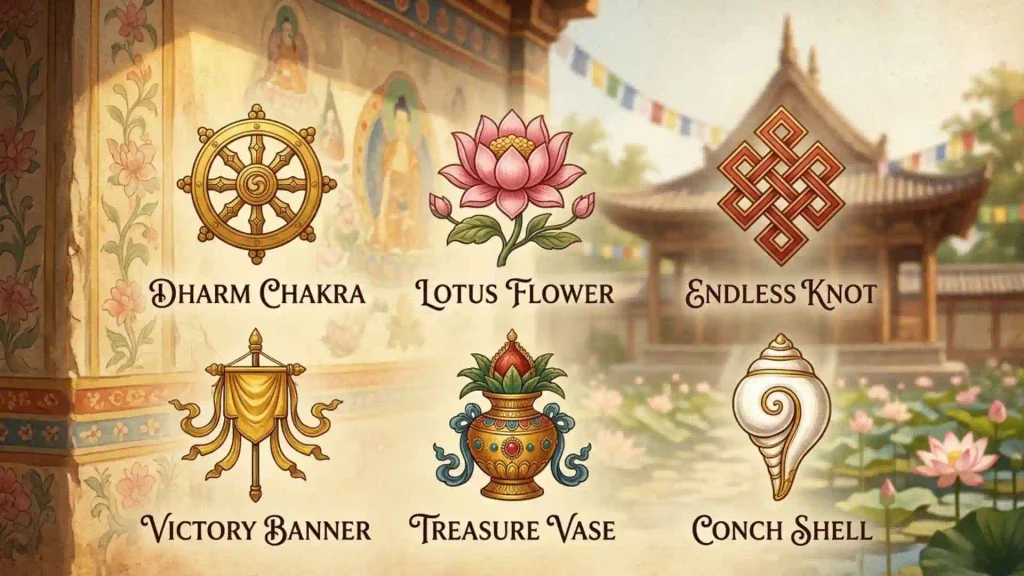
In Buddhist traditions, the lotus is strongly associated with spiritual awakening and enlightenment.
Its growth from muddy water offers a powerful metaphor: a person can develop wisdom and clarity despite difficult circumstances. The flower’s appearance above the water also makes it a fitting image for spiritual development.
The lotus therefore represents much more than romance. Its significance concerns the mind, spiritual practice, and the possibility of awakening.
Does the Lotus Symbolize Romantic Love?
The lotus can represent love in modern artwork, jewelry, and personal symbolism. Some people choose it to express a relationship built on growth, patience, or shared spiritual values.
However, it’s more accurate to describe romantic love as one possible contemporary interpretation than to claim that the lotus universally symbolizes romance in Hinduism or Buddhism.
Hummingbirds: Beauty, Vitality, and Love Across the Americas
Hummingbird symbolism: Meanings vary across cultures and contemporary interpretations
Hummingbirds captivate people with their bright plumage, rapid wingbeats, and ability to hover in place. These distinctive qualities have inspired associations with energy, beauty, and vitality.
In modern symbolic interpretations, hummingbirds may represent joy, affection, resilience, or the sweetness of life. Their meanings, however, aren’t identical across the Americas.
Hummingbirds as Symbols of Love and Beauty
A hummingbird can serve as a personal emblem of a lively, joyful relationship. Its movement and vivid appearance make it an appealing image for artwork, jewelry, and tattoos.
Modern interpretations may connect the bird with:
- Joy: Appreciating small moments of happiness.
- Vitality: Energy and enthusiasm for life.
- Beauty: Admiration for something delicate and striking.
- Affection: A personal reminder of someone loved.
- Resilience: Continuing to move forward through difficulty.
These associations are useful when discussing contemporary symbolism, but they shouldn’t automatically be attributed to a specific ancient culture.
Hummingbirds in Indigenous American Traditions
Indigenous communities across North and South America have distinct histories, beliefs, and storytelling traditions. A symbol’s meaning in one community doesn’t automatically apply to another.
For that reason, an accurate article should identify the specific nation, community, story, or historical source behind any traditional hummingbird association.
Avoid broad claims that all Native American cultures interpret hummingbirds as messengers of love. Such statements erase important cultural differences and may misrepresent living traditions.
Hummingbirds in Aztec History and Mythology
Hummingbirds have an important place in Mexica, commonly called Aztec, religious imagery. One notable figure is Huitzilopochtli, a major deity associated with the sun and warfare.
The bird’s significance in this religious context doesn’t establish that hummingbirds universally symbolized romantic passion or served as traditional love messengers.
For modern readers, the hummingbird can still make a meaningful personal symbol. Its cultural interpretation should simply remain separate from documented historical associations.
Celtic Love Knots: Symbols of Unity and Lasting Connection
Celtic-inspired knot symbolism: Interconnection, continuity, and unity
Interlaced knotwork is a striking feature of historic Celtic and Insular art. Its repeating lines weave around one another, producing intricate patterns that can appear to have no clear beginning or end.
Modern jewelry makers often market certain designs as Celtic love knots and associate them with eternal love, unity, and unbreakable bonds.
Those interpretations can be meaningful, but the historical evidence requires care. Not every interlaced design had a documented romantic meaning in ancient Celtic societies.
What Does a Celtic Love Knot Mean?
In contemporary romantic contexts, a Celtic-inspired knot often represents two lives intertwined.
Its visual structure lends itself to ideas such as:
- Unity: Two people sharing a life.
- Continuity: A relationship that develops over time.
- Commitment: Choosing to maintain a lasting connection.
- Interdependence: Recognizing how partners support each other.
- Enduring affection: A bond that remains meaningful through change.
These are common modern interpretations rather than a universal dictionary of ancient Celtic knot meanings.
Celtic Knotwork in Historical Art
Interlaced patterns appear in medieval manuscripts, metalwork, stone crosses, and other forms of Insular art. These designs formed part of a rich artistic tradition with religious, decorative, and cultural dimensions.
A modern knot pendant may draw inspiration from that historic artwork while carrying a meaning created by its designer or wearer.
The distinction is useful: historical knotwork is documented, while claims about a particular knot representing eternal romantic love may reflect more recent interpretations.
Celtic-Inspired Wedding Rings and Jewelry
Celtic-inspired designs remain popular in wedding bands, pendants, and anniversary gifts. Their continuous lines offer an appealing metaphor for shared commitment.
Couples may choose these patterns because they appreciate Celtic heritage, admire the artwork, or want a visual representation of connection.
The strongest choice is one whose design and meaning genuinely resonate with the people wearing it.
Cherry Blossoms: Love, Beauty, and the Fleeting Nature of Life
Cherry blossom symbolism: Beauty, impermanence, renewal, and precious moments
Every spring, cherry blossoms transform parts of Japan into landscapes of pale pink and white. Their brief flowering season has made them powerful images of beauty and the passing of time.
Known as sakura in Japanese, cherry blossoms hold a prominent place in Japanese cultural imagery. They can evoke the arrival of spring, the beauty of nature, and the fleeting character of life.
Sakura Symbolism in Japanese Culture
Cherry blossoms are celebrated for their beauty and short-lived blooms. Their appearance marks a seasonal transition, making them a natural focus for reflection and celebration.
In cultural imagery, the blossoms can suggest:
- Beauty: Appreciating something beautiful while it lasts.
- Impermanence: Recognizing that life and circumstances change.
- Renewal: Welcoming spring and a new season.
- Reflection: Thinking about the passage of time.
- Togetherness: Sharing the experience of seasonal beauty.
These associations extend beyond romantic relationships. Cherry blossoms can symbolize the broader experience of appreciating life’s temporary moments.
Hanami and the Appreciation of Fleeting Beauty
Hanami is the Japanese custom of enjoying the beauty of flowering trees, especially cherry blossoms. People gather in parks and other outdoor spaces to admire the blooms, often sharing food and spending time together.
The practice connects natural beauty with social celebration. It also offers an opportunity to appreciate something that won’t remain unchanged for long.
That temporary quality explains why cherry blossoms can work as a symbol for a precious relationship or a meaningful moment.
What Do Cherry Blossoms Mean in Love?
In contemporary romantic symbolism, cherry blossoms can represent tenderness, new beginnings, and the beauty of shared experiences.
They may also remind couples that relationships change over time. Rather than suggesting that love must be fleeting, the blossoms can encourage people to appreciate their time together.
A cherry blossom tattoo, illustration, or gift may therefore express affection through the idea of fleeting beauty and meaningful moments.
Chinese Decorative Knots: Good Fortune and Togetherness
Chinese knot symbolism: Craftsmanship, auspicious wishes, and celebration
Chinese decorative knots transform cords into elaborate patterns through repeated loops and carefully arranged strands. These designs appear in traditional decorations, festive displays, gifts, and ornamental objects.
The craft has a long cultural history, but the meaning of a particular knot depends on its design and context. Not every Chinese decorative knot is specifically a symbol of romantic love.
What Do Chinese Decorative Knots Symbolize?
Chinese decorative knotting is associated with craftsmanship and ornamental tradition. Certain knots and arrangements carry auspicious meanings, especially when used in celebrations and festive settings.
Depending on the design and occasion, a decorative knot may communicate:
- Good fortune: A wish for favorable circumstances.
- Happiness: Hope for joyful experiences.
- Continuity: An association suggested by the connected strands.
- Celebration: A decorative feature for an important occasion.
- Affection: A personal meaning attached to a gift or relationship.
These associations should be tied to specific designs or traditions whenever possible.
Chinese Knots in Weddings and Celebrations
Decorative knots may appear in festive displays and gifts where they contribute color, intricate craftsmanship, and auspicious symbolism.
Their visual complexity makes them suitable for commemorating meaningful occasions. A couple may also choose a knot-inspired design to express unity or their appreciation of Chinese decorative traditions.
However, the exact meaning depends on the design and use. It’s better to identify the particular knot than to assume that every traditional pattern represents marriage.
Are Chinese Knots Symbols of Eternal Love?
Some contemporary interpretations connect decorative knots with enduring affection because their strands remain visibly connected.
This is a reasonable modern metaphor, but it shouldn’t replace the broader cultural meanings associated with Chinese knotting. The most accurate explanation distinguishes established auspicious symbolism from personal romantic interpretations.
Wedding Rings: Traditional Symbols of Lasting Commitment
Wedding ring symbolism: Marriage, fidelity, and commitment
Wedding rings are among the clearest examples of objects that acquire meaning through social customs. Couples exchange them in many marriage traditions, using the rings to mark a significant promise.
Their circular shape also lends itself to the metaphor of continuity. Because a circle has no visible endpoint, people often interpret it as an image of enduring love.
That interpretation is familiar today, although ring customs have developed differently across societies and historical periods.
Why Wedding Rings Represent Commitment
A wedding ring serves as a visible reminder of a marriage and the promises associated with it. Its significance comes from both the ceremony and the meaning the couple assigns to it.
Common associations include:
- Commitment: Choosing to build a shared life.
- Fidelity: Honoring the relationship’s expectations.
- Continuity: Maintaining a meaningful bond over time.
- Partnership: Recognizing shared responsibilities and goals.
- Public recognition: Showing that a couple has entered a marriage.
A ring doesn’t create a healthy relationship on its own. Its symbolic power comes from the intentions and actions behind the promise.
Wedding Ring Traditions Across Cultures
Wedding customs vary according to religion, region, family tradition, and personal choice. Some couples exchange rings during a ceremony, while others emphasize different objects or rituals.
Even ring-wearing practices differ. In many Western traditions, people wear wedding rings on the left hand. Other communities favor the right hand or follow different customs.
These variations demonstrate why traditional love symbols should be understood within their specific settings.
Wedding Rings Compared With Other Love Symbols
Different symbols communicate different aspects of a relationship.
| Symbol | Main message | Best understood as |
| Heart | Affection and emotional connection | A general symbol of love |
| Red rose | Passion and romance | A romantic gesture |
| Red thread of fate | Destined connection | A folklore-based symbol |
| Lotus | Spiritual meaning and purity | A religious or personal symbol |
| Wedding ring | Marriage and commitment | A relationship marker |
| Lock and key | Intimacy and trust | A modern romantic metaphor |
A couple may use several symbols together. For example, a wedding ring can mark commitment, while flowers celebrate a special moment within the relationship.
Love Symbols Around the World: A Cultural Comparison
Looking at love symbols around the world reveals both shared themes and important cultural differences. Many traditions use natural objects, repeated patterns, or meaningful gifts to express affection, but the details differ.
The table below summarizes the central cultural contexts explored in this article.
| Cultural context | Symbol | Main association |
| Modern Western popular culture | Heart | Romantic affection |
| Greek and Roman mythology | Rose | Love, beauty, and divine associations |
| Greek and Roman mythology | Dove | Associations with Aphrodite and Venus |
| Chinese folklore | Red thread of fate | Destined relationships |
| Japanese culture | Cherry blossoms | Seasonal beauty and impermanence |
| Ancient Egyptian religion | Ankh | Life and vitality |
| Hindu traditions | Lotus | Purity and divine associations |
| Buddhist traditions | Lotus | Spiritual awakening and enlightenment |
| Celtic-inspired modern design | Interlaced knotwork | Unity and enduring connection |
| Chinese decorative arts | Decorative knots | Craftsmanship and auspicious wishes |
| Contemporary wedding customs | Wedding ring | Marriage and commitment |
Why the Same Symbol Can Have Different Meanings
A symbol’s meaning can shift when it moves between communities or historical periods.
A rose, for example, can represent romantic love in a bouquet, religious devotion in a painting, or remembrance in a memorial setting. Its physical appearance stays the same, but the surrounding context changes the message.
Likewise, a lotus may communicate spiritual awakening in Buddhist imagery and divine associations in Hindu art. Reducing both traditions to a single romantic meaning would overlook their distinct religious significance.
Three factors often influence cultural symbols of love:
- History: How people used a symbol in earlier periods.
- Religion and mythology: Stories and beliefs connected with the image.
- Modern culture: How media, fashion, gifts, and popular traditions reshape its meaning.
How to Interpret Cultural Symbols Respectfully
Understanding a symbol requires more than memorizing a definition from a gift shop or social media post.
When researching a cultural symbol, ask:
- Where did the symbol originate?
- Which community or tradition uses it?
- What did it mean historically?
- Does its modern meaning differ from its original use?
- Is the claimed association supported by reliable sources?
These questions help distinguish documented traditions from modern interpretations. They also make it easier to appreciate cultural symbolism without treating different societies as interchangeable.
Which Symbols Represent Eternal Love, Soulmates, and Commitment?
People often search for symbols of eternal love because they want an image that captures the depth of a relationship. Others look for symbols of destiny, loyalty, or spiritual connection.
The most suitable symbol depends on the message you want to communicate.
Symbols of Eternal and Everlasting Love
Wedding rings, heart imagery, and selected knot designs are often used to represent enduring affection.
Their meanings differ, however. A wedding ring is closely connected with marriage and commitment. A heart commonly expresses affection, while a knot can suggest connected lives or continuity.
The idea of eternity usually comes from the symbolism people attach to these objects rather than a literal guarantee that a relationship will last forever.
Symbols of Soulmates and Destiny
The red thread of fate is a prominent choice for people drawn to the idea of destined relationships.
Its folklore-based meaning centers on the possibility that certain people are connected despite distance or unexpected circumstances. Modern depictions often use it to represent soulmates or meaningful encounters.
For someone who values that idea, a red-thread bracelet or tattoo may serve as a reminder of a special connection.
Symbols of Loyalty, Trust, and Devotion
Doves, wedding rings, and personalized keepsakes can communicate loyalty and commitment.
A ring marks a promise. A meaningful gift can express appreciation. A dove may evoke peace and partnership.
Still, symbols of trust and commitment work best as expressions of values that people practice. Honesty, respect, and consistent care matter more than the object itself.
Symbols of Spiritual and Unconditional Love
The lotus is relevant to spiritual symbolism, particularly in Hindu and Buddhist contexts. Other religious imagery may express compassion, divine devotion, or the relationship between humanity and the sacred.
However, spiritual love and romantic love aren’t identical concepts. A symbol can represent both in a modern personal context without carrying both meanings in every religious tradition.
When choosing a spiritual symbol, research its original meaning and consider whether it fits your own beliefs and the traditions from which it comes.
How to Choose a Love Symbol for a Gift, Tattoo, or Relationship
A meaningful symbol doesn’t need to be expensive or elaborate. The best choice reflects your feelings, your relationship, and the message you want to share.
Before selecting a design, think about what you want the symbol to communicate. Passion, appreciation, loyalty, destiny, and spiritual growth each suggest different possibilities.
Choosing a Symbol for a Romantic Gift
Start with the feeling you want to express rather than the object itself.
- For passion: Choose red roses or a heart-shaped keepsake.
- For commitment: Consider a wedding ring or an engraved piece of jewelry.
- For destiny: Explore the red thread of fate.
- For spiritual connection: Consider a lotus design after researching its religious context.
- For friendship: Yellow roses or a personalized keepsake may communicate warmth and appreciation.
- For shared history: Choose an object connected to a meaningful memory or experience.
Personal details can make an ordinary gift memorable. A pendant engraved with the date you met may mean more to your partner than an expensive item with no personal connection.
Choosing a Love Symbol for a Tattoo
A tattoo can preserve a meaningful idea, but its significance deserves careful thought.
Consider these factors before choosing your design:
- Meaning: Understand the symbol’s documented history and modern interpretations.
- Personal connection: Choose something that reflects your experiences or values.
- Cultural context: Research religious and cultural symbols before using them.
- Design: Think about size, placement, detail, and long-term readability.
- Accuracy: Verify historical claims rather than relying entirely on tattoo websites or social media.
A red thread may represent a meaningful relationship. A heart can communicate affection. A lotus may reflect spiritual growth. Each can work well when the design’s meaning aligns with your intentions.
Choosing a Symbol for an Anniversary or Wedding
Wedding rings are a familiar choice for marking marriage, but couples have plenty of alternatives.
You might choose:
- Matching pendants that reflect a shared interest.
- A floral arrangement connected with a memorable occasion.
- An engraved keepsake featuring a meaningful date.
- A knot-inspired design representing partnership.
- A handwritten note accompanied by a heart symbol.
- A piece of artwork reflecting a place you visited together.
The important thing is to choose a symbol that feels authentic to your relationship. A meaningful object can serve as a reminder of shared experiences long after the celebration ends.
Choosing Flowers That Express Your Feelings
Flowers offer an easy way to express affection, appreciation, and celebration. Red roses are strongly associated with romance, while pink roses commonly express admiration and yellow roses often suggest friendship.
Before ordering a bouquet, consider the recipient’s favorite flowers, the occasion, and any cultural preferences. A thoughtful choice doesn’t need to follow traditional flower meanings perfectly.
For readers in Singapore, Petal & Poem is one resource to explore for flower arrangements and delivery. Choose a florist based on the arrangement, delivery details, and suitability for your occasion.
Frequently Asked Questions About Love Symbols
What Is the Most Recognized Symbol of Love?
The heart is among the most widely recognized modern symbols of romantic love. People use it in jewelry, cards, artwork, and digital messages to express affection and emotional connection. However, no symbol has exactly the same meaning in every culture.
What Are the Oldest Symbols of Love?
There isn’t one universally established oldest symbol of love. Ancient civilizations used flowers, religious imagery, mythological figures, and other motifs to express ideas connected with affection, desire, fertility, and devotion. The age of a particular symbol depends on the earliest reliable evidence of its use and meaning.
Which Flowers Symbolize Romantic Love?
Red roses are among the most familiar flowers associated with romantic love and passion. Pink roses often express admiration, while white roses may represent purity or remembrance. These associations vary across traditions and occasions.
What Symbol Represents Eternal Love?
Wedding rings and some modern knot designs commonly represent enduring love and commitment. Their meanings depend on cultural customs and personal interpretation. A continuous circle, for example, provides a visual metaphor for a bond without an obvious endpoint.
What Does the Red Thread of Fate Mean?
The red thread of fate represents a connection between people believed to be destined to meet or form a relationship. It appears in Chinese folklore and related East Asian stories and has become a popular modern symbol of soulmates and meaningful connections.
What Does the Ankh Symbolize in Ancient Egypt?
The ankh primarily symbolizes life and vitality in ancient Egyptian culture. It appears in hieroglyphs, religious artwork, and ceremonial objects. Its connection with eternal love is mainly a modern interpretation of its broader associations with life and continuity.
What Does a Lotus Flower Symbolize Spiritually?
The lotus has important religious meanings in Hinduism and Buddhism. It can represent purity, divine associations, spiritual development, or enlightenment, depending on the tradition and context. It isn’t exclusively a symbol of romantic love.
Are Celtic Love Knots Ancient Symbols of Eternal Love?
Historic Celtic and Insular art includes intricate interlaced patterns. Modern jewelry often interprets selected knot designs as symbols of eternal love and unity. However, the romantic meanings assigned to specific designs aren’t always supported by evidence of their original historical use.
Do Love Symbols Have the Same Meaning in Every Culture?
No. Some symbols have widespread modern meanings, but their interpretations vary across cultures, religions, and historical periods. A flower may represent romance in one context and remembrance in another. Understanding its background helps prevent misleading interpretations.
Conclusion: The Meaning Behind Love Symbols
Love symbols in different cultures reveal how people express affection, desire, devotion, and commitment through objects and images. The heart communicates romantic emotion, roses evoke love and beauty, and wedding rings represent a promise between partners.
Other symbols carry more specific cultural or religious significance. The red thread of fate draws on folklore about destined relationships, the ankh represents life in ancient Egyptian culture, and the lotus holds deep spiritual meaning in Hinduism and Buddhism.
These differences make the study of symbols of love and their meanings so fascinating. A symbol can communicate a familiar feeling while preserving a story rooted in a particular place, tradition, or period.
When choosing a symbol for a gift, tattoo, or relationship, look beyond its appearance. Learn its history, consider its cultural context, and choose something that genuinely reflects your intentions.

I am Lisa Reynolds, a linguist fascinated by the ever-changing world of slang. I enjoy researching how slang reflects trends, technology, and social connections. I wrote “Text Talk: Understanding Digital Slang” and “From Street to Screen: Slang in Media”, exploring the influence of digital communication on language. I love sharing my discoveries in a way that feels like a conversation with friends, so you feel the culture and humor behind every phrase.
 John Carter