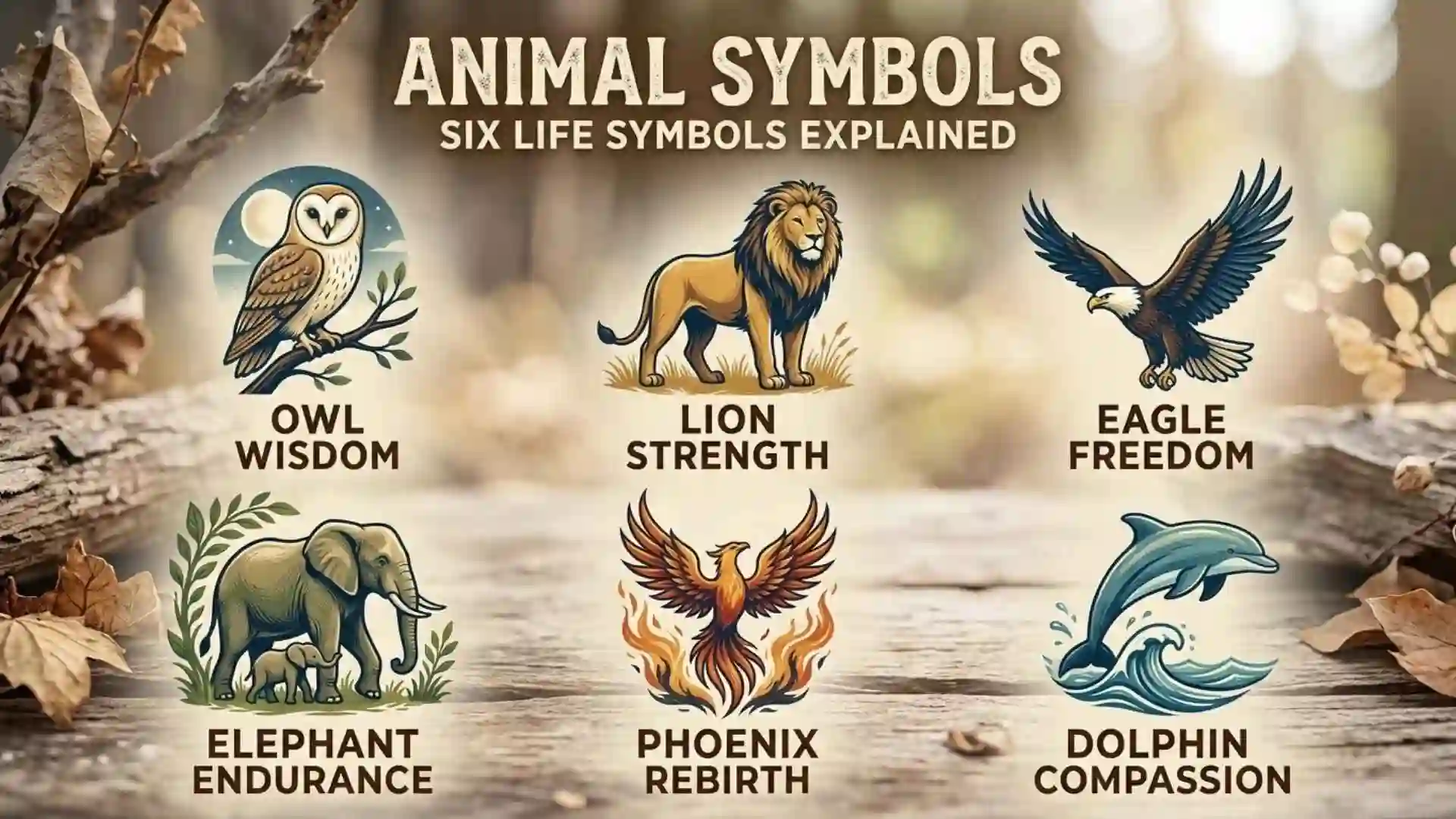
Animal symbols have been used for centuries to represent human qualities, emotions, beliefs, and cultural values. From the lion, which often represents courage and leadership, to the butterfly, which symbolizes transformation, animals help people express ideas that can be difficult to describe in words. Animal symbolism appears in mythology, religion, folklore, literature, art, tattoos, and modern branding.
The meaning of an animal can change depending on the culture, historical period, and situation in which it appears. An owl may represent wisdom in one tradition and mystery in another, while a snake can symbolize danger, healing, renewal, or transformation. Understanding these differences helps you choose an animal symbol that reflects your intended message.
This guide explores popular animal symbols and their meanings, animals associated with strength, wisdom, love, protection, and change, and the role of animal symbolism across cultures. It also explains how to choose an animal symbol for personal expression, artwork, tattoos, or logos.
What Are Animal Symbols?
Animal symbols are images, representations, or references to animals that communicate an idea beyond the animal itself. They may represent a personality trait, emotion, spiritual belief, social identity, natural quality, or cultural value.
For example, an eagle is commonly associated with freedom and vision because of its ability to fly high and observe a wide landscape. A dove frequently represents peace, while a bee can represent cooperation and hard work because of its role within a colony.
Animal symbolism is not universal. Meanings develop through stories, religious traditions, historical experiences, observations of animal behavior, and artistic conventions. The same animal may have different meanings in different communities.
According to educational anthropology resources, animals can play important roles in cultural identity, oral traditions, religious practices, and the way communities understand their relationship with the natural world.
Animal Symbols and Their Meanings: Quick Reference Chart
The following chart summarizes common associations with popular animal symbols. These are general interpretations rather than fixed meanings that apply to every culture.
| Animal symbol | Common meaning | Related ideas |
| Lion | Courage and strength | Leadership, confidence |
| Owl | Wisdom | Knowledge, mystery |
| Butterfly | Transformation | Growth, new beginnings |
| Eagle | Freedom | Vision, ambition |
| Wolf | Loyalty | Instinct, teamwork |
| Fox | Cleverness | Adaptability, strategy |
| Elephant | Wisdom and strength | Memory, patience |
| Dove | Peace | Hope, harmony |
| Snake | Transformation | Renewal, danger, healing |
| Horse | Freedom | Endurance, movement |
| Deer | Gentleness | Grace, sensitivity |
| Bear | Protection | Courage, resilience |
| Cat | Independence | Curiosity, mystery |
| Raven | Mystery | Intelligence, change |
| Peacock | Beauty | Pride, self-expression |
| Turtle | Patience | Longevity, stability |
| Bee | Cooperation | Productivity, community |
| Dolphin | Friendship | Communication, playfulness |
| Ant | Hard work | Preparation, persistence |
| Spider | Creativity | Patience, connection |
| Frog | Renewal | Change, fertility in some traditions |
| Swan | Grace | Beauty, devotion |
| Tiger | Power | Courage, determination |
| Bat | Night and mystery | Adaptation, transformation |
| Crow | Intelligence | Mystery, observation |
These associations provide a starting point for exploring animal symbolism. For historical, religious, or cultural research, always consider the specific tradition in which the animal appears.
Popular Animal Symbols and What They Represent
Lion Symbol: Courage, Strength, and Leadership
The lion is one of the most recognizable symbols of courage and authority. Its powerful appearance and position as a major predator have made it an enduring emblem of strength, confidence, and leadership.
Lions appear in royal imagery, coats of arms, sculptures, literature, and sports branding. A lion symbol may communicate bravery, determination, protection, or the ability to lead others.
For personal designs, a lion is often chosen by people who want to express confidence and resilience. Its meaning can vary, however, according to the culture and the context in which it is depicted.
Owl Symbol: Wisdom and Knowledge
The owl is commonly associated with wisdom, learning, intelligence, and observation. Its connection with the night also gives it associations with mystery and hidden knowledge.
In ancient Greek tradition, the owl was associated with Athena, a goddess connected with wisdom. Today, owl imagery frequently appears on educational materials, book covers, academic designs, and logos related to learning.
An owl can be a meaningful choice for a symbol representing knowledge, careful thinking, or curiosity.
Butterfly Symbol: Transformation and New Beginnings
The butterfly represents transformation because it develops through distinct stages, changing from a caterpillar into a winged adult. This natural process has made it a familiar symbol of growth, change, and new beginnings.
Butterflies are frequently used in artwork, jewelry, tattoos, and personal designs to express a new chapter in life. They may also represent freedom, beauty, hope, or the idea of emerging from a difficult period.
The butterfly is particularly suitable when the intended message involves personal development or a major life transition.
Eagle Symbol: Freedom and Vision
The eagle is commonly associated with freedom, ambition, power, and far-reaching vision. Its ability to fly high has helped establish it as an emblem of independence and perspective.
Eagles appear in national emblems, flags, official seals, and military imagery. In these settings, the bird may communicate authority, sovereignty, courage, or national identity.
For personal use, an eagle can represent independence, lofty goals, and the determination to pursue a larger vision.
Wolf Symbol: Loyalty and Instinct
Wolves are often associated with loyalty, teamwork, instinct, endurance, and independence. Their social behavior has contributed to their image as symbols of family bonds and cooperation.
In popular culture, wolves can also represent wilderness, freedom, mystery, or a strong individual who remains connected to a group.
A wolf symbol may suit designs that emphasize loyalty, resilience, or the balance between independence and belonging. Cultural stories about wolves vary, so their symbolism should not be reduced to a single interpretation.
Fox Symbol: Cleverness and Adaptability
The fox is a common symbol of intelligence, resourcefulness, strategy, and adaptability. Folktales often portray foxes as clever characters who solve problems through observation and quick thinking.
A fox symbol can represent the ability to adapt to changing circumstances, approach challenges creatively, or use intelligence instead of force.
In some stories, the fox also represents trickery or deception. Its meaning depends on whether the story presents cleverness as a positive quality or a source of trouble.
Elephant Symbol: Wisdom, Strength, and Memory
Elephants are often associated with wisdom, patience, strength, memory, and family connections. Their size communicates physical power, while their social behavior contributes to associations with care and cooperation.
Elephants have significant symbolic roles in several South and Southeast Asian religious and cultural traditions. In Hindu traditions, Ganesha is depicted with an elephant head and is widely associated with wisdom, learning, and the removal of obstacles. Elephants also have important historical roles in royal imagery and ceremonial settings.
Because elephants carry different meanings across traditions, the specific cultural context matters when interpreting their symbolism.
Dove Symbol: Peace, Hope, and Harmony
The dove is widely recognized as a symbol of peace, reconciliation, hope, and gentleness. Its image is used in religious artwork, memorials, public campaigns, and messages promoting harmony.
In the biblical story of Noah’s ark, a dove returns with an olive leaf, indicating that the floodwaters have receded. This story helped establish the dove as an enduring image of hope and renewal.
A dove is a suitable symbol for reconciliation, remembrance, peaceful intentions, and the desire to overcome conflict.
Snake Symbol: Renewal, Danger, and Transformation
The snake has complex and sometimes opposing meanings. Because snakes shed their skin, they can represent renewal, transformation, and the continuation of life. In other settings, their venom and unpredictable movements connect them with danger, fear, or deception.
Some cultural and religious traditions associate snakes with healing, protection, fertility, or sacred power. Other stories portray them as threatening creatures or symbols of temptation.
The snake is an especially useful example of why animal meanings should be explained in context rather than presented as universal facts.
Horse Symbol: Freedom and Endurance
Horses commonly symbolize freedom, movement, endurance, strength, and companionship. Their long history of transportation, agriculture, warfare, and sport has given them an important place in many societies.
In art and literature, a running horse can represent independence, ambition, or the desire to escape limitations. A calm horse may instead suggest trust, patience, and partnership.
Horse imagery is often used in designs about personal freedom, determination, adventure, and perseverance.
Animal Symbols by Category
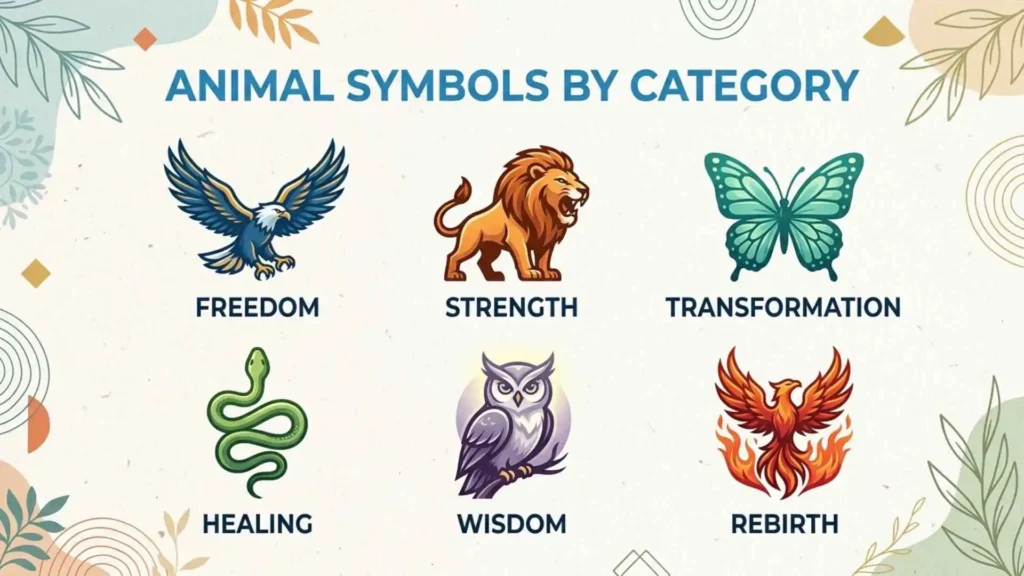
Grouping animals by their general associations makes it easier to identify a symbol that matches a particular message.
Animals That Symbolize Strength and Courage
The lion, tiger, bear, eagle, and elephant are frequently associated with strength and courage.
- Lion: Leadership, bravery, and authority.
- Tiger: Power, determination, and confidence.
- Bear: Protection, resilience, and physical strength.
- Eagle: Ambition, independence, and vision.
- Elephant: Endurance, patience, and powerful presence.
Choose an animal based on the kind of strength you want to express. A lion may communicate leadership, while a bear may better suggest protection and resilience.
Animals That Symbolize Wisdom and Intelligence
The owl, elephant, raven, fox, and dolphin are commonly associated with wisdom or intelligence.
The owl is especially recognizable as a symbol of learning. The fox often represents practical cleverness, while the raven may be connected with mystery and intelligence in different cultural stories. Elephants can represent experience and memory, and dolphins are frequently associated with communication and social behavior.
These symbols can work well for educational projects, book illustrations, personal emblems, and designs about thoughtful decision-making.
Animals That Symbolize Love and Loyalty
Doves, swans, wolves, and dogs can represent love, loyalty, companionship, or devotion.
Doves are frequently associated with peace and affection. Swans are used in some artistic traditions to express grace and romantic devotion. Wolves may represent group bonds, while dogs commonly symbolize friendship, trust, and companionship.
The meaning depends on the image and its intended context. For example, two birds together may communicate partnership more clearly than a single bird used in isolation.
Animals That Symbolize Change and New Beginnings
The butterfly, snake, frog, and moth can be used to represent change, renewal, or transformation.
The butterfly is the clearest general symbol of personal transformation. The snake’s shedding of skin provides a natural association with renewal, while the frog’s development from tadpole to adult makes it relevant to life cycles and change.
These symbols are often used in tattoos, artwork, personal gifts, and designs that mark a new stage of life.
Animals That Symbolize Protection
The bear, dog, lion, elephant, and some guardian animals in particular cultural traditions can represent protection.
A bear may communicate strength and defense, a dog may suggest loyalty and watchfulness, and a lion can symbolize authority and courage. Elephants may convey strength and stability.
For cultural or religious artwork, research the specific guardian figure or tradition before assigning a meaning. Not every animal used as a protector in one culture has the same role elsewhere.
Animal Symbolism Across Cultures
Animals have appeared in mythology, folklore, religious practices, and community identities throughout history. Their meanings are shaped by local environments, traditional stories, social values, and relationships between humans and other species.
Ancient Egyptian Animal Symbols
Animals played important roles in ancient Egyptian religious imagery. Deities were sometimes represented with animal heads or associated with particular animals, creating visual connections between animal characteristics and divine qualities.
For example, Horus is commonly depicted with a falcon head, while Anubis is associated with a jackal or jackal-like figure. These images belonged to a larger religious system and cannot be fully understood through simple modern definitions such as “the falcon means freedom.”
Ancient Egyptian animal imagery is especially relevant to historical research, museum displays, illustrations, and designs inspired by ancient civilization.
Greek Animal Symbolism
Animals appeared in ancient Greek mythology as companions of deities, creatures in heroic stories, and symbols in art.
The owl’s association with Athena is a well-known example of animal symbolism connected with wisdom. Other animals appear in myths with meanings that depend on the specific story, character, or ritual.
When using Greek animal symbols, consider the myth or deity involved instead of assuming that every animal has one fixed interpretation.
Chinese Animal Symbolism
Animals have important roles in Chinese mythology, folklore, art, and the traditional zodiac system. Dragons are associated with auspicious power and imperial imagery in many historical contexts, while tigers can represent strength and protection.
The meanings of animals may differ between folk beliefs, zodiac interpretations, decorative traditions, and specific historical periods. A symbol used for good fortune in one context may carry a different emphasis elsewhere.
South Asian Animal Symbolism
Animal symbolism is prominent in the religious stories, art, and traditions of South Asia. In Hindu traditions, Ganesha’s elephant head is central to his visual identity, while the cow holds special religious and cultural significance for many Hindus.
Animals may also appear as companions or mounts of deities, characters in epics, and figures in local folklore. Their significance should be interpreted within the relevant tradition rather than reduced to a general spiritual meaning.
Spiritual Animal Meanings and Their Interpretations
Some people explore animal symbols through spirituality, personal reflection, dreams, or the idea of a spirit animal. Within these approaches, an animal may represent a quality that someone wants to develop or a theme they are considering in their life.
For example, someone may associate a butterfly with personal growth, an owl with reflection, or a bear with strength and protection. These meanings can be useful as personal metaphors, but they should not be treated as scientifically established predictions or universal spiritual rules.
The phrase “spirit animal” also has specific meanings in some Indigenous traditions. It is important not to treat the beliefs of diverse Indigenous communities as one interchangeable system or use sacred concepts without understanding their cultural background.
If you are exploring spiritual animal symbolism, consider the source of the interpretation, the tradition in which it developed, and what the symbol means to you personally.
Animal Symbols for Tattoos, Art, and Logos
Animal imagery can communicate a message quickly, making it useful in personal artwork, tattoos, clothing, illustrations, and business branding. The best choice depends on the intended audience and the qualities you want the image to express.
Choosing an Animal Symbol for a Tattoo
Think about the personal meaning you want your tattoo to carry. A butterfly may represent a new beginning, a wolf may express loyalty, and an eagle may communicate independence. A snake can be suitable for transformation, but it may also suggest danger depending on its design and cultural context.
Consider the animal’s pose, surrounding imagery, artistic style, and placement. Research cultural or religious associations before using imagery that belongs to a specific community or sacred tradition.
Choosing Animal Symbols for Art
Artists can use animals to express emotion, build a story, or establish a particular atmosphere. A dove may communicate peace, a raven may create a mysterious mood, and a fox may suggest cleverness.
The surrounding colors, shapes, setting, and other objects can change how viewers interpret the animal. A useful design should therefore consider the entire composition rather than relying only on a list of symbolic meanings.
Choosing Animal Symbols for Logos
Businesses and organizations often use animals to communicate qualities associated with their identity. An eagle can suggest ambition, a bear can convey strength, and a bee can represent teamwork or productivity.
Before selecting an animal for a logo, consider whether the symbol fits the audience, brand personality, and industry. Check existing logos and trademarks, and avoid designs that are too similar to established brands.
How to Choose the Right Animal Symbol
Use these steps to select an animal symbol for personal or creative purposes.
- Identify the message. Decide whether you want to represent courage, love, wisdom, independence, protection, or transformation.
- Explore suitable animals. Compare several animals rather than choosing the first one you recognize.
- Research cultural context. Check whether the animal has specific religious, historical, or community-related meanings.
- Consider visual style. A realistic lion, a minimalist owl, and an abstract butterfly can communicate different moods.
- Think about your audience. A symbol may be understood differently by people from different cultural backgrounds.
- Keep the meaning personal but accurate. You can choose your own association while distinguishing it from established historical or cultural interpretations.
The right animal symbol is one that communicates your intended idea clearly and respectfully.
Frequently Asked Questions About Animal Symbols
What are the most common animal symbols?
Common animal symbols include the lion for courage, the owl for wisdom, the butterfly for transformation, the eagle for freedom, the dove for peace, and the wolf for loyalty. These are broad associations, and their meanings can vary across cultures.
Which animal symbolizes strength?
The lion, tiger, bear, elephant, and eagle are frequently associated with strength. The lion often suggests leadership, the bear protection, and the eagle independence and power.
Which animal symbolizes wisdom?
The owl is one of the best-known symbols of wisdom and knowledge. Elephants, ravens, and foxes can also represent wisdom or intelligence in particular cultural and artistic contexts.
Which animal symbolizes transformation?
The butterfly is a widely recognized symbol of transformation because of its life cycle. The snake can also represent renewal through shedding its skin, while the frog may symbolize change through its development from tadpole to adult.
Which animals symbolize love and loyalty?
Doves, swans, wolves, and dogs are often associated with love, loyalty, partnership, or companionship. The intended meaning depends on the cultural tradition and the way the animal is represented.
Do animal symbols have the same meaning in every culture?
No. Animal symbolism changes according to cultural beliefs, religion, history, folklore, and context. An animal associated with wisdom in one tradition may represent something different in another.
Can animals symbolize more than one thing?
Yes. A snake can represent danger, renewal, healing, or transformation. A raven may be associated with intelligence, mystery, or death in different traditions. The surrounding story and cultural context help determine the intended meaning.
How do I choose an animal symbol for a tattoo?
Start with the quality or experience you want to express, then research animals associated with that idea. Consider the design, cultural context, and personal significance before choosing a tattoo.
Conclusion
Animal symbols offer a meaningful way to express qualities, emotions, beliefs, and cultural ideas. Lions commonly represent courage, owls wisdom, butterflies transformation, eagles freedom, wolves loyalty, and doves peace. Other animals, including elephants, snakes, foxes, bears, bees, and turtles, carry a wide range of associations.
However, animal meanings are not universal definitions. They develop through cultural traditions, religious stories, folklore, observations of nature, and personal experiences. Understanding these differences makes animal symbolism more useful for research, artwork, tattoos, and branding.
Whether you are searching for an animal that represents strength, wisdom, love, protection, or new beginnings, begin with the message you want to communicate and explore the relevant animal meanings in their proper context.

I am Lisa Reynolds, a linguist fascinated by the ever-changing world of slang. I enjoy researching how slang reflects trends, technology, and social connections. I wrote “Text Talk: Understanding Digital Slang” and “From Street to Screen: Slang in Media”, exploring the influence of digital communication on language. I love sharing my discoveries in a way that feels like a conversation with friends, so you feel the culture and humor behind every phrase.
 John Carter