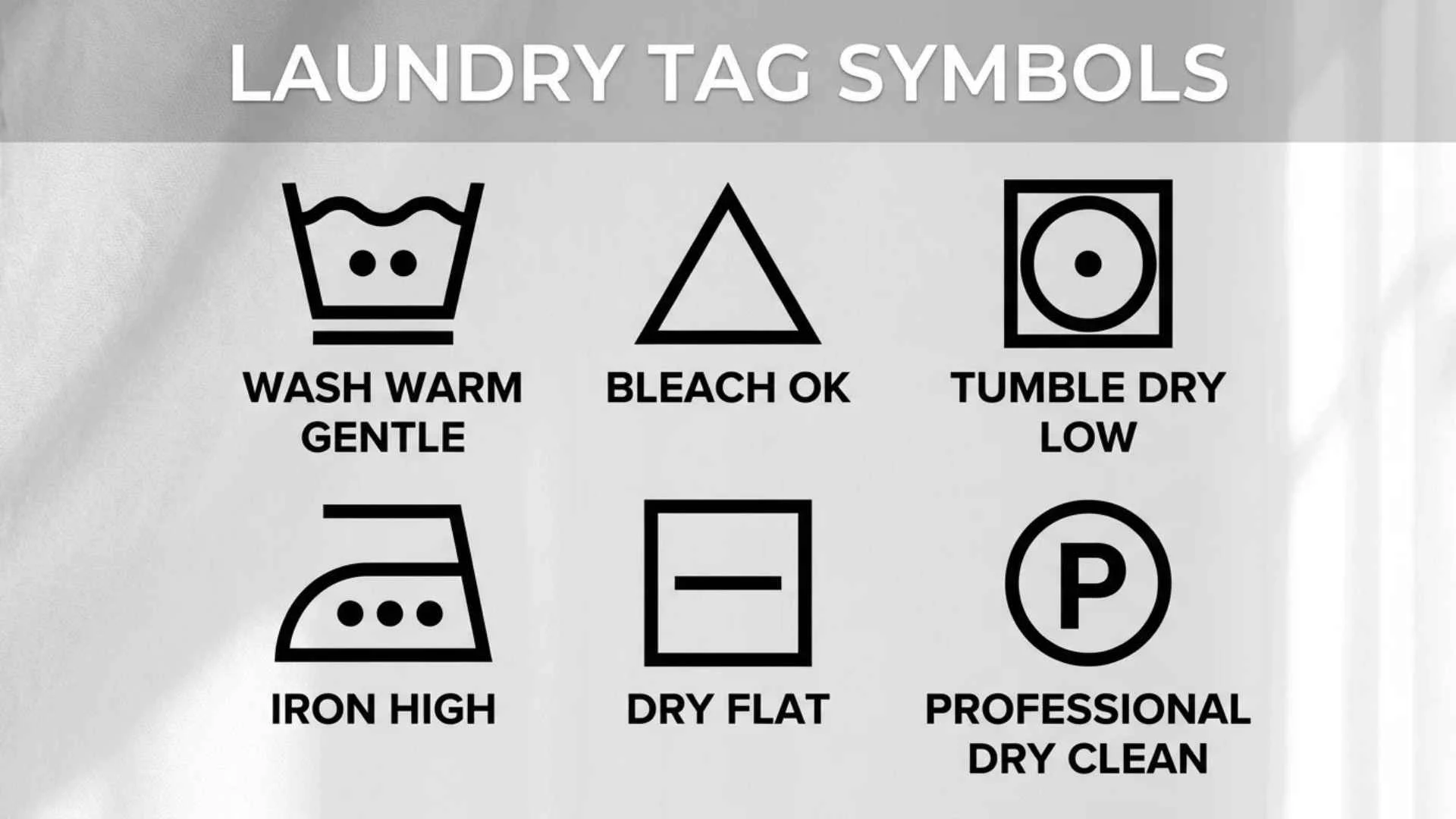
Have you ever looked at a clothing tag and wondered what those tiny symbols actually mean? A wash tub, a triangle, a square, and an iron might look simple, but each one gives you important instructions for caring for your clothes.
Understanding laundry care symbols helps you choose the right washing cycle, avoid excessive heat, and protect delicate fabrics. These small markings can make the difference between a sweater that keeps its shape and one that shrinks after a single wash.
This guide explains the most common laundry symbols, their meanings, and the actions you should take. You’ll learn how to read clothing label symbols, choose suitable washing temperatures, interpret drying instructions, and avoid mistakes that can damage your favorite garments.
The international care-label system follows five main categories: washing, bleaching, drying, ironing, and professional textile care. ISO 3758:2023 describes this system and explains how symbols communicate treatments that should not cause irreversible damage when followed correctly.
What Do Laundry Symbols Mean?
Laundry symbols are visual instructions that explain how to wash, bleach, dry, iron, and professionally clean clothing. Manufacturers use them to communicate garment-care requirements without relying entirely on written language.
Each symbol represents a particular treatment. Additional marks, including dots, numbers, lines, and crosses, explain the limits or conditions for that treatment.
For example, a wash tub containing the number 30 indicates a maximum washing temperature of 30°C under the international symbol system. A line beneath that tub indicates a gentler washing process.
A crossed-out tumble-drying symbol means you shouldn’t put the garment through a tumble dryer. Instead, check the remaining instructions for an appropriate drying method.
The Five Main Laundry Care Symbol Categories
| Symbol category | What it represents | What you need to know |
| Wash tub | Washing instructions | Maximum temperature and washing intensity |
| Triangle | Bleaching instructions | Whether bleaching is allowed and which types are permitted |
| Square | Drying instructions | Tumble drying or natural drying methods |
| Iron | Ironing instructions | Permitted ironing temperature |
| Circle | Professional textile care | Dry-cleaning or professional wet-cleaning requirements |
These categories form the foundation of most international laundry label symbols. Once you recognize the basic shapes, the smaller details become much easier to understand.
Keep in mind that a care label describes suitable treatments, not guaranteed cleaning results. A garment may tolerate the recommended wash but still need stain treatment for stubborn dirt.
How to Read Laundry Care Symbols on Clothing Labels
Reading clothing care symbols becomes straightforward when you follow a consistent process. Start with the main shape, examine any marks inside or underneath it, and then check the remaining instructions.
Most international care labels present the five main categories in this order:
- Washing
- Bleaching
- Drying
- Ironing
- Professional textile care
This order helps you work through the garment’s complete care routine. For example, washing instructions tell you how to clean a shirt, while drying instructions explain how to remove moisture afterward.
What Do Dots, Lines, Numbers, and Crosses Mean?
Small markings often carry the most important details. Here’s how to interpret the most common ones.
| Marking | General meaning | Where you’ll commonly see it |
| Number inside a wash tub | Maximum washing temperature in Celsius | Washing symbols |
| One line beneath a wash tub | Mild washing process | Washing symbols |
| Two lines beneath a wash tub | Very mild washing process | Washing symbols |
| Dots inside an iron | Ironing heat level | Ironing symbols |
| Dots inside a tumble dryer symbol | Drying heat level | Tumble-drying symbols |
| Cross over a symbol | The treatment is prohibited | All applicable categories |
| Letters inside a circle | Professional cleaning process or solvent guidance | Professional-care symbols |
Important: Dots do not have one universal meaning across every laundry symbol. Their meaning depends on the symbol they appear inside.
For instance, dots inside an iron indicate ironing heat. Dots inside a tumble-drying symbol indicate the permitted dryer temperature level.
Lines also depend on context. Lines beneath a wash tub indicate a milder washing process, while lines inside a square can describe natural drying methods.
Where Can You Find Clothing Care Labels?
Manufacturers usually attach care labels where you can find them without damaging the garment.
Common locations include:
- Inside a shirt’s side seam.
- Along the inner seam of pants or skirts.
- Inside a jacket near the lining.
- Near the collar of certain garments.
- Inside a dress or sweater seam.
Some labels contain several layers of information. You may find fiber content, washing instructions, country-of-origin details, and manufacturer information on the same tag.
Read the complete label before washing. A garment made from cotton may still require gentle treatment because of its dye, construction, lining, or decorative finish.
Washing Symbols on Clothes and Their Meanings
The wash tub symbol is one of the most important marks on a clothing tag. It tells you whether domestic washing is allowed and how gently you should treat the garment.
The tub may contain a temperature number, a hand, or lines beneath its base. Each variation changes the instructions.
Plain Wash Tub Symbol: Machine Washing Instructions
A plain wash tub indicates that washing is permitted under the conditions specified by the rest of the symbol.
If the tub has no temperature number, don’t assume that hot water is safe. Check the complete label and use a suitable temperature for the garment.
For everyday clothing, the correct approach is to choose the mildest effective setting that follows the care instructions and meets your cleaning needs.
Wash Tub With Numbers: Washing Temperature Symbols
Numbers inside the wash tub indicate the maximum permitted washing temperature in degrees Celsius under the international system.
| Temperature symbol | Maximum temperature | Practical guidance |
| 30 | 30°C / 86°F | A cooler wash for garments with lower temperature limits |
| 40 | 40°C / 104°F | A common limit for many everyday garments |
| 50 | 50°C / 122°F | Use only when the label permits this temperature |
| 60 | 60°C / 140°F | Suitable only for garments whose labels allow hotter washing |
These temperatures are limits, not targets. If a shirt carries a 40°C symbol, you can generally wash it at a lower temperature when that setting meets your needs.
Cooler washing can also reduce energy consumption when it avoids water heating. However, you should still choose a suitable cycle and detergent for the garment and the level of soil.
The correct temperature depends on the care label instructions, not simply whether the fabric looks thick or durable.
Wash Tub With One Line: Mild Washing Cycle
One horizontal line beneath the wash tub indicates a mild washing process with reduced mechanical action.
This instruction matters because a washing machine does more than move water around. Its drum movement and spinning can stretch fibers, create friction, and affect delicate finishes.
A suitable gentle or easy-care program may provide the reduced agitation required. Choose the closest available setting that matches the label.
Wash Tub With Two Lines: Very Mild Washing Cycle
Two horizontal lines beneath the tub indicate a very mild washing process. This treatment provides additional protection for mechanically sensitive textiles.
Wool garments are one example of items that may need this level of care. Some fine knits and delicate fabrics also require especially gentle handling.
When using a washing machine, select a compatible wool or very delicate program if the label permits machine washing. Avoid assuming that every program called “delicate” provides the same level of protection.
Hand in a Wash Tub: Hand-Wash Symbol
Symbol description: A hand appears inside the wash tub.
The hand-wash symbol means you should wash the garment by hand under the permitted conditions.
A careful hand-washing routine looks like this:
- Fill a clean basin with water at the temperature specified by the label.
- Dissolve a suitable detergent before adding the garment.
- Submerge the item and move it gently through the water.
- Avoid vigorous rubbing, pulling, or twisting.
- Rinse carefully until the detergent has been removed.
- Press out excess water gently if the instructions allow it.
- Reshape the garment and dry it according to its drying symbols.
Avoid leaving delicate colored garments wet for extended periods. Some dyes may bleed, and prolonged dampness can affect the garment’s appearance.
Crossed-Out Wash Tub: Do Not Wash
A crossed-out wash tub means domestic washing is prohibited under that care instruction.
Don’t assume that hand washing will solve the problem. Some garments are sensitive to water itself, while others have construction or materials that cannot tolerate domestic washing.
Check whether the label permits professional dry cleaning or another form of care. If the label is unclear, consult the manufacturer or a qualified cleaner.
Twisted Cloth and Crossed-Out Twist: Wringing Instructions
A twisted-cloth symbol appears in some care-label systems to address wringing.
A crossed-out version means you shouldn’t wring the garment. Twisting wet fabric can stretch seams, distort knitwear, and damage delicate fibers.
Instead, press the water out gently if permitted. For suitable garments, rolling the item inside a clean towel can absorb excess moisture without aggressive twisting.
Machine-Wash Symbols and Washing Machine Settings
Understanding washing machine symbols and meanings helps you translate a clothing label into a practical machine setting. However, a care symbol and a machine’s program name aren’t necessarily identical.
A clothing label describes the treatment the garment can tolerate. Your appliance provides programs designed to deliver different combinations of agitation, temperature, rinsing, and spinning.
Normal, Permanent Press, and Delicate Cycles
| Machine cycle | Typical purpose | When to choose it |
| Normal | Regular washing action | Everyday garments that permit normal washing |
| Permanent press | Reduced creasing and gentler treatment than many normal cycles | Suitable easy-care and wrinkle-prone garments |
| Delicate | Gentler mechanical action | Clothing that permits delicate machine washing |
| Wool | Specialized handling for suitable wool garments | Wool items whose labels permit the selected treatment |
Program names and performance vary by appliance. Always compare the machine’s instructions with the garment’s care requirements.
A permanent press cycle doesn’t automatically satisfy every one-bar symbol. Similarly, a delicate cycle doesn’t make a hand-wash-only garment safe for machine washing.
How to Choose the Right Washing Temperature
Choosing a temperature is about balancing cleaning needs with fabric protection.
Cold water can work well for many everyday garments, lightly soiled clothing, and colors that benefit from gentler washing. It can also reduce the energy used to heat water.
Warm water may help with certain soils and garments that tolerate a higher temperature. Use it only within the label’s limits.
Hot water can be appropriate for some washable textiles, but it may cause shrinkage, fading, or damage to heat-sensitive materials. Never exceed the garment’s stated maximum temperature.
Remember that washing temperature is only one part of the process. Detergent choice, cycle intensity, load size, and rinsing also affect the result.
Spin Speed and Reduced Mechanical Action
Spin speed determines how quickly the washing machine rotates to remove water from clothing. Faster spinning can shorten drying time, but it may place extra stress on some garments.
When a label calls for a mild or very mild washing process, use a suitable program with reduced mechanical action. Follow the appliance instructions for spin-speed adjustments.
For delicate knitwear, structured clothing, or items prone to distortion, gentler water extraction may help preserve shape.
Can You Machine-Wash Clothes Labeled for Hand Washing?
Sometimes, but not automatically.
A washing machine’s dedicated hand-wash or wool program may be suitable for certain garments when their labels or manufacturer instructions permit that treatment. The program name alone doesn’t prove compatibility.
Before proceeding, check:
- Whether the label explicitly prohibits machine washing.
- Whether the garment’s manufacturer permits a machine wool or hand-wash program.
- Whether the machine offers the required temperature and gentle treatment.
- Whether the garment contains embellishments, linings, or trims that could be damaged.
When the label prohibits machine washing, follow that restriction unless the manufacturer provides more specific guidance.
Bleaching Symbols on Clothes Explained
Bleaching symbols use a triangle to communicate whether bleaching is permitted. The symbol can also restrict which bleaching agents are suitable.
This distinction matters because chlorine bleach and oxygen-based bleach aren’t interchangeable. Using the wrong product can cause discoloration or damage.
Empty Triangle: Bleaching Permitted
An empty triangle in the international care-label system means bleaching is permitted under the relevant standard.
This includes chlorine and oxygen-based bleaching agents, subject to the product’s directions and the garment’s condition.
It doesn’t mean every bleach product is appropriate for every stain or color. Always check the bleach label before use.
Triangle With Two Diagonal Lines: Non-Chlorine Bleach Only
A triangle containing two diagonal lines indicates that non-chlorine bleaching, such as oxygen bleaching, is permitted.
Chlorine bleach is not permitted under this instruction.
Oxygen-based products are commonly used for some color-safe stain treatments, but their suitability depends on the product formulation and garment. Follow both sets of instructions.
Triangle With CL: Chlorine Bleach Instruction
The letters CL may appear in older or regional care-label systems to indicate chlorine-bleaching guidance.
Don’t assume this marking belongs to every current international symbol set. The ISO 3758:2023 system uses an empty triangle for permitted bleaching and a triangle with diagonal lines for oxygen-only bleaching.
Crossed-Out Triangle: Do Not Bleach
A crossed-out triangle means bleaching is prohibited.
To protect the garment:
- Use a detergent without added bleach when necessary.
- Avoid applying household bleach directly to the fabric.
- Check stain-remover ingredients before treatment.
- Test any permitted stain treatment according to its directions.
If a stain remains after washing, repeated aggressive treatment may cause more damage than the stain itself. Choose a suitable product rather than automatically increasing the strength of the cleaning agent.
Drying Symbols and Their Meanings
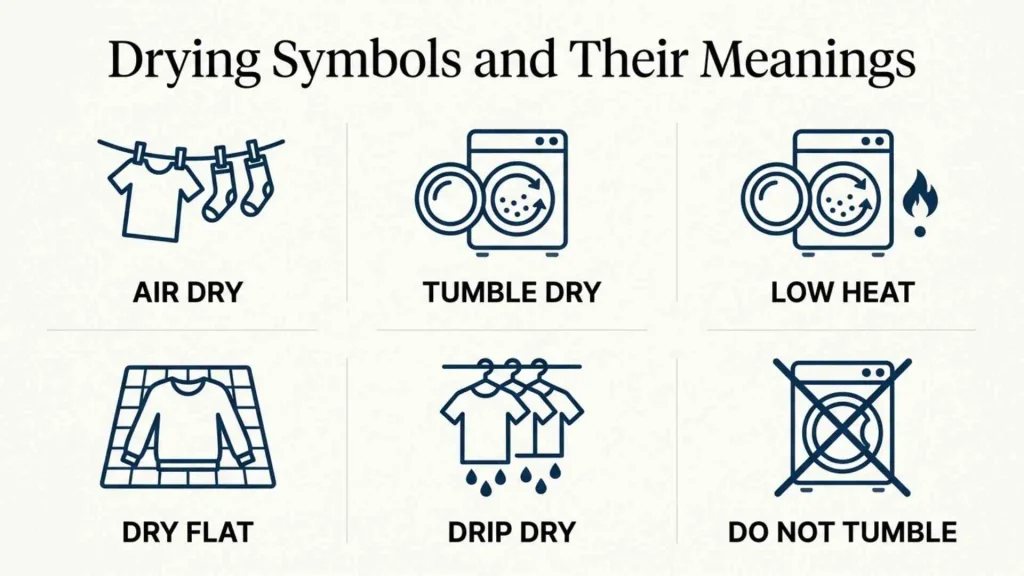
Drying symbols use a square to indicate drying instructions. A circle inside the square identifies tumble drying, while lines inside a square describe natural drying methods.
Understanding these drying symbols can help prevent shrinking, stretching, and unnecessary heat exposure.
Square With a Circle: Tumble-Drying Symbol
A square containing a circle means tumble drying is permitted under the conditions shown.
The dots inside the circle indicate the permitted heat level. More dots generally mean a higher permitted temperature under the relevant symbol system.
Check the symbol before selecting a dryer setting. A garment that tolerates washing may still be unsuitable for tumble drying.
Tumble Dry With One Dot
One dot indicates low-heat tumble drying.
This setting is useful for garments whose care labels restrict dryer heat. Select a low-temperature program and avoid adding extra heat simply to shorten the drying time.
Tumble Dry With Two Dots
Two dots indicate medium-heat tumble drying.
Choose a suitable medium-temperature setting if your dryer offers one. Remember that appliance temperatures and program names can vary.
Tumble Dry With Three Dots
Three dots indicate high-heat tumble drying in symbol systems that use this variant.
Only use high heat when the garment’s label permits it. You don’t need to choose the highest permitted temperature if a lower setting can dry the item effectively.
Crossed-Out Tumble-Dry Symbol
A crossed-out square with a circle means do not tumble dry.
Use a permitted natural-drying method instead. Depending on the label, this may mean line drying, drip drying, or flat drying.
Don’t rely on a low-heat dryer program to override a prohibition against tumble drying.
Line Drying, Drip Drying, and Flat Drying Symbols
The lines inside a square help explain how to dry a garment naturally.
| Symbol description | Meaning | Practical action |
| Square with one vertical line | Line drying | Hang the garment to dry |
| Square with multiple vertical lines | Drip line drying | Hang it without first removing excess water by spinning |
| Square with one horizontal line | Flat drying | Lay the garment horizontally |
| Square with multiple horizontal lines | Drip flat drying | Lay it flat while allowing water to drip away |
| Diagonal line in the square | Shade drying modifier | Dry in the shade when indicated by the complete symbol |
These descriptions refer to the international care-symbol system. Check the complete graphic when interpreting natural-drying instructions.
How to Dry Clothes Without Shrinking or Stretching Them
Safe drying begins with the garment’s label, not the assumption that every item belongs on a hanger.
For suitable woven garments, hanging may work well. Delicate knits can stretch under their own weight, so flat drying may be more appropriate when the label calls for it.
Follow these practical steps:
- Remove wet clothing carefully instead of pulling it by one sleeve.
- Reshape garments when their care instructions allow it.
- Use a clean, flat surface for items that require flat drying.
- Keep garments away from direct heat sources when heat could damage them.
- Allow enough airflow for moisture to escape.
- Avoid tumble drying when the label prohibits it.
The safest drying method is the one that follows the garment’s actual label. Fabric type offers helpful context, but it cannot replace the instructions.
Ironing Symbols and Temperature Meanings
The iron symbol tells you whether ironing is permitted and how much heat the garment can tolerate. Its dots indicate the maximum ironing temperature under the applicable care-label system.
Incorrect ironing can leave shiny patches, flatten textured fabric, melt synthetic fibers, or create permanent scorch marks. Reading the symbol before switching on your iron helps prevent these problems.
Iron With One Dot: Low Heat
One dot indicates low-temperature ironing.
This setting is commonly associated with heat-sensitive fabrics and some synthetic materials. However, fiber names alone don’t determine the correct setting.
Use the label as your guide. If the garment also says to avoid steam, follow that restriction.
Iron With Two Dots: Medium Heat
Two dots indicate medium-temperature ironing.
This setting may suit certain wool, silk, polyester, or blended garments when their labels permit it. These materials don’t all respond identically to heat, so check the complete instructions.
For delicate items, place a suitable pressing cloth between the iron and fabric if the garment’s instructions permit this method.
Iron With Three Dots: High Heat
Three dots indicate high-temperature ironing in the international symbol system.
Some cotton and linen garments can tolerate higher heat, but that doesn’t mean every cotton or linen item should receive it. Fabric finishes, dyes, blends, and garment construction can change the appropriate treatment.
Use the highest heat only when the care label permits it.
Iron With No Dots
An iron without dots indicates that ironing is permitted, but the symbol doesn’t provide a dot-based temperature level.
Don’t interpret the missing dots as permission to use maximum heat. Check any written instructions and begin with a cautious setting if the appropriate temperature remains unclear.
Crossed-Out Iron: Do Not Iron
A crossed-out iron means ironing is prohibited.
Avoid direct heat, even if wrinkles remain after washing. Depending on the garment, suitable alternatives may include reshaping while damp, hanging it properly, or using an approved steaming method.
Don’t assume steam is safe just because you aren’t pressing the garment with an iron. Steam still exposes fabric to heat and moisture.
Steaming and Ironing Delicate Fabrics
Steaming can relax wrinkles in some garments, but it isn’t a universal substitute for ironing.
Before steaming, check whether the care label permits the treatment. Keep heat-sensitive decorations, glued details, and delicate finishes in mind.
When ironing is permitted, these habits can help protect the fabric:
- Start with the lowest suitable temperature.
- Turn the garment inside out when appropriate.
- Avoid holding the iron in one place for too long.
- Use a pressing cloth if recommended.
- Allow the garment to cool before wearing or storing it.
Dry-Cleaning Symbols and Professional Cleaning Instructions
Professional-care symbols use a circle to communicate permitted professional cleaning treatments. The letters and additional markings inside or around the circle provide more specific instructions.
These dry-cleaning symbols matter because some garments cannot tolerate ordinary home washing. Structured jackets, certain embellished dresses, and delicate textiles may need specialized cleaning.
Plain Circle: Professional Cleaning Guidance
A plain circle is part of the professional-care symbol family. In the relevant international system, it indicates professional textile-care treatment.
Don’t interpret it as a guarantee that every solvent or cleaning method is acceptable. Check the complete symbol and any additional markings.
Circle With P or F: Professional Solvent Guidance
Letters inside a dry-cleaning circle communicate information about permitted professional cleaning processes or solvent categories.
The distinction matters because professional cleaners use different processes depending on the garment’s requirements.
| Marking | General purpose |
| P inside a dry-cleaning circle | Identifies a permitted professional cleaning process associated with specified solvents |
| F inside a dry-cleaning circle | Identifies a permitted professional cleaning process using a different specified solvent category |
| Bar beneath a dry-cleaning circle | Indicates a milder professional treatment |
| Two bars beneath a professional-care symbol, where used | Indicates a very mild treatment |
The letters are instructions for professional cleaners, not a recommendation for consumers to buy or handle cleaning solvents themselves.
Circle With a Bar Underneath
A bar beneath the professional dry-cleaning symbol indicates a gentler cleaning process.
Depending on the treatment, this may involve reduced mechanical action, lower drying temperatures, or tighter limits on moisture and other process conditions.
A professional cleaner can interpret these details and select a suitable process.
Crossed-Out Circle: Do Not Dry Clean
A crossed-out dry-cleaning circle means professional dry cleaning is prohibited under that instruction.
It doesn’t automatically mean the garment can be machine-washed. Check the washing and other care symbols to determine which alternatives are permitted.
If no safe domestic method is clear, contact the garment manufacturer or a qualified textile-care professional.
What Does Dry Clean Only Mean?
A dry clean only instruction means you shouldn’t assume that domestic washing is safe.
Some garments contain linings, adhesives, structured components, or decorative details that may react poorly to water or machine movement. Others may lose their shape or finish during an unsuitable wash.
When a garment carries this instruction:
- Follow the label rather than experimenting with a washing machine.
- Tell the cleaner about visible stains.
- Point out delicate trims or damaged areas.
- Keep the care label available so the cleaner can review the instructions.
Dry Cleaning vs. Professional Wet Cleaning
Dry cleaning and professional wet cleaning are different processes. Dry cleaning uses a suitable solvent rather than water as the primary cleaning medium, while professional wet cleaning uses water with specialized equipment, detergents, and controlled handling.
Both methods require suitable procedures and finishing techniques. Professional wet cleaning is not the same as putting a garment through a household washing machine.
Quick Laundry Symbols Chart: Common Meanings at a Glance
When you’re standing beside a washing machine with a clothing tag in hand, you may not want to read a full guide. This quick-reference table summarizes the most common laundry symbol meanings.
The symbol descriptions below are written in words so you can match them with the actual markings on your garment.
| Symbol description | Meaning | What to do |
| Wash tub with a temperature number | Maximum washing temperature | Stay at or below the indicated limit |
| Wash tub with one bar | Mild washing process | Choose an appropriate gentler cycle |
| Wash tub with two bars | Very mild washing process | Use a compatible very gentle program |
| Hand inside a wash tub | Hand washing | Wash gently according to the label |
| Crossed-out wash tub | Do not wash | Follow another permitted care method |
| Empty triangle | Bleaching permitted | Check the bleach product instructions |
| Triangle with two diagonal lines | Non-chlorine bleaching only | Avoid chlorine bleach |
| Crossed-out triangle | Do not bleach | Use suitable bleach-free products |
| Square with a circle | Tumble drying | Check the dots for heat guidance |
| Crossed-out square with a circle | Do not tumble dry | Choose a permitted natural-drying method |
| Square with vertical line or lines | Natural line drying | Hang the garment as instructed |
| Square with horizontal line or lines | Natural flat drying | Lay the garment flat as instructed |
| Iron with one dot | Low-temperature ironing | Use low heat if ironing is permitted |
| Iron with two dots | Medium-temperature ironing | Select an appropriate medium setting |
| Iron with three dots | High-temperature ironing | Use higher heat only when permitted |
| Crossed-out iron | Do not iron | Avoid ironing |
| Circle with professional-care letters | Professional cleaning instructions | Show the complete label to a cleaner |
| Crossed-out professional dry-cleaning circle | Do not dry clean | Follow another permitted method |
This chart covers common symbols rather than every possible variation. Some care labels include additional marks, and regional labeling conventions can differ.
For verified graphics and the full international symbol set, consult the GINETEX care symbols reference.
Laundry Care Instructions for Different Fabrics
Different fabrics respond differently to water, heat, friction, and drying methods. However, the fiber name alone doesn’t tell you everything about a garment’s needs.
Fabric care symbols provide the most reliable starting point because they account for the treatment the finished garment can tolerate.
Cotton and Linen Care Instructions
Cotton and linen are common natural fibers, but their care requirements can vary widely.
Some cotton T-shirts tolerate regular machine washing, while others may shrink, fade, or lose their shape under excessive heat. Linen often wrinkles easily and may need careful handling to preserve its appearance.
For cotton and linen garments:
- Check the maximum washing temperature.
- Separate colors when dye transfer is a concern.
- Avoid excessive heat if the label restricts it.
- Follow the specified ironing temperature.
- Choose the permitted drying method.
Don’t assume a white cotton shirt can tolerate hot water or chlorine bleach simply because it’s made from cotton.
Wool and Cashmere Care
Wool and cashmere can lose their shape when exposed to unsuitable heat, agitation, or handling. Some garments are washable, while others require professional care.
Follow these precautions:
- Use a wool or hand-wash program only when the label permits it.
- Choose a suitable detergent for wool when recommended.
- Avoid twisting or aggressively rubbing wet fibers.
- Reshape the garment gently after washing.
- Use flat drying when the label specifies it.
A sweater may stretch if you hang it while wet. Flat drying can help support its shape when that method is permitted.
Silk Care Instructions
Silk is valued for its smooth texture and appearance, but it can be sensitive to certain cleaning treatments.
Some silk garments permit hand washing, while others require professional cleaning. Dye, lining, embellishments, and finishing treatments can all affect the correct method.
Check the label before washing silk. Avoid harsh detergents, aggressive rubbing, and unapproved heat treatments.
If the garment carries a dry-clean-only instruction, don’t assume a gentle hand wash will be safe.
Polyester, Nylon, and Other Synthetic Fabrics
Polyester and nylon are widely used in everyday clothing, sportswear, jackets, and blended fabrics. Their care requirements still vary by construction and finish.
For synthetic garments:
- Follow the maximum washing temperature.
- Check whether tumble drying is allowed.
- Avoid excessive heat when the label restricts it.
- Use the permitted ironing temperature.
- Take extra care with elastic panels, coatings, and bonded details.
A polyester shirt and a polyester jacket may need different care because their linings, finishes, and construction aren’t identical.
Blended Fabrics and Embellished Clothing
Blended fabrics combine two or more fibers, such as cotton and polyester. Their properties depend on the blend and the way the garment was made.
Decorative details add another layer of complexity. Sequins, printed designs, glued decorations, linings, and structured shoulders may not tolerate the same treatment as the main fabric.
When a garment combines several materials, follow the complete care label rather than choosing a treatment based on just one fiber.
Common Laundry Mistakes and How to Prevent Fabric Damage
A small laundry mistake can shorten a garment’s useful life. Fortunately, many common problems are avoidable once you understand the instructions on clothing tags.
Washing at a Higher Temperature Than Recommended
Hotter water isn’t always better. Excessive heat can contribute to shrinkage, dye loss, and damage to sensitive finishes.
How to avoid it: Check the wash tub symbol and stay within its temperature limit. Use a lower temperature when it meets your cleaning needs.
Choosing the Wrong Wash Cycle
A normal cycle may expose delicate garments to more mechanical action than they can tolerate.
How to avoid it: Match the washing program to the label. Use a suitable mild or very mild cycle when the symbol requires it.
Using the Wrong Bleach
Chlorine bleach can damage garments that permit only non-chlorine bleaching. Other products may also affect dyes or finishes.
How to avoid it: Read the triangle symbol and the bleach product’s instructions before treating stains.
Tumble-Drying Clothes That Need Air Drying
Excessive dryer heat can shrink some garments or distort their shape. Even low heat isn’t appropriate when the label prohibits tumble drying entirely.
How to avoid it: Check the square symbol and follow its drying instructions. Use line drying or flat drying when the label permits those methods.
Ironing at Excessive Heat
An iron can leave shiny marks, scorch fabric, or melt certain synthetic fibers.
How to avoid it: Check the dots inside the iron symbol. Use a suitable temperature and avoid ironing when the symbol prohibits it.
Ignoring Professional-Cleaning Instructions
Some garments can’t tolerate ordinary home washing. Their construction or materials may require specialized cleaning.
How to avoid it: Follow the professional-care symbols and consult a qualified cleaner if the instructions are unclear.
How to Make Laundry More Efficient and Extend Clothing Life
Following garment care instructions can help protect clothing from avoidable damage. It can also reduce the need to replace garments prematurely.
The biggest benefits often come from simple habits rather than expensive products or complicated routines.
Use Appropriate Washing Cycles and Temperatures
Choose a cycle that matches the garment’s care requirements. Avoid unnecessarily hot water when a cooler setting provides suitable cleaning.
Lower-temperature washing can reduce the energy used to heat water. However, the right choice still depends on the fabric, soil level, detergent, and hygiene needs.
Avoid Overloading the Washing Machine
Overloading can restrict movement and prevent clothing from rinsing properly. Follow your appliance’s load guidance and leave enough room for the garments to move.
For delicate clothing, smaller loads may be appropriate when the care instructions or machine program calls for them.
Air-Dry When the Label Allows It
Air drying can reduce dryer energy use and avoid unnecessary tumble-drying heat. It can also suit garments that require line drying or flat drying.
Choose the method specified by the label. Hanging, drip drying, and flat drying aren’t interchangeable for every garment.
Avoid Washing Clothes More Often Than Necessary
Not every garment needs washing after every brief wear. When hygiene needs and the garment’s use allow it, airing suitable clothing may reduce unnecessary washing.
Underwear, workout clothing, heavily soiled items, and garments requiring frequent cleaning still need appropriate care.
Can Following Laundry Symbols Save Money?
It can help reduce avoidable clothing damage and premature replacement. A garment that keeps its shape, color, and finish may remain wearable for longer.
The exact savings depend on how often you do laundry, your appliances, your clothing choices, and your local utility costs. Avoid assuming that one laundry habit will produce the same savings for every household.
How Do Laundry Care Symbols Support Sustainable Clothing Care?
Care labels can support more responsible clothing maintenance by helping you avoid unnecessary damage. Keeping garments wearable for longer may reduce how often you need to replace them.
Practical habits include:
- Following the permitted washing temperature.
- Avoiding unnecessary bleaching.
- Choosing the correct drying method.
- Preventing avoidable heat damage.
- Repairing suitable garments instead of discarding them immediately.
- Donating or reselling wearable clothing when you no longer need it.
These steps won’t eliminate textile waste, but they can help you make better use of the clothes you already own.
Frequently Asked Questions About Laundry Symbols
What Do Laundry Symbols Mean?
Laundry symbols explain how to wash, bleach, dry, iron, and professionally clean garments. Numbers, dots, lines, letters, and crosses provide additional instructions about temperature, treatment intensity, or prohibited methods.
What Do the Dots on Laundry Symbols Mean?
Dots indicate heat levels in relevant ironing and tumble-drying symbols. More dots generally indicate a higher permitted temperature. Always check which symbol contains the dots because their meaning depends on the treatment.
What Do the Lines Under a Wash Tub Mean?
One line indicates a mild washing process with reduced mechanical action. Two lines indicate a very mild process for garments requiring additional protection.
What Does a Crossed-Out Washing Tub Mean?
A crossed-out wash tub means domestic washing is prohibited. Check the remaining care symbols to find out whether professional cleaning or another treatment is permitted.
What Does a Triangle With Diagonal Lines Mean?
Under the ISO 3758:2023 international system, a triangle with two diagonal lines means non-chlorine bleaching is permitted. Chlorine bleach should not be used under this instruction.
What Does a Circle With a Letter Mean on a Clothing Label?
A letter inside a professional dry-cleaning circle provides guidance about the permitted cleaning process or solvent category. These instructions help professional cleaners select an appropriate treatment.
What Does a Square With a Circle Mean?
A square with a circle represents tumble drying. Dots inside the circle indicate the permitted heat level under the relevant symbol system.
Can You Wash Clothes Marked Dry Clean Only?
You shouldn’t assume that domestic washing is safe. Some garments contain materials, linings, adhesives, or construction details that may be damaged by water or machine movement. Follow the label and consult a professional cleaner when necessary.
How Can You Prevent Clothes From Shrinking?
Follow the garment’s washing and drying instructions. Stay within the specified temperature limit and avoid tumble drying when prohibited. Choose suitable drying methods for garments that need careful shape retention.
What Should You Do If a Clothing Label Is Missing or Unreadable?
Check the manufacturer’s product information if it’s available. If you can’t confirm the instructions, take a cautious approach based on the garment’s construction and materials. Avoid aggressive washing, bleaching, and high heat until you can establish a suitable method.
Final Thoughts on Understanding Laundry Care Symbols
Laundry care symbols make clothing maintenance easier when you know how to interpret them. The wash tub explains washing requirements, the triangle covers bleaching, the square describes drying, the iron sets heat limits, and the circle provides professional-care guidance.
Remember these essential rules:
- Check the entire care label before washing.
- Treat temperature numbers as maximum limits.
- Pay attention to dots, lines, and crossed-out symbols.
- Choose washing and drying methods that match the garment’s requirements.
- Seek professional advice when the label prohibits domestic care or remains unclear.
You don’t need to memorize every symbol at once. Keep a quick-reference chart nearby and check unfamiliar markings before starting a load.
A few seconds spent reading a clothing tag can help protect your favorite garments, reduce avoidable damage, and keep your wardrobe in better condition for longer.
Sources and Further Reading
These sources provide the international symbol framework used throughout this guide. Always consider the actual garment label and any applicable regional labeling requirements when choosing a care method.

I am Lisa Reynolds, a linguist fascinated by the ever-changing world of slang. I enjoy researching how slang reflects trends, technology, and social connections. I wrote “Text Talk: Understanding Digital Slang” and “From Street to Screen: Slang in Media”, exploring the influence of digital communication on language. I love sharing my discoveries in a way that feels like a conversation with friends, so you feel the culture and humor behind every phrase.
 John Carter