Washing instructions symbols help you understand how to clean, dry, iron, and care for your clothes without damaging the fabric. These small signs appear on clothing labels and provide important information about washing temperatures, machine settings, bleaching, drying methods, and professional cleaning requirements.
However, many people find these symbols confusing, especially when a clothing label contains several signs, dots, lines, or crossed-out shapes. Choosing the wrong washing method can cause clothes to shrink, lose their color, stretch, or become damaged.
Whether you are washing cotton shirts, delicate silk garments, wool sweaters, or everyday synthetic clothing, understanding washing instructions symbols makes laundry easier. This guide explains the most common laundry symbols, their meanings, and how to interpret complete clothing care labels correctly.
Quick Reference: Washing Instructions Symbols Chart
Before exploring each category, use this quick-reference guide to understand the five main laundry symbol groups.
| Symbol appearance | Meaning | What you should do |
| Water-filled tub | Washing | Follow the temperature and cycle instructions |
| Triangle | Bleaching | Check whether bleach is permitted |
| Square | Drying | Follow the recommended drying method |
| Iron | Ironing | Select the appropriate heat setting |
| Circle | Professional cleaning | Follow dry-cleaning or professional-care instructions |
These five categories form the foundation of most modern clothing care labels. Additional markings, including dots, numbers, lines, and crosses, provide more specific instructions.
What Are Washing Instructions Symbols?
Washing instructions symbols are standardized visual signs printed on garment care labels. They tell consumers how to clean and maintain different fabrics safely.
Many internationally used clothing care symbols follow ISO 3758, which establishes a system for displaying textile care instructions through symbols.
Instead of writing lengthy instructions in multiple languages, manufacturers use recognizable shapes that communicate washing and maintenance requirements.
These symbols generally cover five areas:
- Washing: Explains the permitted washing method and temperature.
- Bleaching: Indicates whether chlorine or non-chlorine bleach is allowed.
- Drying: Provides instructions for tumble drying and natural drying.
- Ironing: Shows the recommended ironing temperature.
- Professional care: Explains suitable professional dry-cleaning or wet-cleaning processes.
You can usually find these symbols on small labels attached to the inside seam, neckline, or waistband of clothing.
Washing Tub Symbols and Their Meanings
The washing tub is one of the most recognizable laundry symbols. It looks like a container filled with water and provides instructions about washing garments.
Different numbers, lines, and additional markings change its meaning.
Normal Machine Wash Symbol
A plain washing tub without additional markings indicates that the garment can undergo a normal washing process.
You can generally use a standard washing machine cycle, provided you follow any temperature instructions displayed inside the tub.
Mild Wash Symbol
A washing tub with one horizontal line underneath indicates a mild washing process.
This means the garment needs reduced mechanical action and a gentler spin cycle than normal washing.
It is useful for clothing that requires additional care during machine washing.
Very Mild Wash Symbol
A tub with two horizontal lines underneath indicates a very mild washing process.
Choose a delicate or specially designed gentle cycle with reduced agitation and spinning.
This instruction is particularly important for sensitive fabrics that can become stretched or damaged through excessive movement.
Hand Wash Symbol
A hand inside a water-filled tub indicates that the garment should be washed by hand.
Use water at the indicated temperature, a suitable detergent, and gentle movements. Avoid twisting or aggressively rubbing the fabric.
Do Not Wash Symbol
A washing tub crossed out with an X means the garment should not be washed using water.
Check the remaining care symbols to determine whether professional cleaning is required.
Washing Temperature Symbols Explained
Numbers inside washing tub symbols indicate the maximum washing temperature recommended for the garment.
The number represents degrees Celsius, not a mandatory temperature that must always be used.
| Temperature symbol | Maximum temperature | General application |
| 20°C | 20°C | Very delicate or lightly soiled items |
| 30°C | 30°C | Delicate and colored clothing |
| 40°C | 40°C | Many everyday garments |
| 50°C | 50°C | Fabrics specifically approved for warmer washing |
| 60°C | 60°C | Certain durable textiles |
| 70°C | 70°C | Specific heat-resistant textiles |
| 95°C | 95°C | Certain textiles designed for very hot washing |
Always follow the actual temperature printed on the garment label.
What Does 30°C Mean on a Clothing Label?
A 30°C washing symbol means the garment should not be washed at a temperature higher than 30 degrees Celsius.
This setting is commonly suitable for many colored garments and delicate materials. It can also help reduce unnecessary exposure to heat.
What Does 40°C Mean on a Clothing Label?
A 40°C symbol permits washing at a maximum temperature of 40 degrees Celsius.
Many everyday garments, including certain cotton and synthetic fabrics, carry this instruction. However, always check the complete label because fabric construction and dye can affect washing requirements.
What Does 60°C Mean on a Clothing Label?
A 60°C symbol indicates that the garment can tolerate washing at temperatures up to 60 degrees Celsius under the specified washing process.
Do not assume every cotton garment can be washed at this temperature. Always follow the manufacturer’s instructions.
What Do the Lines Under Washing Symbols Mean?
Lines underneath the washing tub indicate the level of mechanical action recommended during washing.
Understanding these markings is important because two garments with the same temperature symbol may require different washing cycles.
One Line Under the Washing Tub
One horizontal line means a mild washing process.
It generally requires reduced agitation, gentler spinning, and a more controlled washing cycle.
Two Lines Under the Washing Tub
Two horizontal lines indicate a very mild washing process.
This setting is designed for garments requiring particularly gentle treatment. Use a suitable delicate cycle and avoid aggressive spinning.
No Line Under the Washing Tub
A tub without horizontal lines indicates a normal washing process at the displayed temperature.
The temperature and other markings must still be followed.
Bleaching Symbols and Their Meanings
Bleaching instructions are represented by triangle-shaped symbols. They tell you whether bleach can safely be used on a particular garment.
Using the wrong bleaching product can cause discoloration, fabric damage, or permanent stains.
Empty Triangle
An empty triangle indicates that bleaching is permitted.
Follow the product instructions and use an appropriate amount of bleach when necessary.
Triangle With Two Diagonal Lines
A triangle containing two diagonal lines indicates that only non-chlorine or oxygen-based bleaching is permitted.
Avoid chlorine bleach because it may damage the garment.
Crossed-Out Triangle
A triangle with a cross means do not bleach.
Avoid using bleaching agents, including chlorine and oxygen-based bleach, on garments carrying this symbol.
Drying Instructions Symbols Explained
Drying symbols generally appear as squares. They explain how to remove moisture from clothing while protecting its shape and material.
A square containing a circle specifically indicates tumble drying.
Tumble Dry Symbol
A square with a circle inside means tumble drying is permitted.
Dots inside the circle indicate the permitted heat level.
| Symbol marking | Meaning |
| Circle with one dot | Low-temperature tumble drying |
| Circle with two dots | Normal or medium-temperature tumble drying |
| Circle with three dots | High-temperature tumble drying |
| Crossed-out square with circle | Do not tumble dry |
Follow the label rather than assuming that all fabrics can tolerate the same dryer temperature.
Line Dry Symbol
A square containing a curved line near its upper edge indicates line drying.
Hang the garment on a clothesline or suitable hanger, depending on the garment’s construction.
Dry Flat Symbol
A square containing one horizontal line indicates that the garment should be dried flat.
This method helps prevent stretching and loss of shape, especially in knitwear.
Drip Dry Symbol
A square with three vertical lines indicates drip drying.
Hang the garment while wet and allow excess water to drain naturally. Avoid wringing or twisting it.
Dry in Shade Symbol
A square with diagonal lines in the upper corner indicates drying in the shade.
Keep the garment away from direct sunlight to help protect sensitive colors and fabrics.
Ironing Symbols and Their Meanings
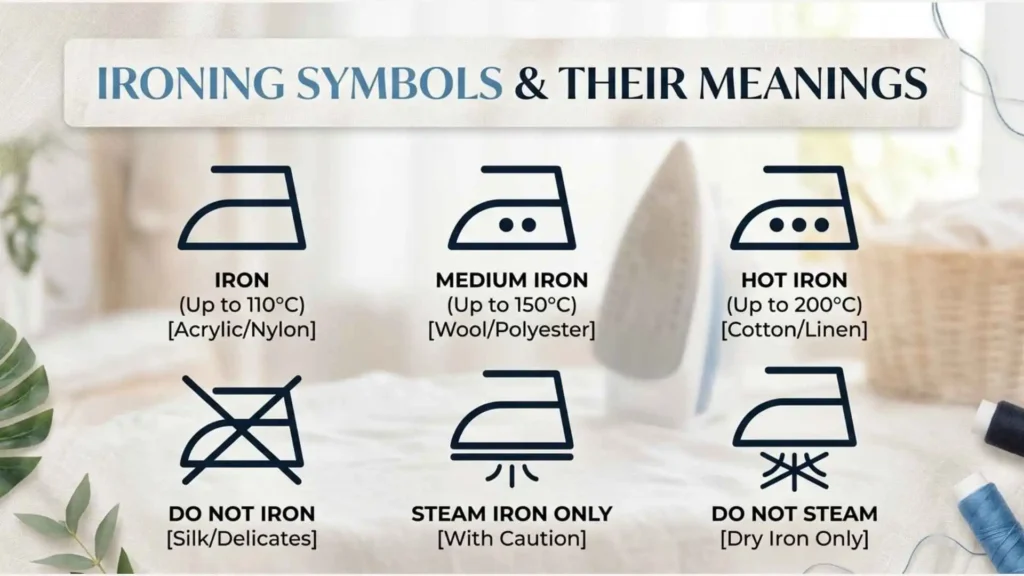
Ironing instructions are represented by an iron-shaped symbol. Dots inside the iron indicate the recommended maximum heat setting.
Different materials react differently to heat, so always check this symbol before ironing.
One-Dot Iron Symbol
One dot indicates low-temperature ironing.
This setting is commonly associated with delicate fabrics and certain synthetic materials.
Two-Dot Iron Symbol
Two dots indicate medium-temperature ironing.
It may be suitable for certain polyester blends and wool garments, depending on the manufacturer’s instructions.
Three-Dot Iron Symbol
Three dots indicate high-temperature ironing.
This setting may be suitable for heat-resistant fabrics such as cotton and linen when their labels permit it.
Crossed-Out Iron Symbol
A crossed-out iron means do not iron.
Avoid direct heat because it may melt, scorch, or permanently damage the garment.
Iron With Crossed-Out Steam
This symbol means steam ironing is not permitted.
If ironing is otherwise allowed, use the recommended dry-iron temperature.
Dry Cleaning Symbols and Their Meanings
Professional cleaning instructions are usually represented by circles. These symbols provide information about whether a garment can be professionally cleaned and which cleaning processes are permitted.
Empty Circle
An empty circle indicates that professional dry cleaning is permitted. Always consider any additional markings.
Circle With the Letter P
A circle containing the letter P indicates a specified professional dry-cleaning process using permitted solvents.
Circle With the Letter F
A circle containing the letter F indicates a professional cleaning process using specified hydrocarbon solvents.
Crossed-Out Circle
A crossed-out circle means do not dry clean the garment.
Professional wet-cleaning instructions use a different symbol system, generally involving a circle with a W and additional markings.
These technical markings help professional cleaners select suitable cleaning processes.
How to Read Washing Instructions Symbols on Clothing Labels
Understanding individual symbols is useful, but knowing how to read several symbols together is equally important.
Most standardized care labels arrange instructions in this general order:
- Washing.
- Bleaching.
- Drying.
- Ironing.
- Professional care.
Each symbol communicates a separate instruction. You should follow all applicable instructions rather than selecting only one.
Example One: Everyday Colored Shirt
Imagine a shirt label displaying:
- A washing tub marked 30°C.
- A crossed-out triangle.
- A square with a circle and one dot.
- An iron with one dot.
- A crossed-out professional-cleaning circle.
This means you should:
- Wash the shirt at a maximum of 30°C.
- Avoid bleaching.
- Tumble dry at low temperature.
- Iron at low temperature.
- Avoid professional dry cleaning.
Example Two: Delicate Sweater
Imagine a sweater label showing:
- A hand inside a tub marked 30°C.
- A crossed-out triangle.
- A square with a horizontal line.
- A crossed-out iron.
These instructions mean:
- Hand-wash at a maximum temperature of 30°C.
- Do not bleach.
- Dry flat.
- Do not iron.
Following these instructions helps protect the sweater’s shape and delicate fibers.
Washing Instructions Symbols for Different Fabrics
Different fabrics have different care requirements. However, the clothing label should always take priority over general fabric-care advice.
Cotton
Cotton is commonly used in shirts, towels, bedsheets, and everyday clothing.
Many cotton garments are machine washable, but their permitted temperature depends on dye, construction, and finishing.
Polyester
Polyester is a synthetic material that often requires moderate washing temperatures.
Avoid excessive dryer and ironing heat unless the care label specifically permits it.
Wool
Wool can shrink or lose its shape when exposed to unsuitable washing conditions.
Some wool garments require hand washing or a specialized wool cycle, while others may need professional cleaning.
Silk
Silk is a delicate natural fiber. Certain silk garments require hand washing, while others must be professionally cleaned.
Never assume all silk items have identical care requirements.
Linen
Linen is a natural fabric that wrinkles easily.
Follow its recommended washing temperature and ironing instructions to maintain its appearance and shape.
Common Laundry Symbol Mistakes to Avoid
Misunderstanding a small marking on a care label can damage an otherwise perfectly good garment.
Avoid these common mistakes:
- Ignoring washing instructions before using a machine.
- Treating a 30°C symbol as a recommendation to use hotter water.
- Confusing one line with two lines underneath a washing tub.
- Using chlorine bleach when only non-chlorine bleach is permitted.
- Tumble drying garments marked do not tumble dry.
- Ironing delicate fabrics at excessive temperatures.
- Assuming every square indicates tumble drying.
- Ignoring professional cleaning instructions.
- Washing garments with different care requirements together without checking their labels.
Paying attention to these details can make everyday laundry safer and more effective.
International Washing Instructions Symbols and Standards
Clothing manufacturers sell garments in different countries, which makes standardized care symbols useful.
ISO 3758:2023 provides an international framework for textile care labeling through symbols. It covers washing, bleaching, drying, ironing, and professional textile care.
However, care-label requirements are not identical everywhere.
For example, the United States has its own Federal Trade Commission care-labeling regulations, while other countries may use different national requirements or labeling conventions.
You may therefore encounter differences in symbol presentation, wording, and additional information depending on where a garment is manufactured or sold.
When in doubt, follow the complete instructions printed on the garment rather than relying on a symbol remembered from another labeling system.
Frequently Asked Questions About Washing Instructions Symbols
What Are the Five Main Laundry Symbols?
The five main laundry symbol categories represent washing, bleaching, drying, ironing, and professional cleaning. Each category provides instructions for a different stage of clothing care.
What Does 30°C Mean on a Washing Label?
A 30°C symbol means the garment can be washed at a maximum water temperature of 30 degrees Celsius. It does not mean you must always use exactly that temperature.
What Do Two Lines Under a Washing Symbol Mean?
Two horizontal lines underneath a washing tub indicate a very mild washing process. Choose a particularly gentle cycle with reduced mechanical action.
What Does a Crossed-Out Washing Symbol Mean?
A crossed-out washing tub means the garment should not be washed with water. Check its other care instructions to identify the appropriate cleaning method.
What Does a Circle With a P Mean?
A circle containing the letter P represents a specified professional dry-cleaning process using permitted solvents.
What Do Dots Inside a Drying Symbol Mean?
Dots inside a tumble-drying symbol indicate the permitted heat level. One dot means low heat, two indicate normal or medium heat, and three indicate high heat.
Can I Machine Wash Clothes With a Hand Wash Symbol?
A hand-wash symbol means hand washing is recommended. Do not substitute an ordinary machine cycle. If the washing machine has a dedicated hand-wash program, use it only if the garment’s care instructions permit it.
What Is the Difference Between Do Not Wash and Do Not Dry Clean?
Do not wash means the garment should not be cleaned using water. Do not dry clean means professional dry cleaning is prohibited. These are different instructions and should not be confused.
Conclusion
Washing instructions symbols provide essential information about how to clean, dry, iron, and maintain different types of clothing. By understanding washing tubs, temperature numbers, bleaching triangles, drying squares, ironing symbols, and professional-cleaning circles, you can make better laundry decisions.
The most important habit is to check the entire care label before washing a garment. Pay attention to dots, lines, crosses, and temperature markings because even small differences can change the recommended cleaning method.
With a clear understanding of washing instructions symbols, you can avoid common laundry mistakes, protect delicate fabrics, and help your favorite clothes remain in good condition for longer.

I am John Carter, a lifelong enthusiast of language and modern slang. I explore how words evolve and shape culture, and I enjoy uncovering the stories behind everyday expressions. I have authored “Slang and Society: The Language of Youth” and “Modern Words, Modern Worlds”, where I dive into how informal language impacts communication and identity. My goal is to make language accessible, fun, and insightful for everyone who loves words as much as I do.
 Lisa Reynolds
 Marcus Lee